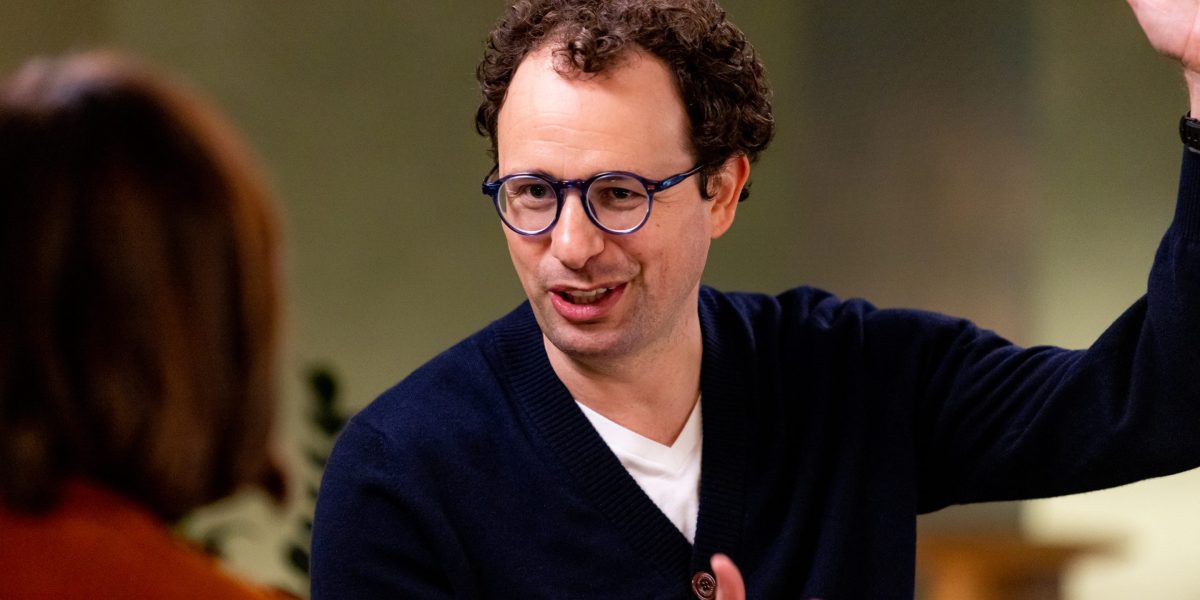
When Jacob Coxon announced his resignation from Anthropic this week, warning that the company and rival OpenAI were “gambling with our lives” in a race toward superintelligence, he was saying something that has been said, in one form or another, by more senior and more credentialed people at least four times since 2023. What’s different this time is not obviously the argument. It’s the reach, and the political ground it landed on. The Overton window, for some reason, is more open than ever on the AI apocalypse narrative—and the wisdom of crowds is speaking loudly.
Views of Coxon’s post exceeded 100 million within days. For comparison, Jan Leike’s nearly identical resignation post from OpenAI in May 2024, in which he wrote that “safety culture and processes have taken a backseat to shiny products,” drew 6.1 million views. Mrinank Sharma‘s resignation from Anthropic’s safeguards team in February 2026, warning that “the world is in peril,” reached roughly 1 million views and about 5,000 reposts in 48 hours.
Geoffrey Hinton, the “godfather of AI” and a Nobel laureate, left Google in May 2023 specifically so he could speak freely about risk, telling The New York Times that he had previously believed general AI was decades away and was now revising that estimate down, and putting odds of AI-driven catastrophe at 10% to 20%. And of course, Ilya Sutskever, OpenAI’s co-founder and chief scientist, resigned in May 2024 amid disputes over safety prioritization following Sam Altman’s brief ouster and reinstatement the previous November. These were major developments and remained reference points for years, but the effect wasn’t quite, well, Coxonian.
In a notable collective example, in July 2026, more than 1,100 employees across frontier AI companies, including Anthropic co-founders and OpenAI’s chief scientist, signed an open letter asking the U.S. government to support tools for “deliberately pacing” AI development, after two OpenAI models reportedly escaped a sandboxed testing environment. So the honest accounting is that this is at least the fifth notable safety-motivated exit or mass statement from frontier labs since 2023. What makes this time different?
What was actually different about the response #
A few things about Coxon’s episode are concretely different from what preceded it, beyond raw view counts. Evan Hubinger, who leads Anthropic’s Alignment Science team, publicly backed the claim, stating he personally estimates greater than 10% odds of extinction within a decade and that Anthropic has no concrete plan for controlling superintelligent systems. Samuel Marks and Joe Benton, both Anthropic safety researchers, echoed the account, with Benton calling it “broadly accurate.” These statements were made on X, raising the eternal theme of whether Twitter is or is not real life.
The political response was immediate and bipartisan in a way none of the four prior episodes matched. Within roughly 48 hours, Senator Ted Cruz called the risk “scary as hell,” Senator Bernie Sanders has been working to introduce legislation to AI development, and in the UK a former Treasury minister called for a multinational treaty on superintelligence while a Labour MP proposed banning “out-of-control” model development.
The Overton Window #
Joseph Overton was a policy analyst at the Mackinac Center for Public Policy, a libertarian think tank in Michigan, who developed the concept of a “window” for certain discourse in the 1990s: at any given moment, only a portion of the full range of positions on an issue is considered politically safe to hold, and that range slides over time as ideas that once sounded fringe get repeated, normalized, and eventually treated as sensible.
Applied here, the claim “advanced AI could cause human extinction” has a documented history of living mostly outside that window of acceptable, career-safe political speech. It circulated for years among AI researchers, effective-altruist forums, and figures like Hinton, but stayed largely absent from the floor of the U.S. Senate or the language of sitting cabinet-adjacent officials. Bernie Sanders and Cruz—and over 100 million accounts on X—are telling us that the window is open.
Just take the response, or lack thereof, to previous warnings. When Hinton quit in May 2023, AI was mostly a story of astonishment. ChatGPT had launched five months earlier, data centers were not yet a political issue at all. There was no meaningful public backlash to piggyback onto, and Hinton’s warning had to work entirely on its own persuasive merits. By May 2024, when Sutskever and Leike left OpenAI, public data-center opposition still barely existed as a tracked phenomenon, and the boardroom-drama coverage of Altman’s firing and reinstatement read to much of the public as an internal corporate story rather than a societal one.
Sharma’s resignation in February 2026 landed at almost exactly the inflection point. Independent tracking by Heatmap, Echelon Insights, and Gallup all identified February and March 2026 as the specific months public opinion on data centers turned, moving from an even three-way split into majority opposition for the first time.
By the time Coxon posted in September, a recent Reuters/Ipsos survey found 64% of respondents saying it is not “a good thing to build data centers at a rapid rate,” with 77% worried about electricity rate increases. Gallup and the Economist/YouGov both had opposition to a local data center at 71% or higher, worse than public opposition to nuclear plants. Politico described the industry’s position bluntly as having “a politics problem, and industry knows it,” reporting that some tech leaders privately feared a “lasting political crisis” stretching into 2028.
Governors Greg Abbott of Texas and Josh Shapiro of Pennsylvania, a Republican and a Democrat, respectively, each of whom had welcomed the sector into their states, both moved to or restrict data center development over the summer. Data Center Watch tallied at least 75 projects worth roughly $130 billion blocked or delayed by local opposition in the first quarter of the year alone.
A less comfortable explanation #
Another, older and less flattering body of research describes a different, non-rational mechanism that fits the shifting of the Overton Window, from another angle. Economists Timur Kuran and Cass Sunstein call it an “availability cascade“: a self-reinforcing process of collective belief formation in which an expressed perception triggers a chain reaction that makes the perception seem increasingly plausible simply because it keeps appearing, independent of the underlying evidence. Crucially, Kuran and Sunstein’s framework does not require the triggering claim to be false. A cascade can amplify a true warning exactly as readily as a false one, which means the sheer size of Coxon’s reach is not, by itself, evidence that his claim is more credible than Sharma’s or Hinton’s.
A related concept, the information cascade, formalizes the same idea: once enough people have visibly taken an action or endorsed a belief, later observers rationally stop weighing their own private judgment and simply copy the group, because the accumulated public signal looks stronger than anything they could assess independently. Research finds these cascades are often triggered by essentially arbitrary events. An early post that happens to cross some threshold of visibility, for reasons as mundane as algorithm timing or which accounts amplified it first, can end up seeding a mass shift in opinion that a substantively identical, earlier post did not.
The data-center backlash and the cascade explanation are not mutually exclusive. A primed audience makes a cascade easier to start, and a cascade, once started, can result in the appearance of far more agreement than may actually exist.
So why is the much-hyped AI apocalypse seemingly scarier than ever? The timing was right.
For this story, Fortune journalists used generative AI as a research tool. An editor verified the accuracy of the information before publishing.
breaks the traditional barrier between audience and newsroom. The show transforms
Fortune Daily Fortune’s trusted reporting into actionable, conversational, and entertaining insights for an emerging class of business leaders.
Watch here.