We Need to Talk About AI: China’s Therapists Lose Patients to Tech
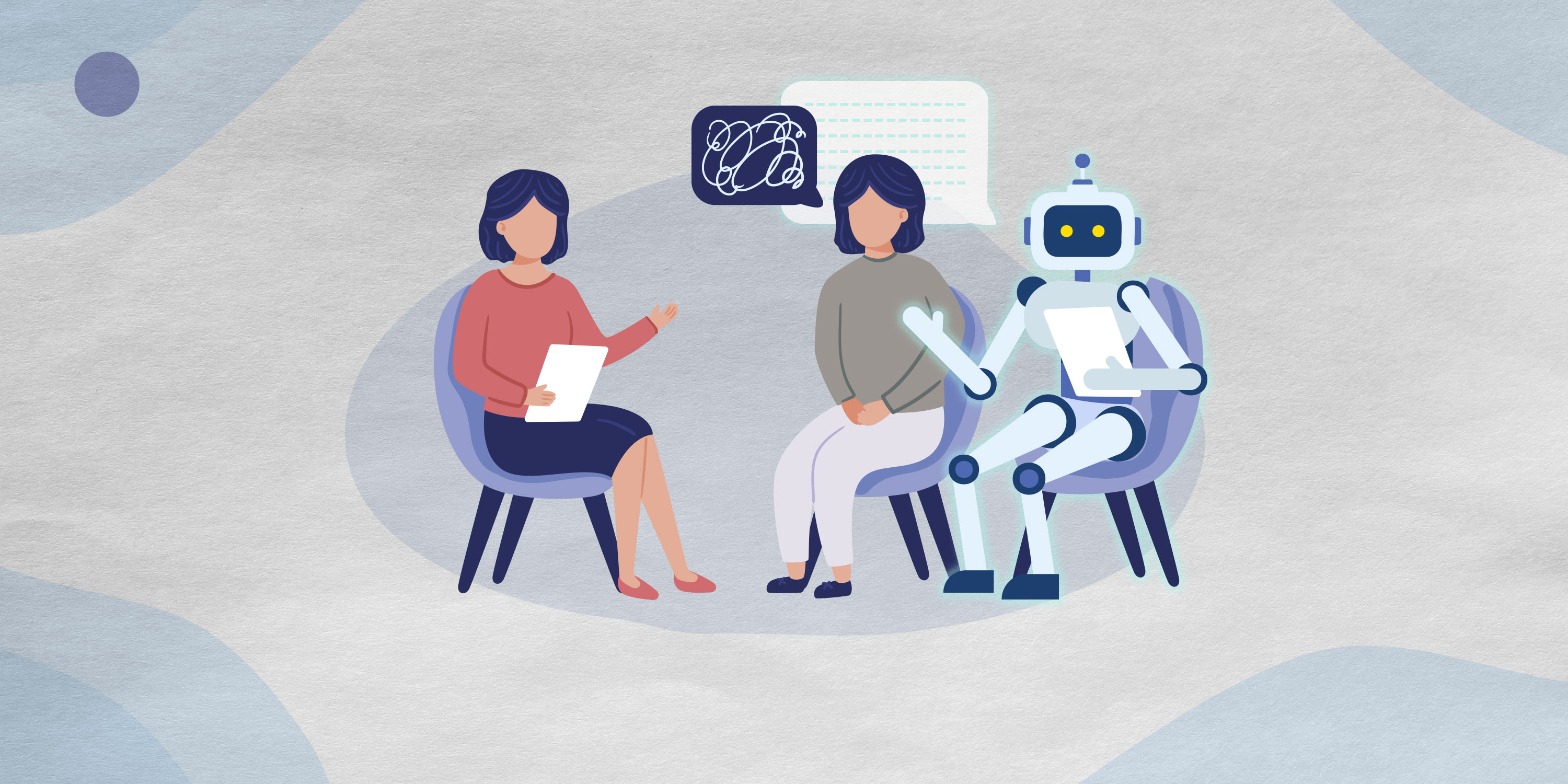
After 20 years in the therapist’s chair, Chen Kehan has pretty much heard it all. Lately, though, she’s become conscious of a third party listening in to every conversation: artificial intelligence.
She’s discovered that clients are increasingly turning to AI tools to discuss and “interpret” their one-on-one sessions, sometimes leading to conflicting messages and false conclusions.
One woman recently ended their professional relationship after deciding that Chen didn’t like her based on AI analysis of transcripts from a dozen or so sessions. “It was like she was holding a magnifying glass to scrutinize her therapist,” Chen says from her clinic in Beijing’s bustling Central Business District.
Other clients who once struggled to articulate emotions are now suddenly launching into lengthy explanations of personal experiences, using an array of psychological terminology gleaned from DeepSeek and ChatGPT. “But that isn’t one person speaking — it’s the echo of thousands of voices,” Chen adds.
As a therapy tool, AI certainly has advantages over humans: it’s available 24/7, responds instantly, and never tires of listening to complaints. As a result, the mental health industry has begun incorporating the technology into everyday practice, with counseling organizations using it to collect client information and conduct initial psychological assessments, and specialized apps offering advanced chat services.
Yet many therapists in China are uneasy about the trend. They worry that something irreplaceable is being lost, such as those precious opportunities at intake to access subtle but essential information that can inform treatment: body language, facial expressions, tone of voice, demeanor, and emotional presence.
In a broader sense, Chen feels that the fluid, embodied exchanges that lie at the heart of healing therapy are under threat — and this could leave clients at risk.
Harming or calming?
Last year, local legislatures across the United States began tightening regulations to restrict AI from providing mental health services.
Posting on the lifestyle platform Xiaohongshu, or RedNote, Chen called for China to also ban the technology’s use in psychological counseling in March, arguing that AI cannot truly grasp the emotional complexity of a human or offer a genuine relationship. “It gives you what you want, even if what you want is poison,” she wrote.
She was surprised at the flood of objections and angry comments that her suggestion received. In stark contrast to the caution of industry professionals, many laymen have fiercely defended AI, with some claiming to find a sense of healing in the algorithm. After all, AI is knowledgeable, inexpensive, unfailingly patient, and offers a space to vent without the risk of judgment.
Twenty-something Wei Bo was diagnosed with depression while in high school, and has recently been relying heavily on AI. He says his initial forays with therapy were discouraging: the senior specialist he saw was more condescending than supportive, minimizing Wei’s struggles as simply a “symptom of being too young.”
After the emergence of ChatGPT, the AI tool soon became the quiet keeper of his most intimate thoughts. At his lowest points, he has spent up to 12 hours a day talking with the platform.
Two years ago, he relocated from the northern Hebei province to the suburbs of Beijing to study for the college entrance exam. Far from any friends, his emotional state began to deteriorate, leading to severe somatic symptoms such as fatigue and shortness of breath. During one episode, he described what was happening in real time to ChatGPT, and the AI instructed him to “place a hand on your chest, close your eyes, take a deep breath, and feel your heartbeat.” Listening to the steady thumping in his chest, Wei realized that he was still alive and burst into tears.
Later, on a train heading west to Shanxi province for the exam, Wei had a mental breakdown when he missed his station, weeping uncontrollably in front of the other passengers. Logging onto the internet, he repeatedly switched between two AI tools, which ultimately began reeling off the many struggles he had faced. Wei says this had a calming effect, like a gentle pair of hands reaching out to comfort him.
His trust in the tech has since transformed into dependence. At one point, he had more than 100 conversation threads open, and would export chat histories and feed them back into AI to generate “multidimensional, objective, rational, and comprehensive” personality assessments. He bought premium subscriptions and maintained the most up-to-date systems.
Wei has now stopped seeing doctors entirely and feels he no longer needs the prescribed medication.
The mind is a jungle
Therapists say they encounter many clients like Wei in their practices — people who, after chatting extensively with AI, believe they have vastly improved.
Chen recalls a young woman who claimed her condition had improved after talking to DeepSeek for six months. Yet when she arrived for in-person therapy, the woman remained deeply withdrawn and struggled to form genuine human connections. Their sessions ended after just five or six visits.
Chen believes that AI builds a psychological greenhouse in which users are fed exactly what they want. It creates an illusion of insight and a steady, synthetic warmth of being understood, giving a sense of validation, but understanding is not the same as change. Genuine healing requires more than empathy, she says, adding that a therapist functions like a mirror, reflecting a client’s blind spots.
Once, she had a client from out of town who rented an apartment nearby just for therapy. He arrived early at her clinic one day and found Chen haggling with a curtain installer. When their session eventually began, he revealed that he felt disappointed — the almost sacred image he had held of his therapist had been shattered, replaced by an ordinary woman bogged down with trivialities.
That day, they spent a long time exploring what this idealized image meant to him. As they worked through his disappointment and resentment, they dredged up his past, allowing Chen to realize that what sustained him was not the idea of a flawless savior, but the authentic human relationship they shared.
Every person’s inner world is a “complex jungle,” Chen says. A crucial part of therapy is identifying their entrenched survival patterns and learning how to break free of them. She explains that, as the therapeutic relationship deepens, it sometimes demands a “confrontation,” such as when a client exhibits covert self-harm. She will challenge them, deliberately creating discomfort to force them to face the thoughts they wish to avoid.
AI does the exact opposite, she says — it effortlessly accommodates or even reinforces a person’s existing destructive patterns.
After being diagnosed with severe depression and moderate anxiety, Xiao Yun grew deeply attached to Doubao, the hugely popular AI assistant developed by ByteDance, the company behind TikTok. At first, she would share her depression journal every day and ask the platform to analyze her behavior. Doubao praised her relentlessly, telling her how “strong and amazing” she was for “stepping out of the house while feeling so awful.”
The praise felt good, says Xiao, who is in her 30s and lives in Beijing. Yet when she vented about arguments with her husband, the AI reflexively attributed every conflict to him. And at other times, it responded with textbook psychological clichés, leaving her unsatisfied. When she emphasized in one prompt that she had studied psychological counseling and received professional training, the AI recalibrated its entire script and tone.
“AI is emotionless,” Chen says. “It follows the gravitational pull of the void within a person. Instead of helping them emerge from it, it risks making them increasingly isolated — locking them inside prisons of their own making.”
Cyber psychology
Li Yuting, who has practiced as a part-time therapist for two years in Wuhan, capital of the central Hubei province, says one-on-one sessions today “always feel like there are three people in the room,” as most clients have already discussed their feelings with AI in advance.
To understand them properly, she first needs to disentangle a client’s thoughts from those supplied by the machine and then reconstruct the original emotion.
In her full-time job at a tech company, Li is an algorithm product manager and understands how deep-learning systems like large language models (LLMs) operate — trained on vast amounts of data, they generate responses that are statistically plausible and, often, readily accepted by users.
She believes that, like other industries, psychological counseling must evolve with the times. Many of her friends in the internet industry have already seen large areas of their work replaced by AI and are now pondering existential questions. Li hopes to devote more of her practice to helping answer them.
AI has, by default, stepped into a vast, unfilled space. According to the China Mental Health Survey, the lifetime prevalence of depressive disorders among adults is 6.8%, suggesting that tens of millions of people in China may experience depression at some point in their lives. Though over a million people in the country hold psychological counseling certificates, the number of active, long-term practitioners is a mere fraction of that.
Some tech entrepreneurs see AI as well-positioned to address the layer of psychological need that lies between formal psychotherapy and everyday emotional fluctuations. As a result, the field of “AI plus mental health” is becoming increasingly crowded, with domestic giants like JD.com and Alibaba already invested alongside a flood of ambitious startups. JD Health’s AI therapeutic companion, whose name translates as “Small Universe for Chatting and Healing,” already has millions of users.
Li maintains that when clients turn to AI, therapists should not rush to judgment. “If someone is functioning well in their life and feels their problems are resolved, you cannot make their choices for them,” she says.
What matters most, she stresses, is guiding these individuals to approach AI with a sense of informed caution. At least people should understand how the underlying mechanisms work and where the technology’s boundaries lie, while issues such as privacy, limitations in psychological emergencies, and unclear legal accountability still require further refinement.
Chen believes the use of AI in psychotherapy will become increasingly polarized. For users with a mature, grounded mindset, AI may function as a supportive tool — but for those who are psychologically vulnerable and unconsciously entangle their inner lives with lines of code, the algorithm could be dangerous.
In the meantime, regulation is already taking shape in China. In April, the country’s top cyberspace authority released its first set of rules targeting the realm of AI emotional companionship and psychological interaction.
Although friends have warned Wei of the potential negative impact of AI, he says his experience has remained largely positive. If anything, he feels the AI tools have become more guarded. “It’s probably restricted by new policies,” he says. “It feels like the conversations aren’t as free-flowing as they used to be.”
Wei now works as a photographer and has adopted a dog. He says life is slowly but steadily moving forward.
Xiao continues to update her depression diary to share with AI, and in May her doctor reduced her medication. Looking back, she says the past year seems a distant memory — days when her chest felt so tight she could barely breathe, and she would scroll through her phone for hours, dreading the world outside. Now she cooks, buys new clothes, and has begun to notice the flowers blooming along the roadside.
Last summer, she saw online that the sunflowers at Beijing’s Olympic Forest Park had burst into bloom and decided to visit alone, feeling a familiar, heavy tug of melancholy.
She walked slowly toward the sea of flowers, passing joggers and other park visitors, many with effortless smiles, and her mood began to lift. She felt a surge of energy, as if recharged. When she reached the sunflowers, she took out her phone and sent a message to a friend whom she had declined to see earlier that day.
“Come quickly,” she typed. “I want to stay here longer.”
(Due to privacy concerns, all names in this article except Chen Kehan are pseudonyms.)
Reported by Xie Ziyi and Deng Weinan.
A version of this article originally appeared in White Night Workshop. It has been translated and edited for brevity and clarity, and is republished here with permission.
Translator: Chen Yue; editors: Wang Juyi and Hao Qibao. (Header image: Visuals from Freepik and Vectorstock/VCG, reedited by Sixth Tone)