VMware gets simpler AI deployment and low-cost version for basic private clouds
Broadcom Inc. is expanding its VMware portfolio with new capabilities that simplify artificial intelligence workload deployment, strengthen infrastructure security and simplify disaster recovery.
The company is also introducing a lower-cost virtualization platform aimed at smaller customers that don’t need a full private cloud platform.
Today’s updates span VMware Cloud Foundation, the company’s flagship private cloud platform, and a collection of optional advanced services. Several capabilities are already available in VCF 9.1.1, which was released in September, while others are scheduled for the first quarter of Broadcom’s 2027 fiscal year, which began on Monday.
The changes are part of a broader Broadcom effort to position VCF as a common infrastructure platform for traditional virtual machines, containers and increasingly demanding AI workloads.
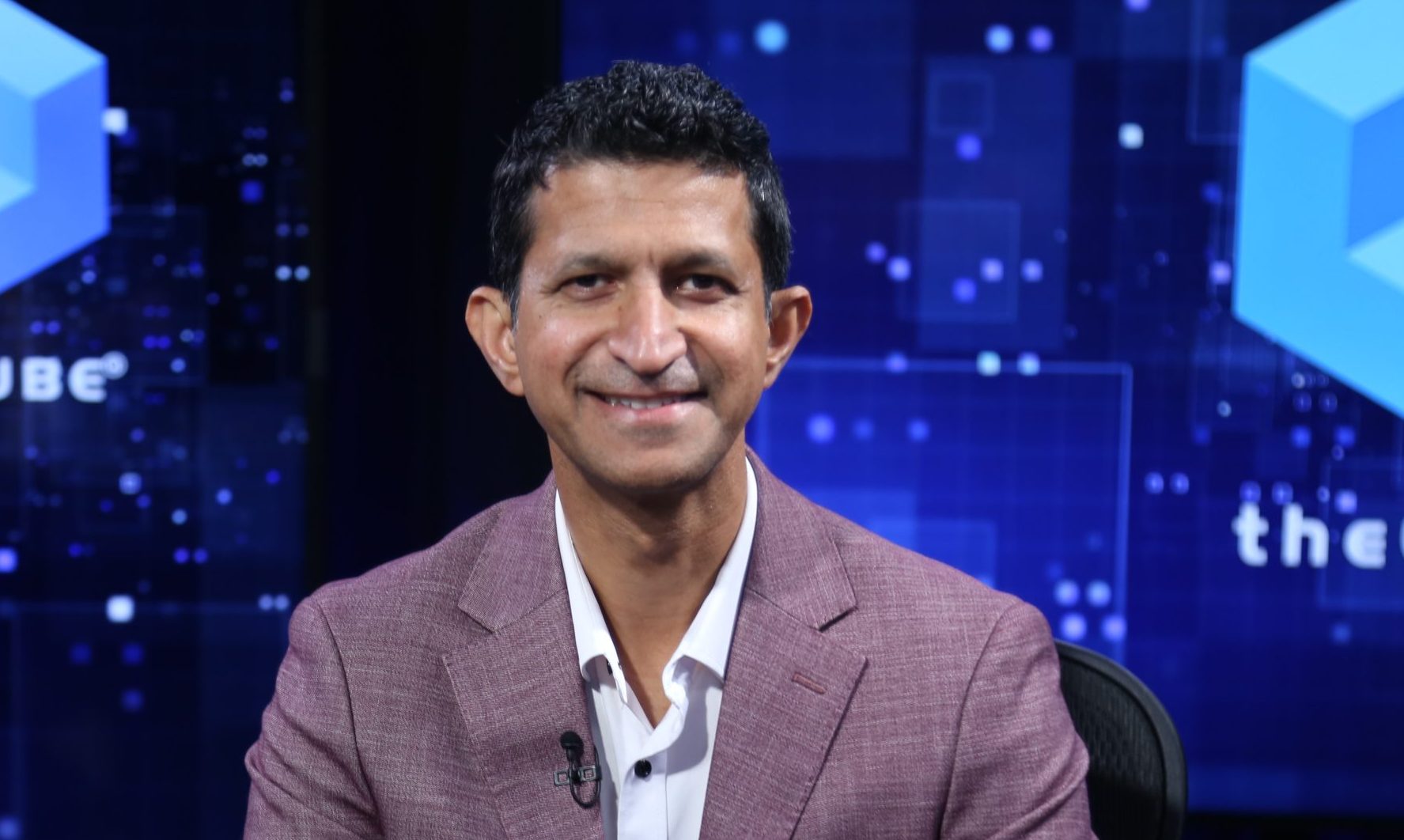
More than 2,600 customers had deployed VCF 9 as of September, representing more than 24 million allocated cores, according to Prashanth Shenoy (pictured), Broadcom’s chief marketing officer and vice president of marketing for cloud platform, infrastructure and solutions.
Broadcom is introducing AI Infrastructure Quickstart, an automated deployment capability designed to simplify the initial configuration of private AI environments.
It combines vCenter cluster deployment, vSphere Supervisor activation and VMware Kubernetes Service cluster provisioning into a single workflow, replacing multiple manual configuration processes. “We have consolidated all of that, made a quick start workflow and streamlined the workflow completely so they can get it up and running day zero in a matter of minutes,” Shenoy said.
Another enhancement, multitenant model sharing, allows multiple business units to use centrally deployed AI models while maintaining separate security boundaries and data privacy controls. Already available in VCF 9.1.1, the capability is intended to reduce GPU requirements and eliminate redundant model deployments. “Fewer GPUs, fewer stacks, lower TCO,” Shenoy said.
Broadcom is also adding native S3-compatible object storage through VMware vSAN. The feature, expected to become generally available in the upcoming VCF release, supports AI applications that depend heavily on unstructured data and lets developers provision storage through self-service interfaces.
On the security front, Broadcom is incorporating additional capabilities directly into VCF rather than requiring customers to purchase them separately. These include confidential computing support for Advanced Micro Devices Inc. and Intel Corp. processors, which was already available in VCF 9.1.1, as well as planned policy-based virtual private cloud connectivity and automated infrastructure configuration compliance.
Broadcom said the compliance features will continuously monitor infrastructure settings against industry benchmarks, identify configuration drift and provide remediation guidance.
The virtualization maker is also moving disaster recovery functionality into the core VCF and VMware vSphere Foundation platforms. The capability will provide orchestrated recovery across thousands of workloads, including recovery from outages, equipment failures and natural disasters.
Additional protection will be available through VMware HyperArmor, a previously announced service that provides hypervisor-level defenses including virtual patching, continuous monitoring and multifactor authentication.
Two other advanced services, VMware Live Recovery and VMware Compliance and Configuration Management, address cyber recovery and continuous compliance enforcement for virtual machines and containers.
The company is also broadening its portfolio at the lower end with VMware vSphere Express, a new offering for environments containing up to 128 processor cores. Based on vSphere 9, Express includes live virtual machine migration, high availability, distributed networking, security and simplified patching.
Shenoy said the product is intended for customers that need basic virtualization without purchasing the more comprehensive and costly VMware vSphere Foundation or VCF platforms. “They don’t need a whole cloud in their two-server environment,” he said.
Customers can upgrade to the larger platforms as their requirements grow. Broadcom didn’t disclose pricing, although Shenoy indicated Express would be substantially less expensive than its higher-end offerings.
Photo: SiliconANGLE
Support our mission to keep content open and free by engaging with theCUBE community. Join theCUBE’s Alumni Trust Network, where technology leaders connect, share intelligence and create opportunities.
- 15M+ viewers of theCUBE videos , powering conversations across AI, cloud, cybersecurity and more
- 11.4k+ theCUBE alumni — Connect with more than 11,400 tech and business leaders shaping the future through a unique trusted-based network
Are you an AWS customer? Support SiliconANGLE financially by buying your AWS services from our Marketplace portal page and links: https://siliconangle.com/aws-marketplace/
About SiliconANGLE Media
theCUBE AIand theCUBE SuperStudios — with flagship locations in Silicon Valley and the New York Stock Exchange — SiliconANGLE Media operates at the intersection of media, technology and AI.
Founded by tech visionaries John Furrier and Dave Vellante, SiliconANGLE Media has built a dynamic ecosystem of industry-leading digital media brands that reach 15+ million elite tech professionals. Our new proprietary theCUBE AI Video Cloud is breaking ground in audience interaction, leveraging theCUBEai.com neural network to help technology companies make data-driven decisions and stay at the forefront of industry conversations.