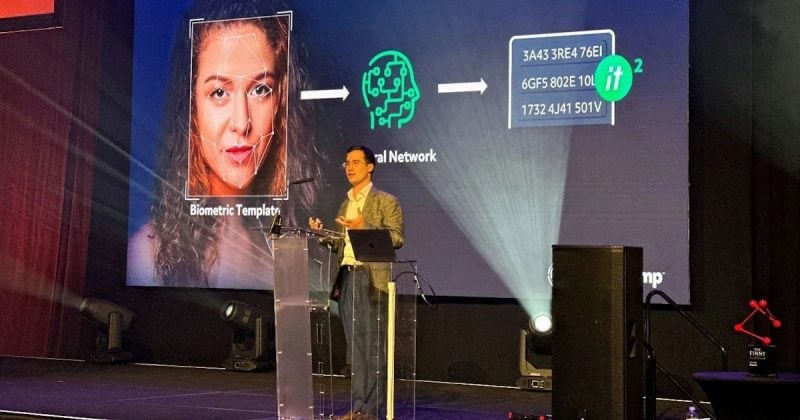
The Nasdaq-listed biometric firm will develop identity-binding technology for trusted semiconductors as part of Europe's €3 billion chip sovereignty push.
Trust Stamp, the AI-powered biometric identity company trading on Nasdaq under ticker IDAI, has been selected as a direct participant in the European Union’s Important Project of Common European Interest on Advanced Semiconductor Technologies, known as IPCEI AST. The initiative, coordinated by Germany, has over €3 billion in committed funding and represents one of Europe’s most ambitious plays for semiconductor sovereignty.
Trust Stamp’s Malta subsidiary secured the spot with support from Malta Enterprise. Its job: develop biometric identity binding that links verified human identities directly to semiconductor devices.
What Trust Stamp is actually building #
The company’s contribution to IPCEI AST centers on what it calls biometric identity binding for trusted chips. In English: creating a system where a semiconductor device can cryptographically prove it’s associated with a specific, verified human being.
This goes beyond the standard “enter your password” approach to authentication. Trust Stamp is exploring hardware-rooted security, meaning the identity verification happens at the chip level rather than in software that can be spoofed or hacked. The company is also reportedly looking into authentication methods for brain-computer interfaces, which sounds like science fiction until you remember that multiple companies are already implanting neural devices in human subjects.
Trust Stamp positions itself as a privacy-first AI biometric identity verification provider. It operates across finance and government sectors, two industries where proving someone is who they claim to be isn’t just convenient, it’s regulatory table stakes.
What investors should watch #
Trust Stamp is a small-cap company competing in a space dominated by much larger players. Its inclusion in a €3 billion EU initiative signals meaningful institutional validation, but execution risk is real. Developing chip-level biometric systems is technically complex, and the timeline from research participation to revenue-generating products can stretch for years.
The funding dynamics are potentially significant. IPCEI participants typically gain access to state aid that would otherwise violate EU competition rules. That means Trust Stamp could receive direct financial support for its R&D efforts, reducing the cash burn that small tech companies typically face during long development cycles.
Disclosure: This article was edited by Editorial Team. For more information on how we create and review content, see our