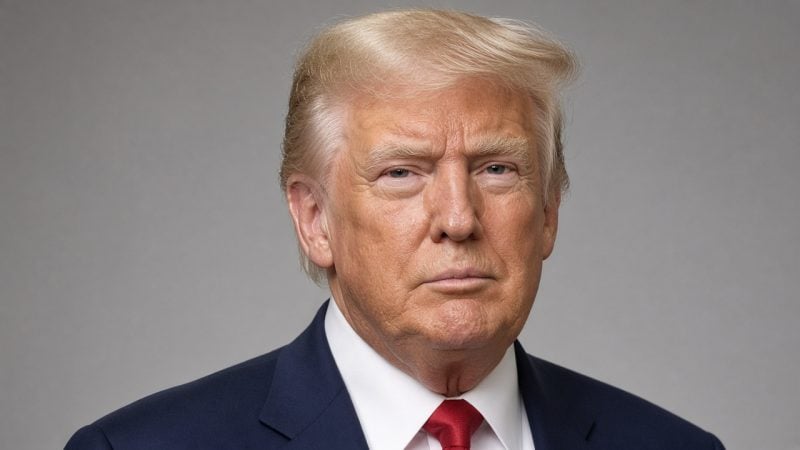
The White House and leaders from Anthropic, Google, Meta, Nvidia, OpenAI and xAI signed a non-binding framework that leans on self-policing instead of regulation
President Donald Trump has picked a side in the debate over how to keep frontier AI in check. Washington will not write the rulebook. The industry will hold the pen, and the White House will watch.
On September 29, 2026, Trump hosted top AI executives at the White House to announce a voluntary safety agreement. It is formally called the Joint Commitment on Frontier Responsibilities and is also known as the White House Accord on Super Intelligence. It runs a single page.
What’s actually in the one-pager #
Leaders from six major AI companies endorsed the document: Anthropic, Google, Meta, Nvidia, OpenAI and xAI, which is a subsidiary of SpaceX. Together they form a roster of the firms building the systems the accord is meant to govern.
The agreement sets out a four-tiered framework for overseeing how frontier AI models are developed and deployed.
The four core commitments are:
Internal monitoring. Companies agree to set up robust systems that track their own models from the inside.
Empowered oversight teams. Internal safety groups are supposed to have real authority, not just a seat at the back of the meeting.
Independent auditors. Outside reviewers are brought in, and the accord gives these external auditors whistleblower-style roles.
Board-level committees. Safety adherence gets escalated to the boardroom, where committees are meant to make sure protocols are followed.
AI, tech, and the markets they move—in one daily briefing.
Daily. Free. Join 34,000+ readers across crypto, finance, and policy.
The accord is explicitly non-binding. It encourages companies to adopt the measures but carries no legal obligations, penalties or enforcement mechanisms. Trump instead described the commitments as “morally binding,” and he emphasized strong self-policing as the backbone of the arrangement.
Per the announcement, the industry offered assurances that it can handle risks tied to cybersecurity and biosecurity.
A familiar playbook, with a new name #
The accord came alongside an executive order issued the same day. That order mandates that government discourse shift from the term “artificial intelligence” to “Super Intelligence.”
The voluntary approach itself is not new. The accord builds on the voluntary AI safety pledges established under President Joe Biden in 2023. That earlier effort also favored company commitments over hard regulation.
What has changed is the framing. The 2026 version introduces formal structures like board-level committees and auditors with whistleblower-style protections.
What this means for AI companies and regulators #
For the six signatories, the deal is a clear win in the near term. They avoid binding federal rules, keep control over how safety is measured, and get a White House photo op signaling they are the responsible adults in the room. Without penalties, the accord’s strength depends entirely on whether companies follow through when safety conflicts with speed or revenue.
A few other things to track in the months ahead:
Disclosure. Will the signatories publicly identify their independent auditors and share findings?
Holdouts. The six signatories are prominent, but they are not the whole industry. Whether other developers sign on, or are pressured to, will shape how meaningful the framework becomes.
State and international pressure. A light-touch federal stance can leave room for other jurisdictions to fill the gap with their own rules. Companies operating globally may still face binding obligations elsewhere, regardless of what they promised at the White House.
Disclosure: This article was edited by Diego Almada Lopez. For more information on how we create and review content, see our