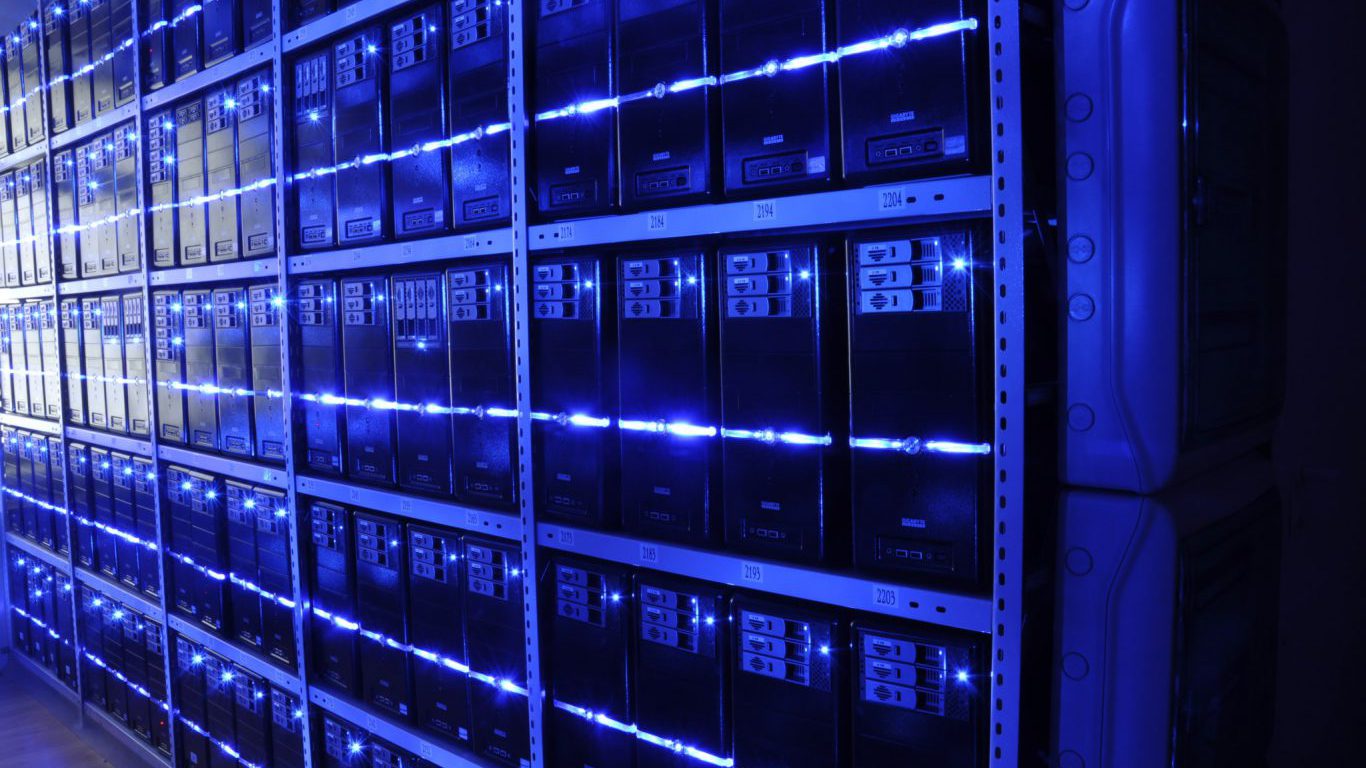
Trump is cheering on the AI data center boom as a golden goose, but the CEOs of Apple, Amazon, and Micron are quietly confirming what millions of families already sense at the checkout counter and on their utility bills.
President Trump on Monday told critics of the U.S. data center buildout to get out of the way, posting “let Data Reign” and warning that “If we kill the Golden Goose, you will only have yourselves to blame.” He dismissed opposing communities as those “who want to end up being backwards and poor” and claimed China “could not be happier with this anti Data Center movement.”
Yet the backlash is grounded in something concrete: rising utility bills and consumer electronics prices, both traceable to what CEOs at the biggest AI infrastructure buyers and suppliers are saying on earnings calls.
Jassy: Multi-Gigawatt AI Commitments and a $496 Billion Backlog #
Amazon (NASDAQ:AMZN | AMZN Price Prediction) CEO Andy Jassy laid out the scale on the Q2 call. AWS revenue grew 36.7% year-over-year, its fastest growth in 18 quarters, on a $169 billion annualized revenue run rate. Backlog hit $496 billion, growing triple digits year over year. Cash capex was $53.1 billion in the quarter alone. Jassy said AWS could “very possibly be a trillion dollar annual revenue business.”
The power footprint is explicit. Jassy told analysts Amazon is “on pace with the capacity build… where we said we expect to have double the capacity, power capacity by the end of 27 that we had in 25.” He added that “multi-year, multi-gigawatt commitments from the two largest AI labs” are already booked, with capacity “already been reserved for 28.” All of that gigawattage has to be generated, moved, and cooled by somebody, which is exactly the angle we took in a free report on seven AI infrastructure suppliers that aren’t chipmakers.
Mehrotra: A Memory Shortage That Lasts Beyond 2027 #
Micron Technology (NASDAQ:MU) CEO Sanjay Mehrotra was direct. “DRAM and NAND industry demand continues to significantly exceed industry supply,” he said, adding tightness will “persist beyond calendar 2027.” Fiscal Q3 revenue reached $41.5 billion, up 346% year over year, with DRAM prices rising in the low-60% range and NAND prices in the mid-80% range. He acknowledged the tradeoff hitting consumers directly: “HBM’s growth and increasing trade ratio with every new generation further pressures non-HBM supply.” New fabs are gated by “the need for enhanced energy infrastructure.” Micron shares are up 236.12% year to date.
Cook: A “100-Year Flood” on Memory Pricing #
Apple (NASDAQ:AAPL) CEO Tim Cook offered the sharpest consumer-facing framing. “On the pricing front, we reluctantly raised prices,” he said. “We did it because we’re in what I would characterize as a 100-year flood on the memory pricing with exponential increases in memory prices.” CFO Kevan Parekh said “More than 100% of” Apple’s gross margin change was explained by memory cost. Cook warned September memory costs will be “even higher” and prices are “continuing to increase” beyond that.
The pass-through is already visible. Apple raised prices on Macs, iPads, Apple TV, HomePod, and Vision Pro in June, with some increases approaching 20%. Amazon followed last month, including a 60% increase for the Echo Dot from $49.99 to $79.99 and a 37% increase for the base Kindle from $109.99 to $149.99, both attributed to memory costs. U.S. residential electricity prices average 18.2 cents per kilowatt-hour in 2026, a nearly 5% increase from 2025, with the largest rate increases concentrated in East Coast regions absorbing data center load. Gas at the pump sits at $4.08 per gallon. Trump’s Golden Goose is laying eggs and running up the tab at the meter and checkout counter.
Contact [email protected] for any questions or corrections.