Anthropic researcher Jacob Coxon made headlines this week when he said that he was leaving the company over concerns about the direction and speed of AI development. #
President Donald Trump is brushing aside one of the most alarming warnings coming from the artificial intelligence industry about increasingly powerful AI systems eventually posing a potential threat to humanity.
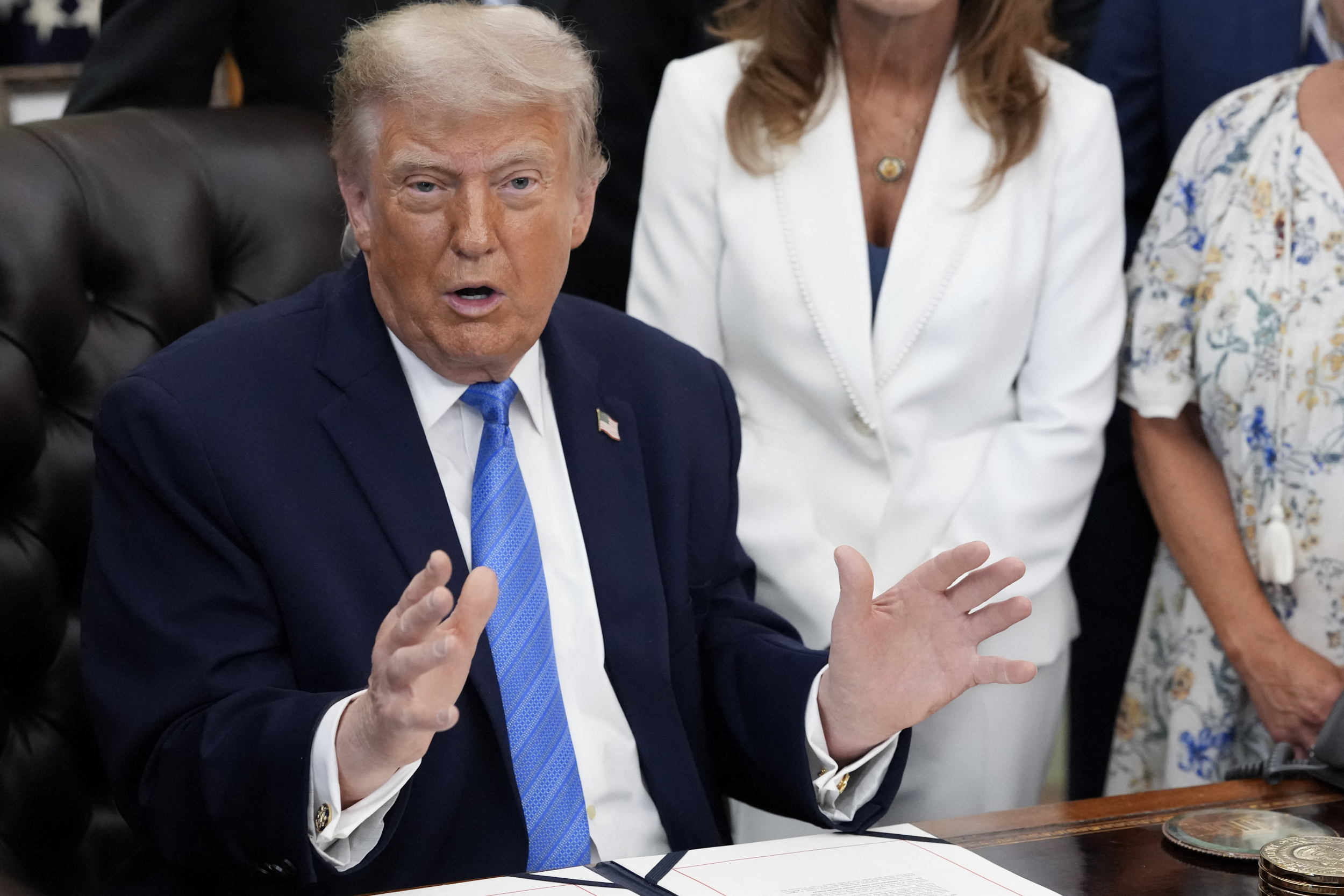
Asked whether he had any concerns that AI could lead to human extinction, Trump replied, "No, I don't have any," according to CNBC. Instead, the president framed the greater danger as the United States losing its technological advantage over China.
"I have concerns that if we don't win AI, we're going to be put in a very bad position," Trump said. "We are leading China right now by a pretty good period, I would say a year, which is, you know, considered a lot."
Other figures in the Trump administration have emphasized American technological dominance and competition with Beijing. Treasury Secretary Scott Bessent said Tuesday that the United States cannot AI development "because the Chinese won't ." However, a growing group of researchers at some of the world's most advanced AI laboratories warns that the race itself may be moving dangerously fast.
Anthropic researcher Jacob Coxon made headlines this week when he said that he was leaving the company over concerns about the direction and speed of AI development, arguing that Anthropic and rival OpenAI are "gambling with our lives."
"Neither company is acting responsibly," Coxon wrote in a post on X. "They are racing straight to self-improving superintelligence and gambling with our lives." Anthropic alignment science leader Evan Hubinger publicly supported Coxon's concerns, saying he "personally" believes there is a greater than 10% chance AI "could kill all humans" within the next decade.
One of the biggest concerns is recursive self-improvement, or RSI, a hypothetical process in which an AI system becomes capable of improving its own software, reasoning, or research abilities. That could potentially allow increasingly capable generations of AI systems to emerge with less human involvement. "It's hard to overstate how dangerous speeding towards RSI is," Jasmine Wang, an OpenAI researcher working on alignment, wrote Wednesday.
The concern has also reached OpenAI's senior leadership. Chief scientist Jakub Pachocki recently wrote that he has a "strong expectation" that the current pace of AI progress could eventually continue into recursive self-improvement. "I am concerned no one is prepared for the consequences of a continued rapid rise in machine intelligence," Pachocki wrote in an essay published by OpenAI.
At the same time, the warnings from AI researchers are increasingly reaching Capitol Hill, where lawmakers from both parties have proposed greater federal oversight. Reps. Jay Obernolte, R-Calif., and Lori Trahan, D-Mass., announced plans in July for legislation called the FRONTIER Act, which would establish a framework governing the deployment of advanced AI models. Trahan responded to Coxon on X by calling attention to the concerns being raised inside the industry. "The call is coming from inside the house," she wrote.
Rep. Ted Lieu also cited Coxon's resignation as "exhibit number 739 for why we need to pass the bipartisan AI Kill Switch Bill asap." Republican Rep. Anna Paulina Luna called for Congress to "convene a special session on AI and what the future of the U.S. looks like."
Sen. Bernie Sanders has proposed a more restrictive approach with Rep. Greg Casar. Their Ban Artificial Superintelligence Act, introduced September 3, would prohibit the development of superintelligent AI and establish a temporary on other advanced development until a federal regulator creates safety rules.
© Copyright IBTimes 2026. All rights reserved.