Plus, the dubious business of prediction markets & the White House targets an OpenAI policy exec
The Week in Short
Thrive Capital raises a fresh $2 billion for Thrive Holdings and will own a piece of the Los Angeles Lakers. Prediction markets are on a roll as Kalshi and **Polymarket **seek fresh funds at $40 billion and $20 billion, respectively, but we’re not fans of the category. Open-source AI is still scarce in the enterprise, despite all the hype. XAI co-founder Igor Babuschkin raises $1.1 billion for his new venture. European startup stars Lovable and Cambridge Aerospace close big Series C rounds. **Brad Lightcap **becomes the latest top exec to leave OpenAI. Phoebe Gates faces fresh allegations of startup deception. The White House targets OpenAI policy advisor Dean Ball. Accel raises $3.5 billion for early-stage deals. Former General Atlantic investor Anton Levy brings in **$1.1 billion **for Layer Global.
The Main Item
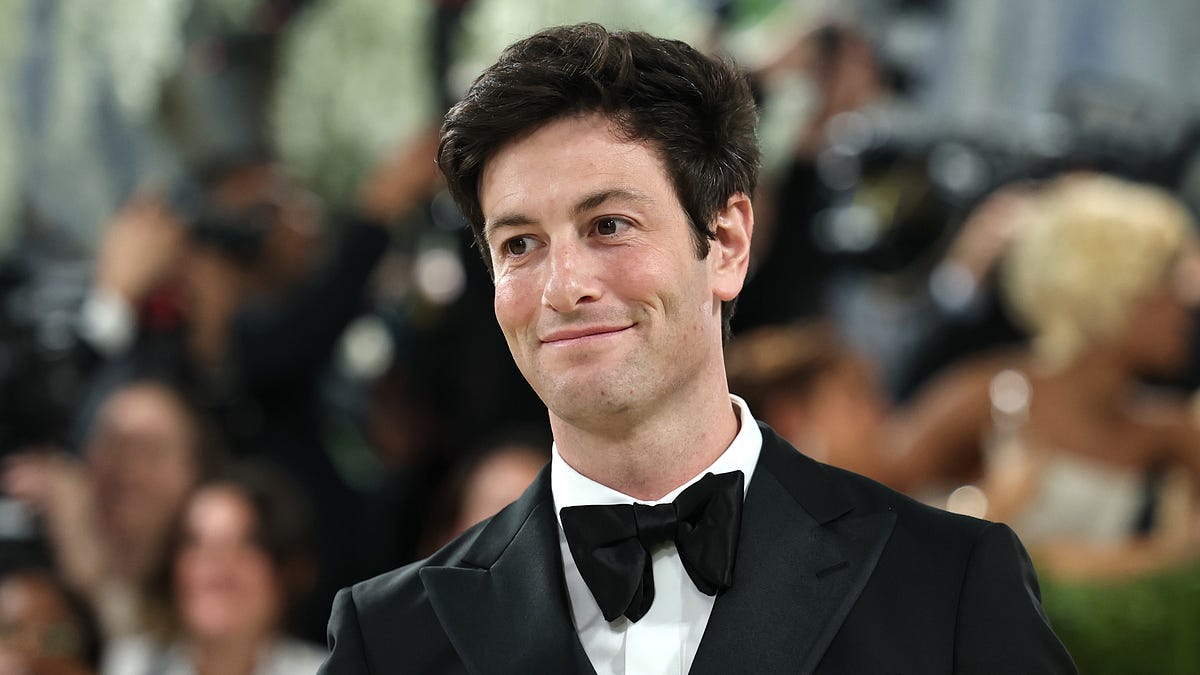
Hard Work, OpenAI & Trump Ties Paying Off for Josh Kushner #
Thrive Capital’s big moves this week exemplify how founder Joshua Kushner has steered the firm far afield of typical Silicon Valley venture capital norms. It’s been working out well so far.
Thrive is headquartered in the historic Puck Building in lower Manhattan, far from Sand Hill Road or downtown San Francisco. It has raised funds for private equity-style roll-ups and invested in an indie film studio. Kushner’s status as the brother of President Trump’s son-in-law Jared has given him proximity to an extraordinary center of power beyond the typical business sphere.
Wednesday’s announcements were both striking examples of Kushner’s increasingly expansive ambitions:
Thrive’s AI roll-up vehicle Thrive Holdings closed a
$2 billionoutside fundraise at a $12 billion valuation. Investors in the funding round included SoftBank, Altimeter Capital, and D1 Capital Partners.Founding partner Josh Kushner
told pressin a joint statement withBob Iger the two agreed to buy outMark Walter’s80% stakein the Los Angeles Lakers, partly through another vehicle, Thrive Eternal.
For years, Thrive was a bit hard to define: it was round-agnostic and trying to muscle its way in on more established Silicon Valley firms. Now it has three clear core theses. The first is closest to traditional venture, with a focus on AI and infrastructure via the main Thrive X fund, with $9 billion allocated for growth and $1 billion for early stage.
The second is a bet on AI transformation inside companies that it hopes to accelerate through Thrive Holdings. Its flagship investment in OpenAI feeds into this: OpenAI owns a stake in Thrive Holdings, and OpenAI employees can take on roles that sound awfully similar to forward-deployed-engineers at the companies Thrive aims roll up and empower with AI tools.
The third is a play that live events and cultural institutions will become a scarce and increasingly valuable commodity, the thesis behind Thrive Eternal. While the fund stumbled in its efforts to buy into the World Cup after a ferocious global backlash, a piece of the Lakers will be a good salve for that wound. (NBA rules limit investment funds to 20% ownership and Kushner and Iger will make large personal investments.)
Thrive Eternal already has a small stake in the San Francisco Giants, and Thrive Capital’s main fund invested in indie film studio A24 back in 2024.
In an investor letter Thrive sent out earlier this week, and obtained by * Bloomberg*, Kushner essentially laid out the multi-pronged thesis. He nodded at plans to invest more often in public companies, explaining that “the more precise our understanding of public markets, the better our judgment will be in private markets.”
The letter also disclosed the returns of the main funds, which included a 2022 vintage marked at 10.5 times gross — one of the better numbers in venture this decade. The letter also quietly showed that the last Thrive fund to return meaningful cash to its investors was raised in 2016. Everything since is paper markups as they wait on returns from OpenAI, Stripe, and Anduril, and on a SpaceX position that has fallen substantially since the letter’s June 30 cutoff and remains partly locked up.
Sources we spoke with give Kushner a lot of credit for the firm’s success, citing a relentless work ethic and drive to succeed. When Thrive’s main bet was on Oscar Health Insurance he was regularly grinding it out attending health conferences. As the fund has grown, he’s surrounded himself with an aggressive group of young partners and encouraged spirited debate about strategy.
*Newcomer *reported back in February Thrive had returned $4.3 billion back to LPs as of June 30, 2025. If the OpenAI IPO goes through even on a delayed schedule next year, Kushner will likely generate billions for his LPs.
Those results have bought Thrive the ability to keep growing. Yet rather than going all-in as a venture megafund, Kushner is using the firm’s relationships and access to capital to push into businesses that haven’t traditionally been a target for VC investors.
In that sense, Thrive may be less a venture firm that has wandered outside its lane than a firm trying to erase the lane altogether.
Cerebral Valley Show
The Most Bullish Man in AI Just Blew Up His Fund #
Ethics Alert
Prediction Markets Are a Bad Bet #
Silicon Valley’s era-defining technologies often sit on a razor’s edge between utopian and dystopian.
The sharing economy promised communal exchange at the tap of a smart phone — or risking it all by jumping in a stranger’s car, or trusting others to deliver. (It largely ended up being more banal: convenient, smartphone-enhanced regulatory arbitrage.)
AI is giving everyone a genius at their fingertips — or creating a super-intelligence that will put us out of jobs and maybe destroy the world.
Juul was a way for cigarette addicts to get off the hard stuff and do something safer — until it became clear it was instead another gateway to addiction, creating a generation of young vape fiends.
Similarly, prediction markets seemed to promise opportunity and insight, a new way to see into the future thanks to the genius of the crowd. But quickly the reality has set in: Kalshi and Polymarket, which dominate the industry, are primarily places to gamble on sports. Some 80 percent of the trading volume on market leader Kalshi is sports betting.
On top of that, a host of deeply problematic issues have arisen around wagering on events where motivated people can potentially game the results.
As these companies raise more and more money — just this week, Kalshi was reported to be raising at a $40 billion valuation and Polymarket was said to be doing the same at $20 billion — Silicon Valley has to ask itself: if this is really the world that it wants to build? At a moment when there are so many genuinely revolutionary AI companies getting marked up at lightning speed, why spend energy getting young men to waste more and more of their time and money on gambling?
There is a world in which Kalshi and Polymarket and the fleet of emerging rivals serve as truth machines for discerning the wisdom of crowds, and markets for hedging various sorts of risk.
That is not our world. The reality is that the main business of prediction markets is deregulated sports betting, essentially a workaround to state gaming laws that mostly bar wagering by anyone under 21, and ban it entirely in 11 states.
This is legal thanks to the efforts of Michael Selig, the crypto and prediction industry lawyer whom President Trump named to head the Commodity Futures Trading Commission (CFTC). Selig insists, implausibly but with the power of the government behind him, that the ability of American businesses to freely hedge their risks requires that Washington override all state regulation of sports betting. Selig this week invoked the CFTC’s emergency powers to block legal efforts by the state of New York to ban Kalshi for violating the state’s gambling laws, the latest skirmish in a nationwide fight.
It’s hard to ignore the fact that the industry enjoying such sweetheart regulatory treatment features a highly unusual arrangement where Kalshi and Polymarket, otherwise fierce rivals, both count Donald Trump Jr. as a close advisor (and in the case of Polymarket, the president’s son is also an investor through his 1789 Capital fund).
People have already taken hairdryers to thermometers to win prediction market wagers, which is funny-not-funny in the context of betting on military maneuvers, or wildfires, or flight cancellations. Insider trading of various sorts appears to be rampant on the platforms, despite belated clean-up efforts.
As with crypto, prediction markets are fun sandboxes for experimenting with financial structures and trading strategies and theoretically could yield some social goods. Theoretically is the operative word here though.
It’s hard to see how the current anything-goes national regulatory regime could survive a Democratic administration, or even a non-Trump Republican one. Regardless, let’s not wait for the horror stories about broke young families or people dying for someone’s parlay. There are plenty of reasons to think twice before joining the prediction market party.
Machine Earning
Apply for a Spot at Our Machine Earning AI Summit on Sept. 29 in San Francisco #
Newcomer is hosting our first-ever Machine Earning AI Summit in San Francisco on September 29.We’re bringing together the most prominent venture-backed founders and builders in commerce and AI for a curated invite-only event.
Spots are extremely limited, so apply as soon as you can for a chance to attend.
One Big Chart
Open-Source AI Makes Gains But Still Lags Far Behind in the Enterprise #
Despite all of the chatter about open-source models in recent weeks, they still account for a very small share of enterprise AI use, though they’re growing steadily from their tiny base.