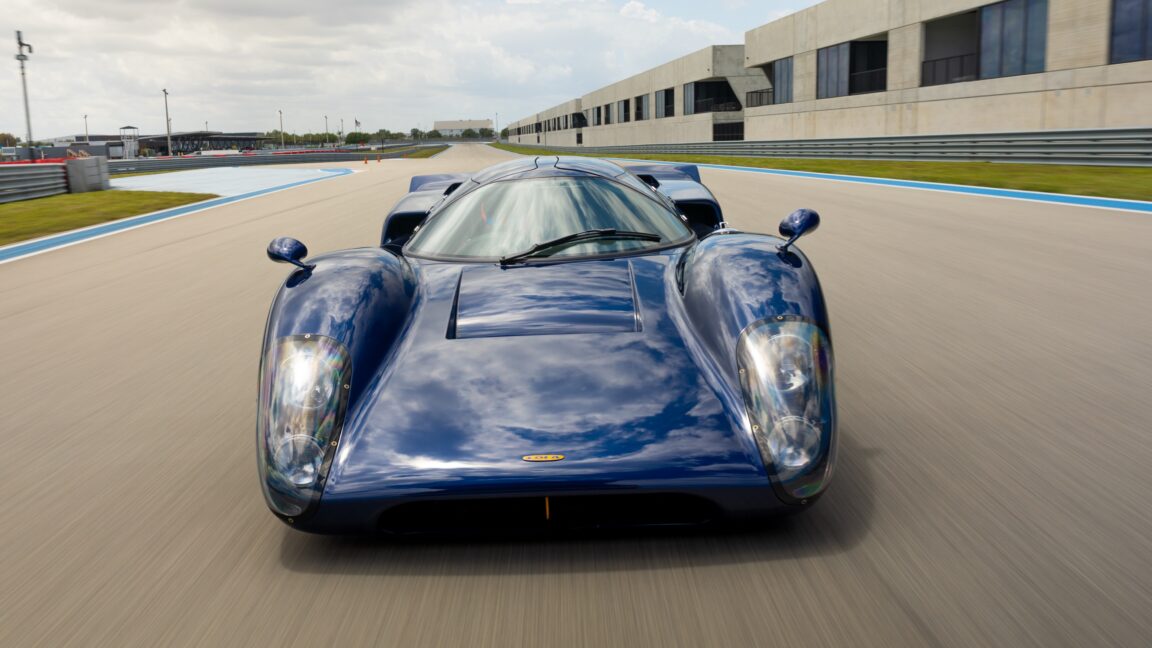
To varying degrees, each form of motorsport combines sport, entertainment, and technological development. As Ars has explored, there are valuable lessons that companies can learn from competition, particularly when the pressure is as intense as Formula 1. If you asked me last month, I would likely have said that when it comes to historic racing, it’s almost all about the sport and entertainment, with precious little tech development.
But that was before I spoke with Matt Faulks, executive innovation director at Lola Cars, about the company’s new run of T70S. The original T70 debuted in 1965, and Lola built more than 100, which in the latter half of the 1960s proved effective in short races like the Can-Am series as well as endurance events like Le Mans or Daytona. Latterly, T70S have proved popular among the historic racing crowd, and as Lola rebuilds itself after a 2022 bankruptcy, it’s joining some of the other storied manufacturers that will build you a continuation car. Lola will have 16 new cars, configured either for historic racing complete with the necessary FIA homologation papers as the T70S, or as UK road-legal version, the T70S GT.
But it’s the use of materials that makes the new T70S particularly interesting.
Take the magnesium, for example. “There’s a lot of magnesium [alloy] in that era of race car, and the way magnesium is generally processed and turned into usable parts is … pretty dirty,” said Faulks. “By the time you’ve got a part from it, it’s quite a dirty, carbon-intensive technology that uses some pretty nasty shielding gases in the casting process.”
So instead of getting magnesium that has been smelted via the Pidgeon process, Lola extracts the stuff from seawater via electrolysis, powered by solar. “What we end up with is magnesium ingots, which we can then go do whatever we want with at a massive amount less carbon cost and a massive amount less of, shall we say, general pollution cost than doing it any other way,” Faulks said.