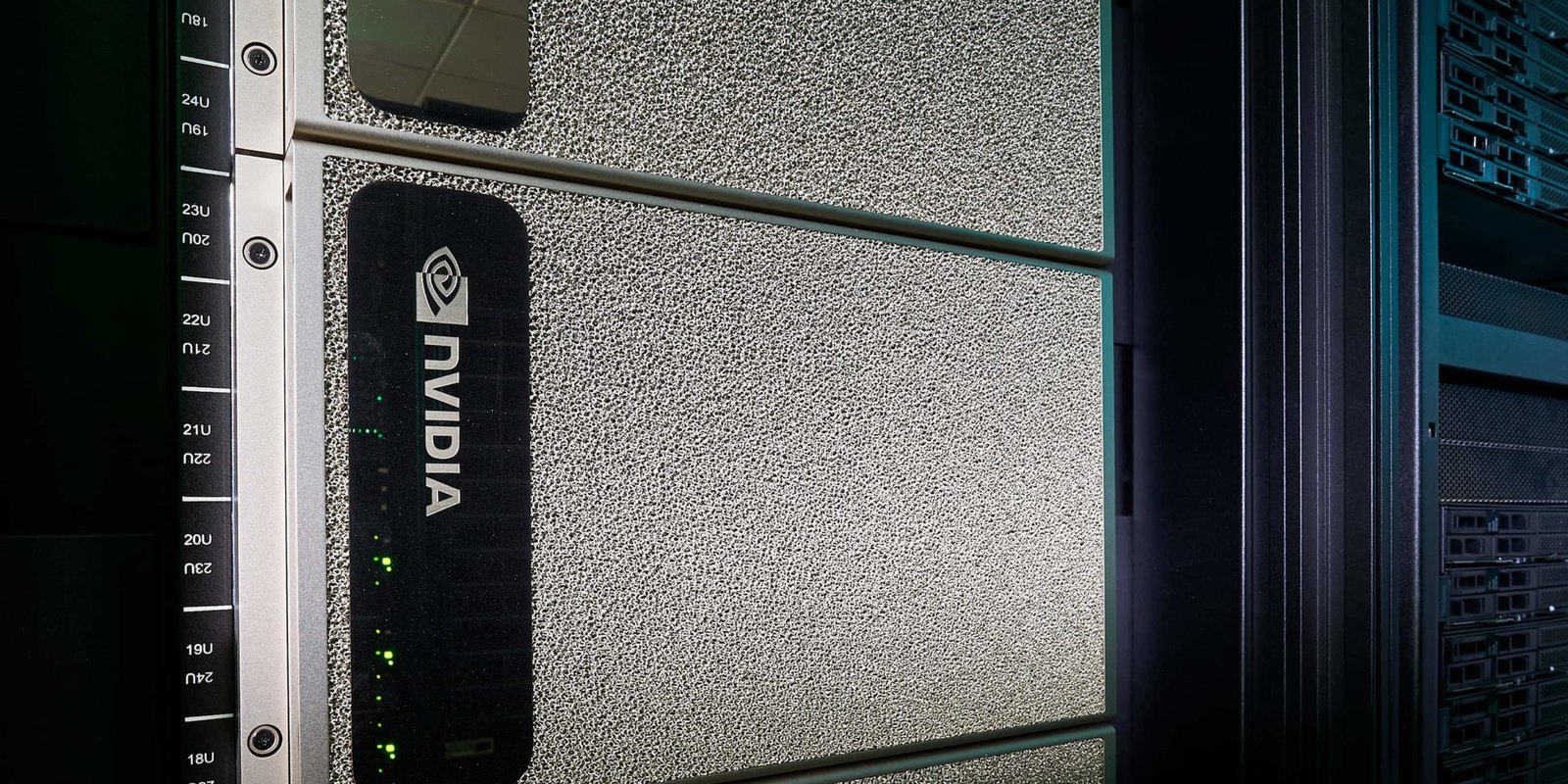
An Nvidia DGX B200 server, with eight Blackwell GPUs, in a data centre rack, photographed in September 2026 (illustrative). Image: Javils00 / Wikimedia Commons, CC0, cropped

The US has moved to shut the cloud loophole that let Chinese AI companies rent America’s most powerful chips in other countries’ data centres. A new interim final rule from the Commerce Department requires a licence to ship advanced AI chips to any data centre, anywhere, that would sell large amounts of computing power to Chinese firms.
What the rule stops #
China already can’t buy Nvidia’s top data centre chips without a US licence, but its labs could rent them from cloud companies in third countries. The rule, written at the direction of the Treasury and the National Security Council, is meant to ensure that restrictions “cannot be circumvented through remote computing arrangements involving data centers in third countries”, the Bureau of Industry and Security (BIS) said.
It covers any data centre that gives more than 12 million “aggregate TPP” of computing power to a company headquartered in China, Macau or another “Country Group D:5” country, or whose ultimate parent is. TPP is the US measure of chip power; by MadRobot’s reckoning from the rule’s formula and Nvidia’s published figures, that is roughly 750 H100s or about 330 Blackwell B200s. It counts across “linked data centers”, including ones joined only digitally, so capacity can’t be split between sites.
Go-betweens are caught too: a licence is needed if a data centre knows a customer outside China is training or supplying models for a Chinese company. Data centres must check customers for direct or indirect Chinese ownership, which BIS says will stop firms dodging the rule “through corporate restructurings or spinoffs”. Those already selling that much compute to Chinese-owned firms have 90 days from the rule taking effect to get a licence or face further export restrictions.
The one carve-out is compute used only for “commercial recommender systems”, the kind online shops and social networks use to rank products and posts. Anything that generates text, images, audio, video or code doesn’t count.
Five countries now need a licence #
Exporters will also need a licence to send advanced AI chips and servers, from Nvidia’s H100 upwards, to Indonesia, Malaysia, Singapore, Thailand and Brazil, which the rule says carry a “higher-than-normal risk of diversion”. The Commerce Secretary can add more. Norway and South Africa, named in some reports ahead of the release, are not on the list.
Customers headquartered in the US, or owned by a US parent, are exempt if the exporter reports each deal to BIS, listing every party, its ultimate parent and the chips’ model, quantity and power. That lets American cloud giants keep building in Southeast Asia while other buyers face case-by-case review. Countries that “tolerate evasion” could face import restrictions, tighter chip rules or a downgrade in their US export status.
Singapore makes the list the same weekend it signed the US-led Pax Silica declaration on securing AI supply chains.
Biden’s AI Diffusion Rule is formally gone #
The rule also formally rescinds the Biden administration’s January 2025 AI Diffusion Rule, which sorted the world into three tiers for chip access. BIS said in May 2025 it would scrap it, and the text notes it “has never been enforced”. Out go the tiers, the controls on AI model weights and the data centre “validated end user” scheme. Chip foundries and packagers also face tighter checks when making advanced chips for designers based in China or the five new countries.
The rule takes effect when it appears in the Federal Register, which hasn’t happened yet, with comments due 60 days later. It says “super intelligence” rather than AI throughout, under Trump’s September executive order.
A crackdown in the middle of the Nvidia scandal #
US officials have been investigating Megaspeed, a Singapore cloud company, over Nvidia chips reaching China, and the scandal over Jensen Huang’s ties to its former chief executive ended with his resignation as Nvidia’s boss last week. A forensic report days later said six of China’s newest open models carry the fingerprints of Blackwell chips that can’t legally be sold there.
The House passed the Remote Access Security Act in January to give Commerce explicit power over remote access, but it has not become law. Beijing has been tightening its own AI export controls too.
The timing is pointed: Trump is preparing to meet Xi Jinping at the APEC summit in Shenzhen, where chips are expected to be discussed, and the White House is set to name Nvidia one of its AI “national champions”. Nvidia hasn’t commented publicly on the rule.
Why it matters #
Renting compute abroad has been the easiest legal way for Chinese labs to train on US chips, and this rule makes every data centre in the world answer for who its customers really are. How hard it bites depends on how well BIS can police cloud contracts, and on whether the Southeast Asian hubs it singles out cooperate.
Sources: BIS interim final rule, RIN 0694-AK50, BIS press release, House Select Committee on the CCP