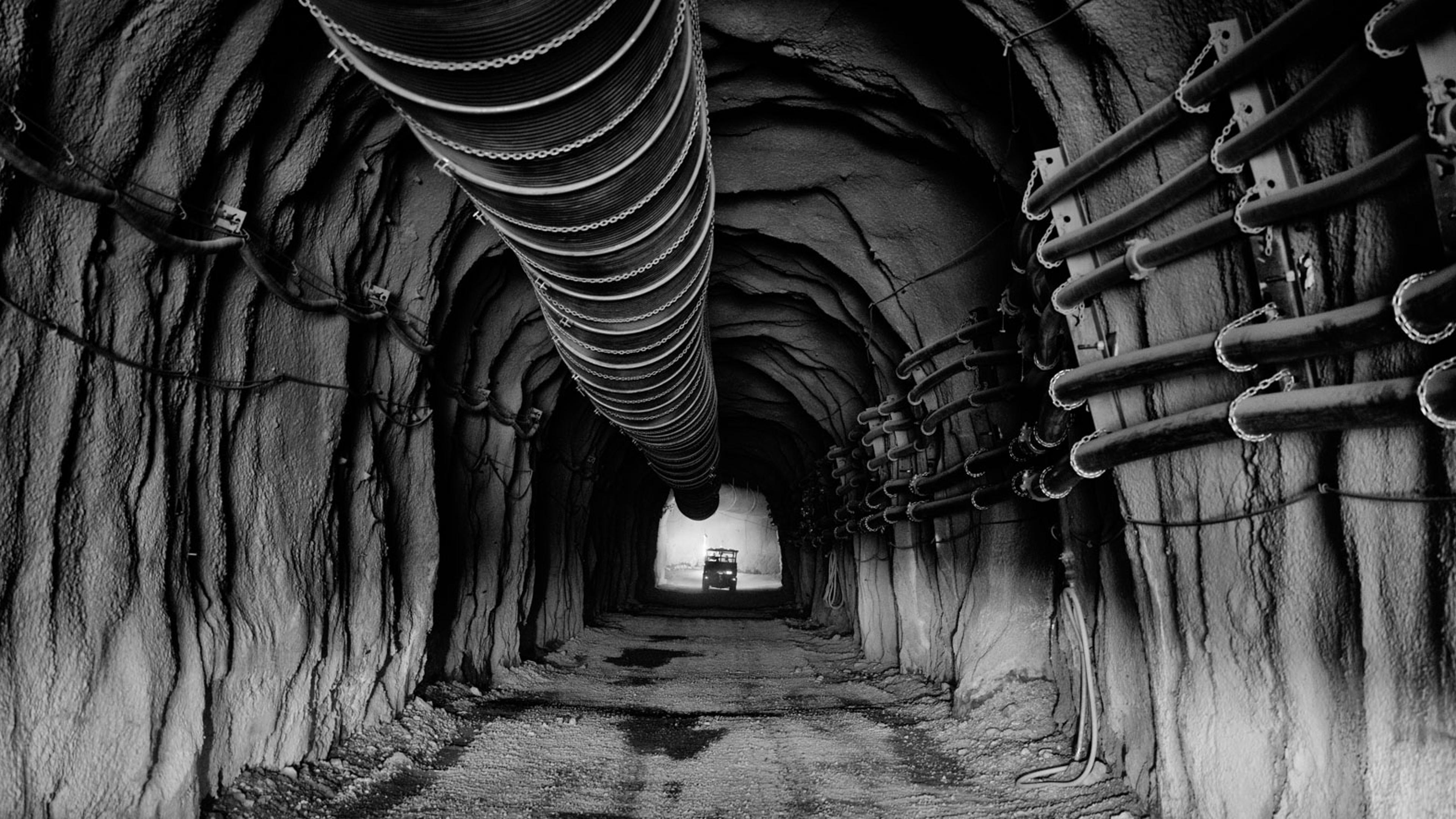
More expansive than the island of Manhattan, Thacker Pass in northern Nevada is the biggest U.S. lithium-mining project developed in decades. And it’s been one of the country’s most visible flash points in the race to build new critical-mineral mines. While at first spurred by the clean-energy transition, the demand for critical minerals is now driven by their role as essential ingredients for AI data centers.
But local communities aren’t so sure. In northern Nevada, the Fort McDermitt Paiute and Shoshone Tribe has protested Thacker Pass, saying it would destroy sacred Indigenous sites, while climate advocates have tried to thread the needle between its potential to produce lithium, a key component of some rechargeable-battery technology needed to manufacture electric vehicles, and mining’s risks to the local environment. Today, Thacker Pass is grinding ahead alongside dozens of other projects in the U.S. facing similar concerns.
Much of the world’s critical-mineral supply chain currently runs through China, leaving the U.S. vulnerable to geopolitical wrangling. The success of the ongoing American mining renaissance will shape whether the U.S. and other allies can insulate themselves from such challenges—not to mention power the transition to renewable energy. “It is the most important emerging energy-security question,” says Fatih Birol, the executive director of the International Energy Agency.
Across political parties and ideological camps, policymakers agree the U.S. must bring some mining and processing capacity home. But many environmentalists and local communities remain concerned about how it’s happening, with 40 mining projects listed as part of a federal fast-track program and projects moving quickly. Today’s rapid development, captured in these up-close images of the new mining boom, will set new precedents for what companies must do—or could get away with—when they want to build megamines. There are no easy answers.
Carmen Lucas is a 90-year-old from the Kwaaymii tribe in California and has been fighting mining developments for over two decades. Her list of grievances is long. Development creates local pollution that harms children’s health and can damage the cultural heritage of Indigenous sites. More than anything, she criticizes developers for treating the land as if it’s empty. “Washington is looking at the Imperial Valley and saying that’s just a desert, that’s just wasteland,” she says. Today, she is championing opposition to a project to tap into a lithium reserve beneath the southern end of California’s Salton Sea, where reserves are worth more than $500 billion. “It has been mandated by the United States government and the state of California to annihilate the California Indians since the Gold Rush,” she says. “And I’m still watching it today.”
Lucas and the Kwaaymii tribe are far from alone. Globally, more than half of the minerals needed for the energy transition are on or near the land of Indigenous or other land-connected peoples, according to research published in the journal *Nature Sustainability. *Historically, these communities have been displaced, or suffered from polluted air and water as a result—even long after the mines close. At the former site of the Tar Creek mine in Oklahoma, which stopped operating in the 1970s, for example, generations have suffered from the mining remnants that have seeped into the soil and ground-water, leading to neurological damage and stunting development in local children.
In the U.S., community buy-in is often the biggest factor determining whether a project will receive the necessary permits. “You have to embrace social license to operate and say it’s not just a real thing, it’s as important, if not more, than the permit,” says Pat Risner, the president of mining company South32’s zinc and manganese Hermosa Project in Arizona. (Getting and maintaining social license to operate remains difficult for any mining company, given the array of community concerns.)
The context at the federal level has also changed. While the Biden Administration touted the need to boost domestic critical-mineral production, action came relatively slowly. But when Beijing countered President Trump’s massive tariffs by threatening U.S. supplies of critical minerals, his Administration found incentive to accelerate permitting and put up federal dollars to buy into companies. Given the stakes, critical-minerals advocates want to avoid the issue becoming partisan, politics being yet another needle for minders to thread. To many of the people on the front lines, though, none of this matters too much. They just want to ensure that this mining revival doesn’t harm their communities.
Humboldt County, Northern Nevada
An 18,000-acre project site with billions of dollars of lithium underground, Thacker Pass is the flagship U.S. lithium project. With bipartisan federal support, it broke ground in 2023 after clearing a range of permitting hurdles. And yet a bitter taste remains for some community members who say that Thacker Pass will damage historic sites sacred to the Paiute, Shoshone, and Washoe tribes. Others have spoken out in support thanks to the promise of economic development beyond the 1,000 people who work on the site. The project, a priority for the Trump Administration, has also received attention for its unique financing structure. The Department of Energy took a 5% equity stake in both the project and the company developing it.
Southwestern South Dakota
Demand for gold has skyrocketed thanks to geopolitical tensions and supply-chain disruptions. The mines in the Black Hills area of South Dakota, which date back to the 19th century, are now seeing a modern-day gold rush. Even as gold production has dwindled, revenues have soared thanks to higher prices driven by gold’s role as a safe-haven asset as well as its role in advanced electronics and aerospace. Mining companies want to produce more.
But the mining revival extends beyond gold. The Dewey Burdock Uranium Project, also in Black Hills, is being fast-tracked by the federal government to serve the growing demand for nuclear power. Tribes are fighting back mine by mine, citing everything from threats to sacred land to water contamination. Indeed, the nearby history carries warnings. Past uranium mining contaminated local water systems.
Imperial Valley, California
The Hell’s Kitchen megaproject on the shore of California’s Salton Sea is a $1.8 billion bet on a massive, first-of-its-kind geothermal power and lithium-extraction facility. Developers aim to start up the facility’s new geothermal power production first, with lithium mining to follow. While the county and Controlled Thermal Resources, the mine’s owner, last year defeated a lawsuit that attempted to halt operations there, community opposition remains strong and opponents are appealing. The project sits in a low-income, heavily Latino, environmentally over-burdened valley with some of the worst air quality in the country. Tensions are also rife over the mine’s water consumption and the terms of its community-benefit agreement. Meanwhile, as demand for lithium for EV batteries has softened, the company has emphasized that both its geothermal energy and minerals can serve the AI-driven data-center boom.
Patagonia, Arizona
South32 Hermosa is emerging as the next big case study for the future of U.S. mining. The $2 billion zinc and manganese project was the first mining project to receive expedited federal permitting under a streamlined process earlier this year. Unlike most mining mega-projects, which require huge open pits, the Hermosa project is underground, minimizing the visible footprint. “We will mine for up to 70 years at this site, and only disturb 750 acres in total,” says Pat Risner, the project’s president.
Still, many community tensions remain unresolved. The project sits in a biodiversity hot spot, home to jaguars and Mexican spotted owls, and locals are concerned that mining operations may pollute the groundwater they rely on for household use. Negotiations over a community-benefits agreement remain ongoing.
Valley County, Idaho
In central Idaho, developers are bringing an abandoned World War II–era mining district back to life to produce gold and antimony, a mineral used to harden other metals and as a fire retardant. U.S. government officials say the mine is the only one in the U.S. capable of producing enough antimony to meet growing defense needs, for everything from ammunition to infrared sensors. Critics point to company documents showing the site contains only enough to supply the U.S. for two years. Indeed, the vast majority of the project’s revenue will come from gold. After a nine-year process, it received its final permit in May 2025 and broke ground in October. But lawsuits remain ongoing. The Nez Perce Tribe opposes the project in its entirety, saying the permitting decision violates treaty rights and environmental law. And new mining threatens to upend millions spent by the tribe on restoring the local salmon population harmed by mining decades ago. Conservation groups are suing too, because of potential harm to local wildlife. Developers contend that their work will actually remediate the area, since the site was left abandoned in poor condition.
— With reporting by Kaya Lee Berne
The writing in this story is supported by a partnership with Outrider Foundation and Journalism Funding Partners. TIME is solely responsible for the content.