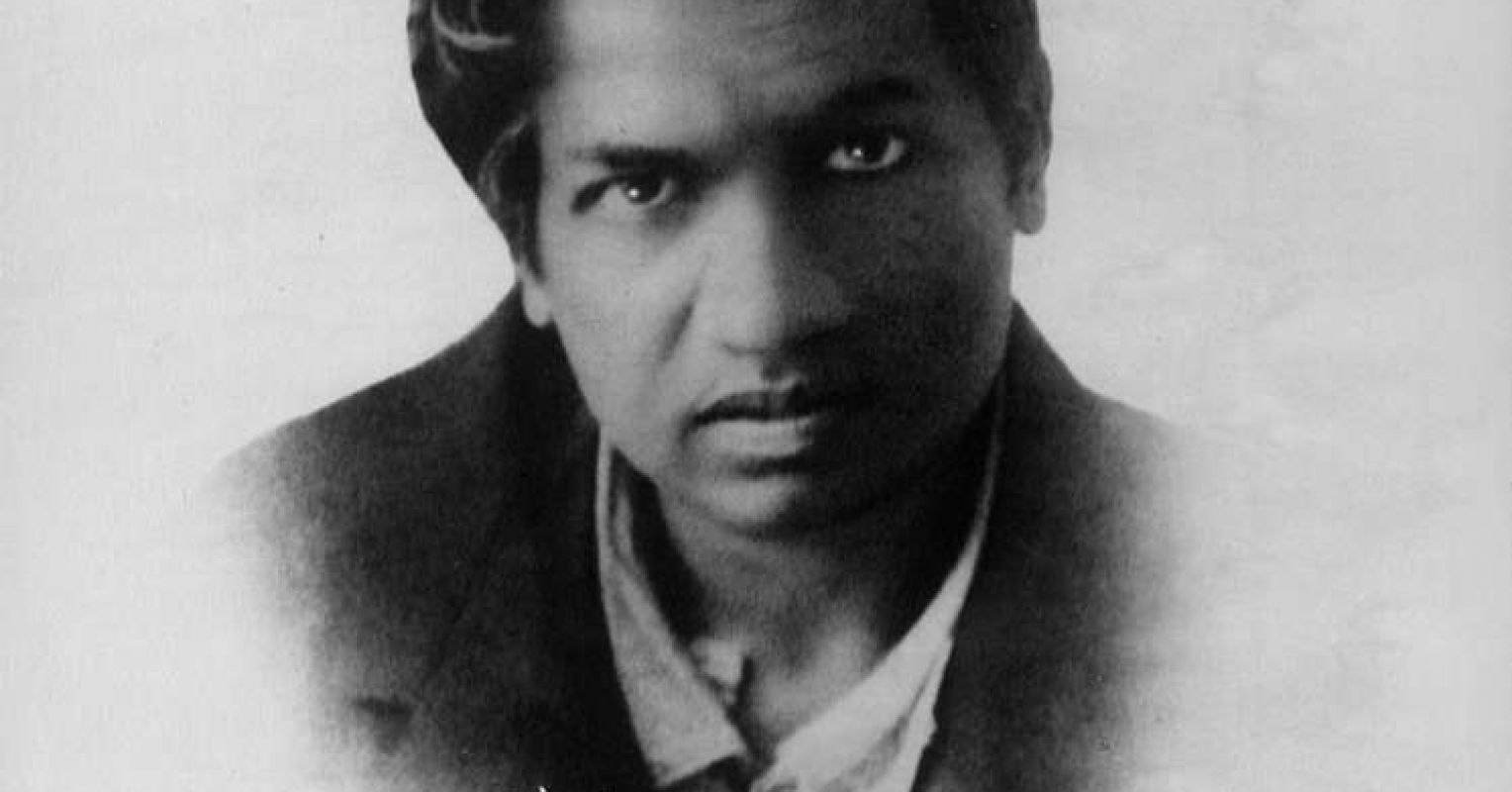
Did the world's most intuitive mathematical mind think like AI? #
Posted August 10, 2026 [ Reviewed by Devon Frye
](https://www.psychologytoday.com/us/docs/editorial-process)
Key points
- An answer no longer tells you who did the thinking behind it.
- Struggle isn't wasted effort; it's what turns information into understanding, and AI lets you skip it.
- We used to test understanding by pushing back, but now the pushing back can be outsourced too.
In 1913, a mathematician in Cambridge opened a letter from a stranger in Madras. It was full of results, pages of them, with almost no explanation attached.
Some looked like the work of a crank. Some looked impossible. G.H. Hardy, a very serious mathematician of his generation, later said the letter contained results that "must be true, because if they were not true, no one would have had the imagination to invent them."
The stranger was Srinivasa Ramanujan. He was an obscure clerk with almost no formal training. He would go on to become one of the most naturally gifted mathematicians who ever lived. He even inspired a book and movie called The Man Who Knew Infinity.
But the strangest thing about him wasn't that he was brilliant. It's that he so often seemed to arrive at the answer before he could explain how he got there. The proof came second, if it came at all.
What really strikes me is that this sequence, answer first and explanation later, is exactly what happens every time we use a large language model.
A Book That Wouldn't Explain Itself #
Here's the part of Ramanujan's story that complicates things.
At 16, he got hold of an old book, a cram manual for the Cambridge entrance exams by G. S. Carr called A Synopsis of Elementary Results in Pure and Applied Mathematics. It contained about five thousand theorems, with often little than the final mathematical proof itself. It handed him thousands of destinations but few roads to get there. So he built the roads himself, then kept going long after the book had nothing left to teach him.
Carr eventually ran out. When Ramanujan reached the last theorem, the book had nothing more to give him, and he was on his own.
AI doesn't run out.
What the Gap Cost Him #
Here's what I think is the critical observation. Closing the distance between Carr's bare theorems and real understanding cost Ramanujan something. It took a tremendous toll on him.
It cost him a scholarship. He won a spot at a college in Kumbakonam in 1904 on the strength of his math alone. Then he lost it a year later because he refused to study anything else. He failed English. He spent years poor and half-fed, chasing results that sometimes led on a chase without a destination. That struggle is what may have built the structure underneath his later genius.
When AI is trained, it's guided by something called a loss function, a number that measures how wrong its guess was, which gets adjusted down and down until the system performs well. So the machine has a loss, in a technical sense of the word. It just doesn't have a loss in any sense that costs it anything. Nothing in the system suffers for the wrong turn. Nothing in it remembers being poor.
Ramanujan's wasted years living through this loss and it changed him. A model's loss is just a number that gets corrected. They're two different things that happen to share a word.
The Test That Used to Work #
Picture Ramanujan writing an equation on a blackboard. I walk in and copy it right underneath his, letter for letter. From across the room, the two lines look identical. But he knows why and how the equation works. He knows what happens if you push on one of its assumptions, and where it would break. I know none of that—no real knowledge, just chalk marks.
We used to have a simple way to expose this gap. You'd simply ask another question about the equation. Push on an assumption, ask for the proof or even a bit of an explanation. The person who only had the answer would be lost in the dust.
That test doesn't work anymore, and this is the part of the argument that I find concerning. Because now, when you push, the AI can push back with you. Ask for the proof and it produces one. Change the assumption and the whole argument reforms around the new one. The very thing that used to expose the gap can now be manufactured on demand.
Which means the only way left to see what a person actually understands is to take the machine out of the room entirely. The closed-book exam, the resident quizzed at 2 a.m. with no time to look anything up, used to feel like artificial situations, stand-ins for real intellectual life. My contention is that it's flipped. Ordinary life is the artificial condition now, propped up by a tool that's always in reach. The sequestered room (and mind) might be the only place left where you can actually see a mind at work.
Artificial IntelligenceEssential Reads
What the Answer Doesn't Show You #
Let's look at this in another way. Two objects can cast the exact same shadow on a wall and be almost nothing alike. A basketball and a dinner plate throw the same round shadow if the light hits them right. You'd be convinced, looking only at the wall, that they were the same thing.
An answer is a shadow. Ramanujan's equation on the blackboard and my copy underneath it throw the identical shape. But behind mine there's nothing. Behind his there's a decade of a young man going hungry to understand why the thing was true.
That's the part AI has quietly taken away from us. It's our ability to look at the shadow and infer the shape of the object behind it. For centuries, a good answer was reasonably solid evidence of a good mind. That's no longer safe to assume, and I don't think we've caught up to what that means yet, from teaching to trusting.
The question was never really whether the machine can think. It's what's left standing behind the shadow, once the answer arrives first.