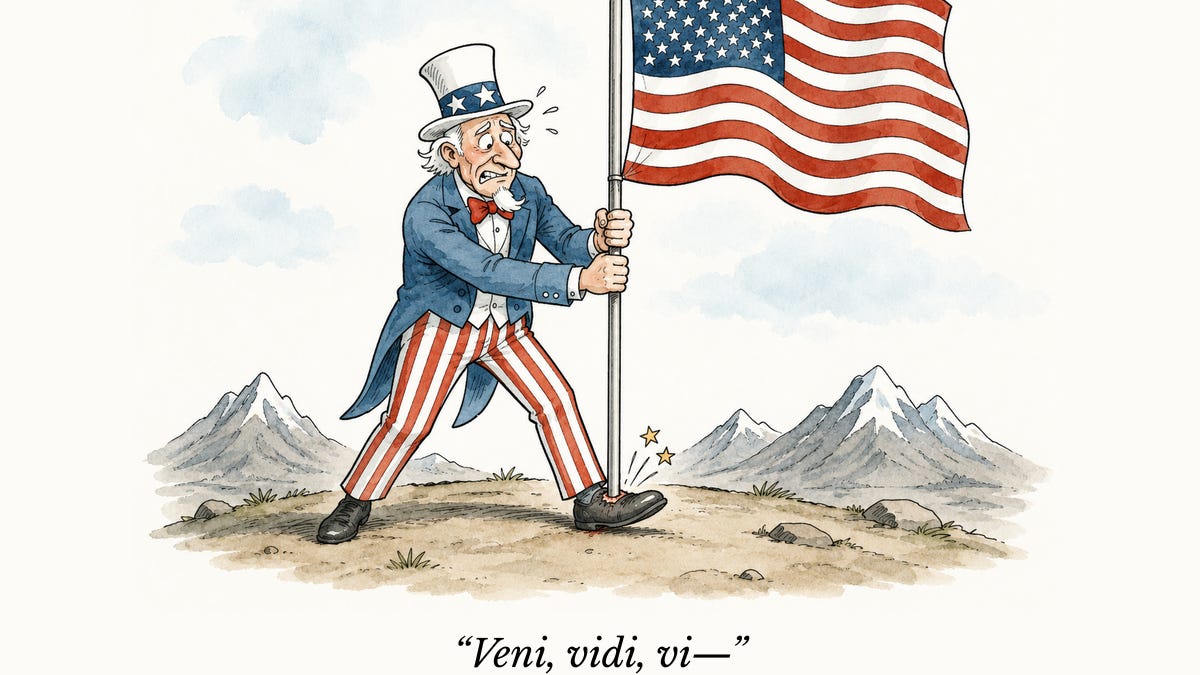
OpenAI announced GPT-5.6 but a terrible thing has happened
Hey, Alberto here! 👋 Each week, I publish long-form AI analysis covering culture, philosophy, and business. Paid subscribers get Monday how-to guides and Friday news commentary. If you’d like to become a paid subscriber, here’s a button for that:
My take on the news that the US government is now controlling the AI industry.
GPT-5.6 is here. It is OpenAI’s response to Anthropic’s Fable 5 and it comes in three versions: Sol, Terra and Luna. According to OpenAI, it’s a very good model (lately, all are). With some good benchmark scores and etc.
But a terrible thing has happened, the worst augurs have come true: you won’t have it.
One day before the announcement, The Information reported that GPT-5.6 would not be launched normally. The US government had asked OpenAI to do a staggered release, starting with trusted partners inside the US. They also reported that the government would be granting access in a “consumer by consumer” basis during the preview process (we don’t know how long that will be).
That’s really bad for us commoners, especially those outside the US. Here’s what OpenAI has to say about that: We believe in broad access, and we plan to make GPT‑5.6 Sol, Terra, and Luna generally available in the coming weeks. . . . At [the government’s] request, we are starting with a limited preview for a small group of trusted partners . . . before releasing more broadly.
What this means is: today was the last normal day in the AI industry.
But instead of being so due to unfathomable capabilities or the singularity or something, it’s because AI has stepped with both feet into undemocratic terrain. I’ve been writing about this for months now, but more on that later.
For this move, the government took inspiration on Anthropic’s decision to withhold Mythos Preview back in April. First, it forced Anthropic to un-release Fable 5 two weeks ago, and now it prevents OpenAI from releasing GPT-5.6 at all. The best AI models ever built are under chains. You are all behind the frontier now. This will, in my opinion, rip apart the entire Western AI ecosystem. China is rushing ahead with Z.ai and DeepSeek and others who are closing the gap with frontier models. As for the waning American open source community, they will be held by the same standards as OpenAI and Anthropic but none of the benefits of being a government partner. Besides, open source is the invisible infrastructure of the world, meaning it’s fundamental but no one knows it’s there; people won’t use open source models. It is, by definition, a niche branch of the AI industry. And, talking about ripple effects, let’s not mention how this will affect the presumed investment bubble and the general sentiment and the demand for the tech, etc, etc.
You only do such a self-own if you are scared to death or if you don’t need the world anymore.
To you and me, both are really bad.
What happens next is unknown—although I have my suspicions, as I will say in a moment—but why this happened is, as I see it, clear as day: Anthropic got what they wanted.
Anthropic wanted safety to be put above everything and now it is above us. They take issue with how it’s being done but not with the decision in principle: “this is the worst AI will ever be,” they said, “and so the US government needs to step up.” And so they did.
To be completely honest, I’m not sure whether this is real fear or just play pretend because, strangely, both things achieve the same goal: If the US government is pretending to be scared about AI capabilities, that means they will not give us normal access for any future model because they want a monopoly. If they’re genuinely scared, that means they will not give us normal access to any future models because they don’t want AI to be democratic.
So, essentially, the same thing.
You see, the singularity is finally here, just not the kind most were expecting.
Now let’s see the receipts because I’ve already laid out how (I think) things will work out and why this is happening in the first place.
Below are some excerpts from *Kayfable,* a recent essay where I explored the situation between Anthropic and the US government and the repercussions on the industry. I think these paragraphs shed light on what happened and on what promises to be a dark road ahead:
You have to understand that Anthropic’s ultimate goal is not to build AGI, but to
ownit. To control it. They don’t trust you or me with it, and never have. Their safety stance has never been an “AI is unsafe” stance, but an “AI is unsafe in your unsafe hands” stance.
OpenAI’s current stance—because they know it’s good PR to be seen as opposing Anthropic—is that broad access for humanity is “good, actually,” but Sam Altman has previously spoken in favor of a “Manhattan Project for AI,” which makes AI, by definition, not the kind of technology you have access to from the device in your pocket. From the New York Times, in March 2023:
Later, as Mr. Altman sipped a sweet wine in lieu of dessert, he compared his company to the Manhattan Project. As if he were chatting about tomorrow’s weather forecast, he said the U.S. effort to build an atomic bomb during the Second World War had been a “project on the scale of OpenAI — the level of ambition we aspire to.” He believed A.G.I. would bring the world prosperity and wealth like no one had ever seen. He also worried that the technologies his company was building could cause serious harm — spreading disinformation, undercutting the job market. Or even destroying the world as we know it.
From the New Yorker, in April 2026: Over the years, Altman has continued to compare the quest for A.G.I. to the Manhattan Project. Like J. Robert Oppenheimer, who used impassioned appeals about saving the world from the Nazis to persuade physicists to uproot their lives and move to Los Alamos, Altman leverages fears about the geopolitical stakes of his technology. Depending on the audience, Altman has used this analogy to encourage either acceleration or caution. In a meeting with U.S. intelligence officials in the summer of 2017, he claimed that China had launched an “A.G.I. Manhattan Project,” and that OpenAI needed billions of dollars of government funding to keep pace.
Now, let’s do Dario Amodei, Anthropic CEO, who has been perhaps more blunt about this, or, you could say, more candid. From The Atlantic, in March 2026:
Amodei seems to think of today’s AI researchers as comparable to Manhattan Project scientists, and has been known to recommend The Making of the Atomic Bomb. In his telling, superhuman AI could be even more dangerous than nuclear weapons, which is why AI needs to be developed the right way, by the right people, so that it doesn’t overpower humanity or tip the global balance of power toward autocracies.
From Amodei’s own essay, * Policy on the AI Exponential*, in June 2026: It has become a common instinct, perhaps developed from recent experience with the internet and telecommunications, to regard new technologies geopolitically as instruments of trade policy, with the aim being to “diffuse our technology stack around the world”. But it is my very strong belief that AI is something much more profound, something that resets the whole game board and around which all future geopolitical strategy must be shaped—like nuclear weapons, but potentially even more so.
Where do you think the U.S.-China Economic and Security Review Commission got the idea to suggest—in 2024!—that “Congress establish and fund a Manhattan Project-like program dedicated to racing to and acquiring an Artificial General Intelligence (AGI) capability.” Where do you think the government got the idea for the Genesis Mission? What do you think the Genesis Mission is? “In this pivotal moment, the challenges we face require a historic national effort, comparable in urgency and ambition to the Manhattan Project. . .”
So, all in all, Anthropic and OpenAI—Amodei and Altman—are not distinct when it comes to comparing AI to nuclear weapons and the industry as a whole to the Manhattan Project. The main difference is whether they prioritize coherence vs. taking care of appearances.
Moving on to more excerpts from Kayfable:
Anthropic is a deeply undemocratic company in the sense that it has never been their plan to give us access to this technology; to them, the distribution of AI products is an unwanted by-product of, on the one hand, needing both our money and our data, and, on the other hand, of the damned AI race sparked by ChatGPT in 2022. They never wanted any of this. Pausing or slowing down AI has never been about R&D but about deployment. The tech is fine, it’s just not so fine if you have it. Amodei distrusts Xi Jinping so much . . . precisely because his company is the one that most closely resembles China.
What is happening with Fable 5 and GPT-5.6 is an effective slowdown on the race—as Anthropic explicitly wanted—but of the risky kind—which they explicitly did not want—because only top US models are held back and because there’s no regulation in place and because the process is opaque and ad-hoc. And because China is certainly so happy about this, and wondering how America can screw up every damn time.
And yet, the industry is one day closer to becoming a de facto national intelligence agency. You will probably retain access to models up to Opus 4.X and GPT-5.X but will see about beyond that. More:
[Anthropic is] working against the clock . . . to 1) convince the world that their principles are the principles to be had, and 2) ensure that if we won’t have them, then they’ll be imposed on us. How do they plan to do that? By “tricking” the US government to prioritize the safety story, which is the control story, which is, as I’m telling you, the
AI as an undemocratic technologystory.
This is very important: Anthropic surpassed OpenAI in revenue and capabilities to have sway to force a stop on them through the US government. Anthropic basically said, “This is too dangerous and you need to agree. And if you don’t agree, then you will agree anyway.”
. . . as long as the industry remains commercial, [Anthropic is] trapped in a race they’ve already won. But if at some point the US government transforms the industry into a national AI initiative
[akin to the Manhattan Project], then Anthropic will let go of the facade. They won’t need us—consumers and enterprises alike—even for appearances. Our data is theirs. Our money, inconsequential. As soon as that happens—and I contend that it will happen soon-ish—Anthropic will immediately cut off its [frontier] technology from the world. It won’t be available even in closed form. “It’s not a toy,” they will say, “and you’re just a bunch of kids.”
To the people thinking this is bad for the companies’ pockets: yes, and? No one has more money than the government. No one needs less money than the government. This is the first step of a full-blown integration. What did you think getting closer to AGI meant really? And again, I gave you the answer.
What did you think getting closer to AGI meant? Vibes? Papers? Essays? Models accessible to all? Did you really think they’d give a superhuman-level AI to
everyone? The most important technology humanity has ever invented, in your commoners’ hands? A “country of geniuses in a datacenter” in your backyard? Please, don’t be naive.
As you can see, things are playing out pretty much according to plan. I think this took OpenAI genuinely by surprise but the ultimate state of things—a Project Manhattan for AI—is the preferred scenario for them, too. If OpenAI doesn’t like this, it’s because they seem to be slightly behind Anthropic in revenue and its popularity trend points downward. GPT-5.6 could’ve been the turn of the tides for OpenAI but it will be for China instead.
And finally:
If you think this is still just marketing, you have understood nothing, and your lack of imagination baffles me more than Anthropic’s behavior of late. There’s no need for marketing when you believe to be sailing toward the end of time. What you need is to be at the helm. Or, failing that, convince those who are to take your preferred course. No amount of shameless kayfableis too much to ensure the world steers itself your way.
Welcome to the new AI industry.