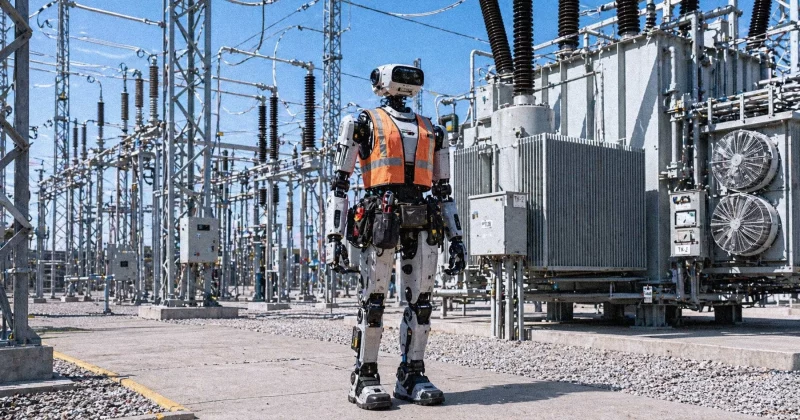
The stablecoin giant's AI division claims its lightweight model leads industry benchmarks for on-device smartphone applications
Tether Data, the technology arm of the company best known for issuing the world’s largest stablecoin, just dropped an open-source AI model designed to run on your phone. VisionPsy-Nano, a vision-language model packing roughly 460 million parameters, was released on July 29 as part of Tether’s QVAC AI research initiative.
The company claims the model leads industry benchmarks for consumer smartphone AI.
From stablecoins to neural networks #
Since March 2024, Tether Data has been building toward a future where AI models run locally on user devices rather than bouncing queries off massive cloud servers. The logic is straightforward: local execution means better privacy, lower latency, and no dependence on centralized infrastructure.
VisionPsy-Nano is a “vision-language model,” which means it processes both images and text. At 460 million parameters, it’s deliberately compact. For comparison, the largest frontier models from major AI labs run into the hundreds of billions or even trillions of parameters.
The model ships under an open-source license, meaning developers can inspect, modify, and deploy it without licensing fees.
The QVAC pipeline and synthetic data play #
The QVAC Genesis series, Tether Data’s synthetic dataset project, expanded dramatically from 41 billion tokens to 148 billion tokens between 2025 and 2026. That’s a roughly 3.6x increase in training data volume in about a year.
What this means for investors and the market #
Tether isn’t publicly traded, and USDT is a stablecoin pegged to the dollar, so there’s no direct token price to watch here.
On-device AI processing means user data never leaves the phone. For crypto projects building privacy-preserving applications, a free, open-source vision-language model that runs locally is an immediately useful building block.
Tether’s claim of leading industry benchmarks will need to survive peer review and independent testing.
For now, VisionPsy-Nano represents something concrete rather than aspirational. It’s a model developers can download, test, and deploy today. Disclosure: This article was edited by Editorial Team. For more information on how we create and review content, see our