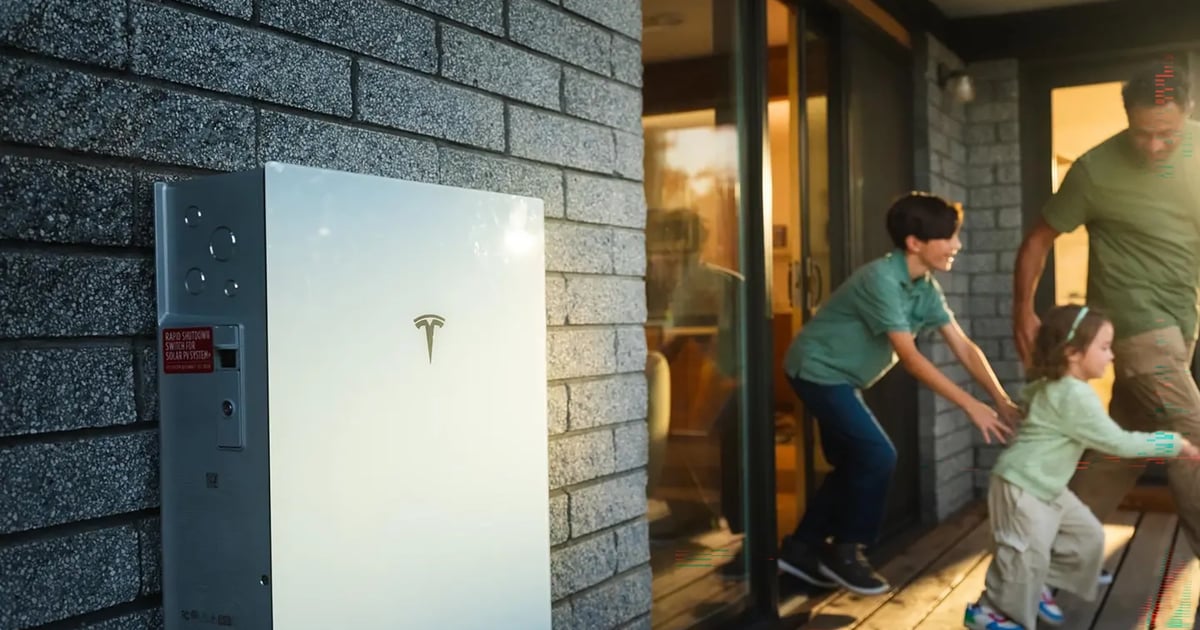
Sunrun’s Voltus deal adds residential batteries to the capacity options available to AI hyperscalers, but distributed resources cannot solve every physical grid constraint.
Sunrun will supply Voltus with capacity from residential solar-plus-storage systems in PJM and MISO under an agreement supporting Voltus’ Bring Your Own Capacity programs for AI hyperscalers, the companies said Monday.
Sunrun did not disclose the capacity involved in the agreement, the number of participating homes or the specific hyperscaler projects that will receive the capacity. The company said the resources will come from a portion of its thousands of residential storage-plus-solar systems in the two grid regions.
“Meeting growing energy demand requires us to maximize every single electron available across the country,” Sunrun CEO Mary Powell said in a statement. “In collaboration with Voltus, we are providing critical capacity from home batteries supported by funding from hyperscalers.”
Capacity Isn’t Deliverability #
Voltus launched its BYOC program to allow large loads such as hyperscalers to bring firm, flexible capacity to support the grid and facilitate data center interconnection. The program aggregates distributed resources such as batteries and smart thermostats, with participating homes and businesses receiving payments for their resources.
The distinction between capacity and physical grid capability could limit what the arrangement does for individual data centers.
“Yes, distributed resources can enable speed-to-power as long as the state and federal market rules are aligned to enable it,” said Rob Gramlich, founder and president of Grid Strategies.
Gramlich said distributed resources can in many cases provide generation supply efficiently, while data centers increasingly are being required to bring their own generation. Transmission access is treated separately in regions with independent grid operators, he said.
“The important distinction is between installed battery nameplate and accredited capacity,” said Neil Osnato, founder of Persistence Analytics Group.
Residential batteries can be aggregated into a dispatchable resource, Osnato said, but their capacity value depends on the applicable market rules and how much dependable capacity the aggregation can commit and deliver.
A BYOC portfolio could help address a large load’s resource-adequacy requirement without resolving the physical constraint preventing that load from connecting, Osnato said.
“If the purpose is purely to establish an aggregate capacity obligation at the market level, the geographic relationship may be broader,” he said. “But if someone is claiming that the VPP also relieves the infrastructure constraint preventing a specific data center from connecting, location becomes much more consequential.”
A battery located hundreds of miles from a data center could contribute to regional resource adequacy while doing little to address a local transformer, substation, transmission interface or voltage constraint serving the facility, he said.
Google Provides Precedent #
Voltus’ June agreement with Google provides a precedent for the model. Voltus said it would aggregate up to 100 MW of accredited distributed capacity annually in PJM for three years under a Google-funded virtual power plant. The resources can include batteries, smart thermostats and other flexible assets from homes and businesses.
The Sunrun agreement expands Voltus’ potential residential resource pool across PJM and MISO, but the companies did not say how much capacity will be added to Voltus’ programs.
Sunrun and Voltus also did not say whether the capacity announced Monday is already participating in PJM or MISO markets or will be newly enrolled for the hyperscaler programs.
Hyperscalers Become Buyers #
The underlying VPP model is not new. What is changing is the potential role of hyperscalers as buyers of distributed capacity.
“The newer development is hyperscalers potentially treating distributed residential flexibility as part of their capacity procurement stack rather than as an incidental utility program,” Osnato said.
The model could give large electricity users another way to secure capacity as utilities and grid operators grapple with growing data center demand. But Osnato cautioned against treating distributed resources as a replacement for grid infrastructure.
“Capacity is not deliverability,” he said.
A distributed portfolio could defer or reduce some infrastructure investments when its location and dispatch match the relevant grid constraint, he said. But it cannot by itself eliminate inadequate transmission capability, insufficient substation or transformer capacity, voltage or stability limitations or other physical interconnection requirements.
Gramlich said New Jersey recently passed legislation intended to advance arrangements in which large loads bring their own generation, and that other states are considering similar approaches.
Sunrun separately announced in June that it, Renew Home and Tesla would work to deliver more than 16 GW of flexible energy capacity to hyperscalers and utilities. That initiative is separate from the Voltus agreement announced Monday.
The companies did not disclose the amount of capacity covered by the Sunrun-Voltus agreement, the number of participating homes or the specific hyperscaler projects that will receive the capacity.