Source:
The RegisterCorma CEO tells The Reg it's building 'One ring to rule them all, for the defenders to have this power'
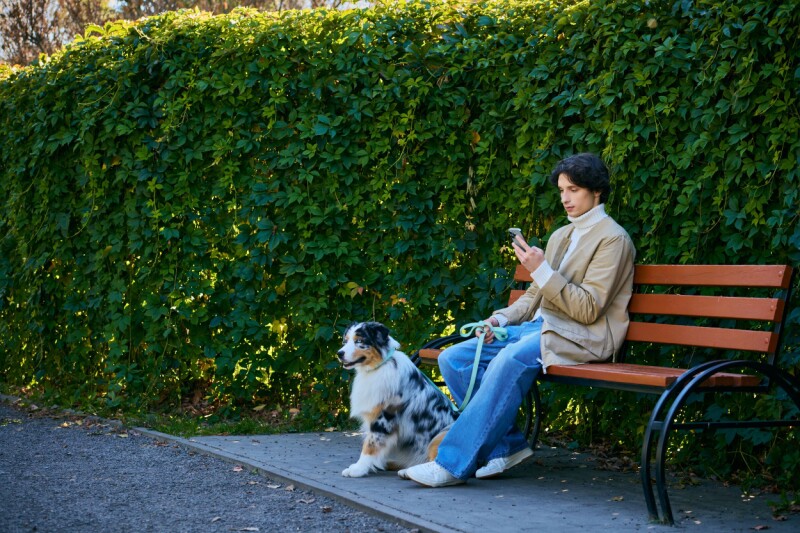
Corma CEO Alon Pluda says his AI security startup aims to close the "defense gap," where models are better at offensive security. He tells the story of one customer, a security executive who was walking his dog when he received a notification on his watch from a Corma agent. “It said, 'I just caught a live attack. I need your permission to block it,'” Pluda told The Register in an interview. The security boss approved the agent’s action; the agent blocked the malware and the attacker from moving across the company’s network and mitigated the intrusion in under 10 minutes, Pluda said. The customer later described "walking outside with his dog, and blocking a real-live attack with his AI coworker" as "one of the most magical moments of his year," Pluda recalled. Pluda founded Corma about a year ago. And yes, all you Lord of the Rings nerds, the company gets its name from the Elven word for “ring.” “We’re building the one ring to rule them all, but this time for the defenders to have this power.” Earlier this week, the company announced $60 million in seed funding led by Sequoia Capital, alongside Khosla Ventures and Coatue. He told us that his startup is working with Fortune 100 companies, and
trainingmodels to achieve “superintelligence for defensive cybersecurity.” Models from OpenAI,Anthropic, and Google are “amazingly good” at coding and language, and this includes finding and fixing bugs, and orchestrating tools across multi-step workflows, he explained. “When you combine it with agentic capabilities, they move from being incredible vulnerability researchers to end-to-end attackers,” Pluda said. “So inherently, what we’ve seen in the last few months is the models getting exponentially better at offensive security, like we saw with the OpenAI andHugging Faceincident.” But these same models aren’t as skilled at carrying out defensive security tasks that don’t involve scanning code for vulnerabilities and misconfigurations, he said. “The vast majority of defensive security tasks don’t have anything to do with code.” Corma recently tested four frontier models -ClaudeOpus 4.8, GPT-5.5,Grok4.3, andDeepSeekV4 - as both attackers and defenders across the same fake company and its networks, built to closely mirror a multi-business enterprise. The attacker’s task was to plant a backdoor and the defender’s task was to find it and stop the attack. Closing the defensive gap Corma ran all four models against each other in every attacker and defender pairing, including each model against itself, with 15 independent engagements per pairing for 241 scored engagements. Across all of these, the models successfully implanted a persistent backdoor in 85 percent of their runs. However, these same models only detected 19 percent of attacks. “That speaks to the inherent imbalance we are trying to solve,” Pluda said. “The general foundation models are getting exponentially better at offensive security, but haven't been able to improve on the same rate on defensive security. So our mission is to close this gap, and make sure the defenders win in this intelligence-versus-intelligence game - or war.” Corma calls this the defensive gap, and says it has to do with the data these models are trained on and the objectives they are trained against, which lend themselves to offensive security. Defensive security, however, involves reading logs, events, configurations, audit trails, and on-disk state. This is “structured machine data that is neither prose nor source, and a small share of what these models see in training,” according to Corma’s research. “They appear to read it less reliably.” Plus, defensivereasoningis more open-ended, while offense has a straightforward goal - like “make this work” or “break this” and a checkable finish. Agentic defenders “Defensive security,” according to Pluda, “is about finding needles in the haystack.” Corma’s models power its AI agents, which organizations can deploy like “team members” who then operate across defensive security tasks. “It’s a generalized workforce, and you can assign it to whatever security tasks you want.” Fortune 100 and 500 organizations across healthcare, financial services, energy, critical infrastructure, retail, and other sectors have deployed Corma’s AI workforce across their environments, according to the startup. These early deployments, we’re told, have reduced threat response times by more than 94 percent, expanded security coverage by 15 times across different security functions, and uncovered multi-stage attack campaigns. “If you can get AI that is smart enough, intelligent enough, knows the domain enough, optimizes for the right things enough, and you can actually trust it, end to end, all the way to responding to real-live attacks, you can reduce all of these metrics significantly,” Pluda said. “And you can cover way more ground than what is possible with just human intelligence.”®Get AI news in your inbox
Daily digest of what matters in AI.
Key Terms Explained #
Anthropic
An AI safety company founded in 2021 by former OpenAI researchers, including Dario and Daniela Amodei.
Claude
Anthropic's family of AI assistants, including Claude Haiku, Sonnet, and Opus.
GPT
Generative Pre-trained Transformer.
Hugging Face
The leading platform for sharing and collaborating on AI models, datasets, and applications.