Why the "Chatbox" Model is Failing #
Most of us interact with AI by opening a blank prompt, explaining our needs, getting a slightly off-target answer, and then spending ten minutes refining the prompt. It is an exhausting loop of re-introduction. NetEase is arguing that while AI has become incredibly smart, it still doesn't actually know the user.
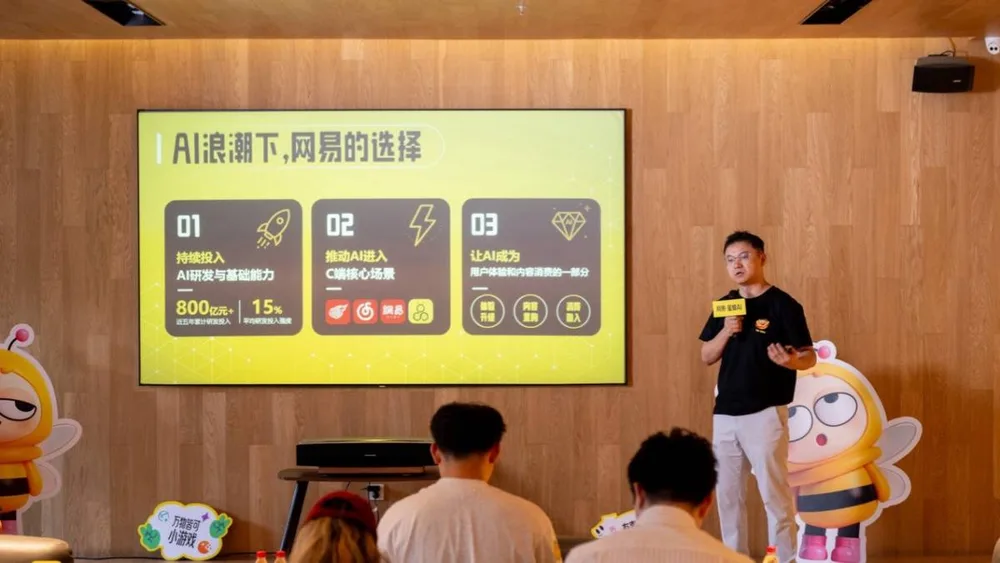
Bee AI attempts to flip this by leveraging existing user data—school, major, interests, and past experiences—with user permission. The goal is to move from "finding information" to "taking action." For instance, in a job hunt scenario, the AI doesn't just list open roles; it filters them based on the user's actual background and helps organize materials because it already has the context.
They’ve packaged this into a "Personal Universal Lobster" persona. It isn't just a utility; it’s a community guide and life logger. The data they're seeing is telling: users who "adopt" these AI lobsters show a massive spike in activity, with interaction frequency jumping nearly 90% over three months. This suggests that when AI feels like a relationship rather than a tool, retention actually happens.
Moving Beyond Static Content #
The more interesting part of this deployment is how it changes the nature of UGC. We've gone from text to images, then to short video and live streaming. Each step increased engagement but also raised the barrier to creation. To make something truly interactive, you usually needed to be a coder or a game designer.
NetEase is using AI to turn "interactive content" into a mass-market expression tool. Instead of just generating a static image of a cat, a user can create a "playable" piece of content where clicking the cat's ear triggers a specific reaction.
This shifts the creator's mindset from "What do I want people to see?" to "What do I want people to do with this?" This creates a new loop of creation, play, sharing, and remixing that goes beyond just lowering the cost of producing traditional media.
Grounding AI in Real-World Experience #
The biggest hurdle for any community AI is the hallucination problem, especially for high-stakes info like grad school applications or job hunting. General models give you the "official" answer, but they miss the "actual" experience.
NetEase is attempting a deep dive into community-sourced knowledge. By organizing real human experiences shared within the community and feeding them into the AI's retrieval chain, the AI can provide nuance that isn't in a training set. It’s not just dumping forum posts into a prompt; it's a structured effort to filter and update community knowledge so the AI can tell you not just how a process works, but what actually happens on the ground.
[Next Groq is spending billions to poach Nvidia engineers →](https://promptcube3.com/en/news/6810/)

[these AI tool field notes](https://tanyan888.com/), with plenty of directly applicable cases.
All Replies (2) #
@GhostGeekWow, look at you using big words like "seamless" while the rest of us are still fighting with prompt engineering.