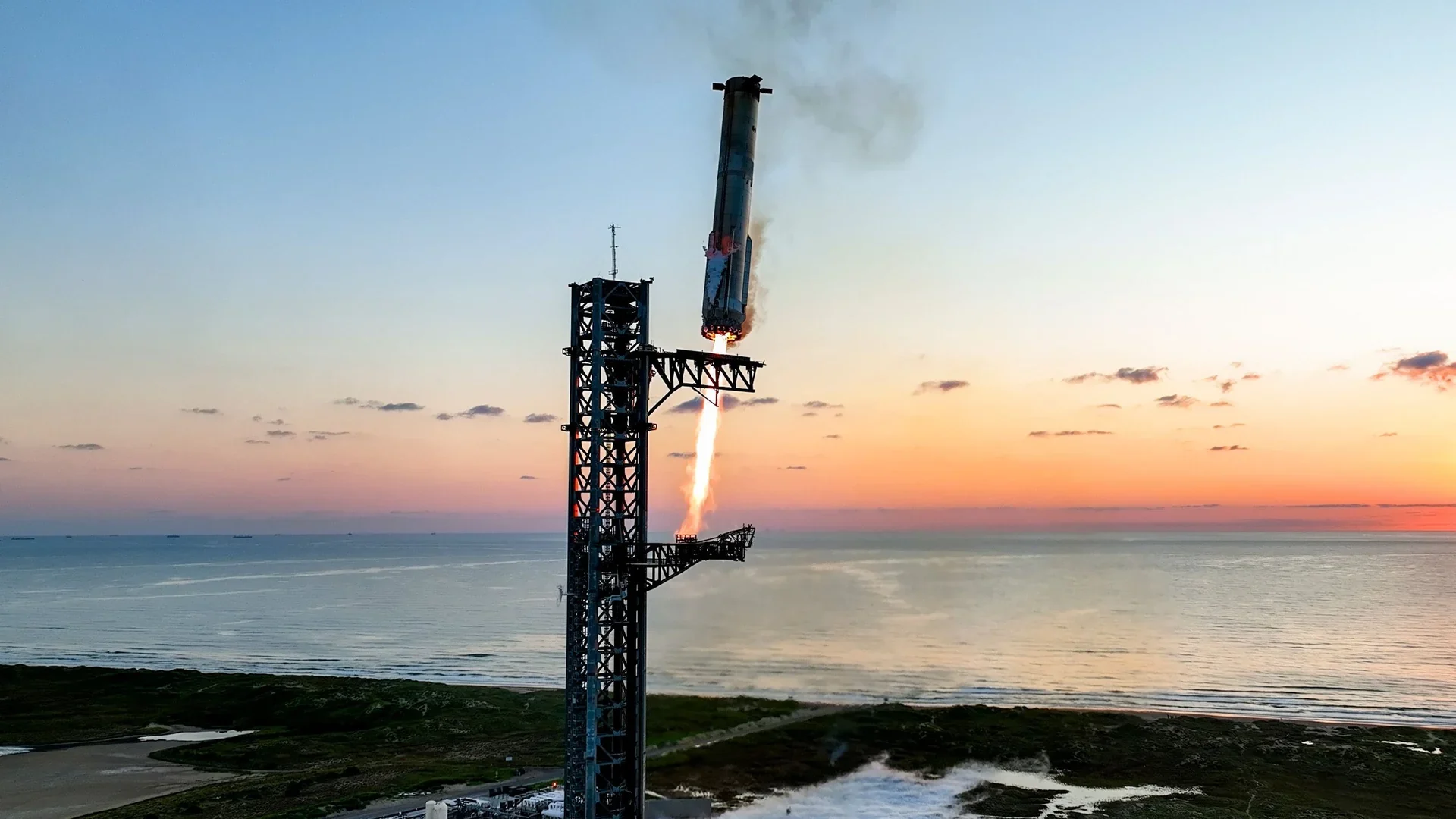
The Federal Communications Commission has authorized SpaceX to deploy up to 1,000,000 satellites for orbital data centers that support AI computing, according to coverage from DNE Africa, Business Recorder and Tesla Accessories. The constellation carries the name Starmind. The headline number is enormous, but the approval also attaches hard deadlines that tell a more useful story than the cap itself.
We covered the clearance itself in our earlier report on the FCC’s Starmind decision. This piece goes one level deeper. It works through the two deployment gates, the arithmetic they imply, what SpaceX itself admitted about the technology, and what AI buyers and investors should watch next. Everything stated as fact here comes from the verified details of the approval. Anything beyond that is labeled as analysis or illustration.
Note the framing up front. An FCC authorization is permission, not a build schedule and not a product. The reports do not confirm a launch calendar, a satellite design, a project cost, a customer or a date for commercial service. What they do confirm is a set of milestones with calendar dates attached, and those dates are the best lens on how seriously to take the plan. This article sits in our AI and machine learning coverage because the whole premise rests on a bet about where AI compute will live.
Don't miss new tech stories on Google
Add Shattered once in the Google app and our stories show up in your news suggestions.
What the FCC Authorized for SpaceX Starmind #
The FCC authorized SpaceX to deploy up to 1,000,000 satellites under the SpaceX Starmind program name. The satellites are meant to form orbital data centers that support AI computing. The commission said the system is intended to help meet what it called “rapidly growing demand” for AI computing. That phrase is the only direct regulatory rationale in the verified material, and it signals how the agency framed the decision: as a response to demand pressure on compute rather than a broadband or communications license in the traditional sense.
Elon Musk appears in the coverage as SpaceX’s owner or leader. Beyond that identification, the reports reviewed here do not attribute new statements to him about Starmind, so this article does not either. The authorization is also conditional. That single word shapes everything that follows, because a conditional grant can narrow, stall or lapse if the conditions go unmet.
The scope of the approval deserves precision. It covers radiofrequency communications used to keep contact with, and control of, the orbital data centers from Earth if primary communications systems fail. In other words, the verified text describes the backup command link. It does not describe the compute payload, the power system, the launch vehicle or the way customers would reach the processing capacity. Readers who see “FCC approves 1 million AI satellites” in a social post are reading a compressed version of a narrower regulatory act.
The Two Deployment Gates in Plain Numbers #
The SpaceX Starmind approval sets a staged clock. SpaceX must begin deployment no later than November 2033. It must have at least 100,000 satellites deployed, which is 10% of the authorized maximum, no later than November 2035. It must have at least 500,000 deployed, which is 50% of the maximum, by November 2038. The table below lays out each date and the share of the cap it represents.
| Milestone | Deadline | Satellites required | Share of 1,000,000 cap |
|---|---|---|---|
| Authorized maximum | Not applicable | Up to 1,000,000 | 100% |
| Begin deployment | November 2033 | Deployment must start | Not specified |
| First gate | November 2035 | At least 100,000 | 10% |
| Second gate | November 2038 | At least 500,000 | 50% |
| Remaining half | Not specified in the verified reports | Up to 500,000 more | Up to 50% |
Two features stand out. First, the gates are minimums, so the table describes the floor SpaceX must clear to keep the authorization intact, not a forecast of what it will build. Second, the verified reports list no deadline for the final 500,000 satellites. A reader should not assume none exists, only that it has not surfaced in the coverage reviewed for this article.
What the Gate Math Implies for Launch Cadence #
The numbers below are our own arithmetic on the confirmed milestones. They are not SpaceX projections, and nothing in the reports suggests SpaceX plans to deploy at an even pace. Still, simple division shows how steep the climb is if the company only meets its minimums.
The 2033 to 2035 sprint
Suppose deployment starts in the last permitted month, November 2033. The company would then have 24 months to reach 100,000 satellites. That works out to about 4,167 satellites a month, or roughly 137 a day, every day, for two years. If deployment starts earlier, the pace relaxes, and a company with a working design would surely want to start earlier. The worst case for SpaceX is also the case where the schedule looks most punishing, so the start date is the variable that matters most.
The 2035 to 2038 ramp
The second gate asks for 400,000 more satellites in the 36 months between November 2035 and November 2038. That is about 11,111 a month, or roughly 365 a day. Put differently, the second phase demands more than twice the daily pace of the first phase in the worst-case reading. The ramp is front-loaded with risk: any slip in phase one compresses the time left to hit the 50% line, and a missed gate could put the conditional authorization in question.
For scale, our earlier coverage noted that Amazon Leo put 36 satellites in orbit on a single Ariane 6 launch. That is a useful reminder that a good launch day is measured in dozens of satellites, while Starmind’s gates are measured in hundreds of thousands. The gap shows why the real question is launch cost and cadence, neither of which the reports address.
Why a Conditional Authorization Matters #
Regulators attach conditions to large constellation grants for a practical reason. Spectrum and orbital space are finite, and a license that reserves them while nothing flies blocks other operators. Milestones force an applicant to show progress or release the claim. That logic is general to satellite licensing, and it applies here in a particularly sharp form because the 1,000,000 figure is far larger than anything most observers had considered plausible for a single operator.
The conditional label cuts two ways for SpaceX. On the plus side, the company holds a regulatory position that rivals lack, and it holds it with seven years before the first deadline bites. On the minus side, the conditions create a paper trail. Each missed or marginal milestone invites scrutiny from the commission, from competitors and from groups that worry about orbital congestion. The reports do not say what happens if a gate is missed, so this article does not guess at the remedy.
The authorization also does not establish that SpaceX will use the entire allocation. The permission to deploy up to 1,000,000 satellites is a ceiling, and the fact sheet behind this story is explicit that the full constellation is unconfirmed. A company can hold a license for far more hardware than it ever builds, and the 10% and 50% gates are the only points where the plan becomes testable against reality.
The Backup Communications Link #
The part of the system the FCC actually licensed is the radio link used to maintain contact with and control the orbital data centers from Earth if primary communications systems fail. That is a safety-style function. Any large satellite fleet needs a way to command a vehicle when its normal data path goes down, whether to adjust orbit, shut down a payload or deorbit a dead unit.
It is worth separating this from the primary data path. Customers sending AI workloads to orbit would need high-bandwidth links, and the reports reviewed here say nothing about how those links would work. The backup channel is the contingency layer. For a fleet that could reach into the hundreds of thousands, the reliability of that contingency layer matters more than it does for a small fleet, because a failure mode that hits 0.1% of satellites would still strand 1,000 units at the cap.
That last figure is a simple illustration, not a reported failure rate. Its purpose is to show why regulators care about control links in a constellation of this size. Small percentages become large absolute numbers, and each stranded satellite is an orbital object that someone must eventually manage.
AI1 Power Figures and What 175 Kilowatts Means #
Reports describe an AI1 satellite as capable of providing up to 250 kilowatts of electrical power, with average power of about 175 kilowatts. Those two figures give a useful ratio: average output equals 70% of peak. The reports do not confirm that AI1 is the design Starmind will use at scale, and the fact sheet lists any specific satellite design as unconfirmed. Treat AI1 as a reported data point, not a finalized spec.
With that caveat, the figures allow an illustration. The table below multiplies the 175 kilowatt average by each milestone count. This assumes, hypothetically, that every satellite matches that average, which no report confirms. The result is a rough sense of the electrical scale implied by the gates, expressed in gigawatts.
| Scenario (illustrative only) | Satellites | Average power at 175 kW each |
|---|---|---|
| Single satellite | 1 | 0.000175 GW (175 kW) |
| First gate floor | 100,000 | 17.5 GW |
| Second gate floor | 500,000 | 87.5 GW |
| Authorized maximum | 1,000,000 | 175 GW |
| Peak case at 250 kW, maximum | 1,000,000 | 250 GW |
To put the first row of gigawatt figures in context, our earlier coverage of a Goldman forecast cited 52 GW of US data centers in 2028. Comparing that figure with the illustrative table is not apples to apples. Terrestrial capacity is measured as facility demand, while the table sums satellite generation under assumptions nobody has confirmed. Even so, the comparison conveys why the plan, if built to the cap, would be an energy project as much as a launch project.
SpaceX’s Own Warning on “Unproven” Technology #
The most revealing line in the coverage comes from SpaceX itself. Its regulatory filing described space-based data centers as relying on “unproven” technologies and said they “may not achieve commercial viability.” A company seeking permission for up to 1,000,000 satellites told the regulator, in its own filing, that the commercial case is not guaranteed. That is a candid disclosure and it changes how the headline reads.
Companies include risk language in filings for legal reasons, and readers should not treat it as a prediction of failure. But the language does tell us something. If SpaceX believed the technology were settled, the filing would not need to say otherwise. The honest reading is that the authorization is an option the company paid regulatory effort to secure, and that exercising the option depends on engineering and economics that remain open.
The open questions are the usual suspects for orbital compute. Chips must run in a radiation environment. Heat must leave the satellite without air to carry it away. Data must move between orbit and the ground at useful speeds. The reports confirm none of the solutions, and the fact sheet lists the satellite design as unconfirmed. Until SpaceX publishes technical detail, the confidence level on any of these should stay low.
How Outlets Framed the Starmind Story #
DNE Africa, Business Recorder and Tesla Accessories all reported the authorization. The shared core was the same: a 1,000,000-satellite authorization for AI-focused orbital data centers. We do not repeat every outlet-by-outlet difference here, because a separate piece already examines how outlets framed the Starmind satellites.
What matters for readers is how much of the regulatory text survives a headline. A reader who sees only the first number misses the deadlines, the backup-link scope and SpaceX’s own risk language. The cap grabs attention, while the conditions carry the information.
A practical habit helps here. When a story leads with a maximum, look for the minimum. Here the maximum is 1,000,000 and the minimums are 100,000 and 500,000 on fixed dates. The minimums define what SpaceX is actually on the hook for, and they are the figures a careful analyst should model first.
Market Impact: What Investors and Chip Buyers Should Watch #
An authorization generates no revenue. It carries no customer list, no pricing and no confirmed date for commercial service, all of which the fact sheet marks as unconfirmed. So the near-term market effect is about narrative and optionality rather than cash flow. Investors who price the story today are paying for the possibility that orbital compute becomes real, and the verified milestones put the first hard test in 2035.
Our earlier coverage of SpaceX’s share price noted that SpaceX slid 5% to $119.66 in the days around this news, which shows that the market did not treat the approval as an unambiguous positive. We draw no causal link between the two events, since the reports reviewed here do not make one. The point is that a regulatory win and a stock move are separate things.
For chip buyers and AI infrastructure planners, the practical takeaway is timing. Even on SpaceX’s own deadlines, meaningful orbital capacity is a mid-2030s question. Anyone planning compute capacity for the next three to five years still has to buy on the ground. That reality shows up in the ground-side data our readers follow, including the AI chip shortage and TSMC’s 2nm revenue share, which describe supply pressure that Starmind cannot relieve for years.
Competitive Comparison: Orbital Compute Versus Ground Options #
Starmind competes with every other way of adding AI capacity, not just with other satellites. The comparison below is qualitative because the reports offer no cost, latency or capacity figures for orbital compute. We therefore describe what each option demonstrably offers today and what remains unknown for Starmind.
- Ground hyperscale campuses: Proven, financeable and already scaling. Pressure comes from power supply and local opposition, topics we tracked in our reports on resident pushback against Japanese data centres.
- Edge facilities: Small and fast to deploy. Our coverage of a Lubbock edge site described 15 cabinets and zero water use, a different design philosophy from orbital scale.
- Offshore concepts: Early studies exist, including a paid study we covered on offshore data centers using wave power, but none operate at scale.
- Orbital data centers (Starmind): Authorized, with deadlines, but described by SpaceX itself as relying on unproven technology. No operational capacity is confirmed.
The comparison explains why the approval matters even if the technology slips. Orbital compute offers a way around land, water and local permitting fights, which are real constraints on the ground. Whether it can match ground economics is the open question. For now the ground options win on every measurable dimension except the one orbital promises: freedom from terrestrial siting limits.
Historical Context: From Broadband Constellations to Orbital Compute #
Satellite constellations first won regulatory approval as communications networks, where each satellite relays traffic and the product is connectivity. Starmind inverts that model. The satellite is the computer, and communications exist mainly to move data in and keep control. The FCC’s own description, tied to demand for AI computing, reflects that shift in purpose.
The scale also marks a break. Earlier constellation approvals were large by the standards of their day, yet a 1,000,000 satellite cap sits in a different order of magnitude. Whatever one thinks of the engineering, the authorization shows that regulators will entertain applications sized to the AI buildout rather than to the satellite industry’s historical norms.
The political backdrop is active too. Our reporting on a proposed overseas data center tax that could expose five hyperscalers shows that policy attention on where AI compute sits is rising on the ground as well. An orbital option adds a new jurisdictional puzzle that existing rules were not written to answer.
Open Regulatory and Space Traffic Questions #
The reports leave several questions unanswered. They do not say what orbits Starmind would use, how debris risk would be managed, how the fleet would coordinate with other operators, or what happens to satellites at end of life. Those topics will likely draw attention as the project moves from paper to hardware, and the verified material covers none of them.
The deadlines create their own question. Seven years separate the authorization from the November 2033 start deadline. Technology, launch markets and regulation can all shift in that window. Milestones set today may look conservative or reckless by then, and a regulator can revisit conditions. We do not know whether that is likely, and the reports do not address it.
Five Predictions for Starmind #
These are our own judgments, offered as analysis and not as reported facts. We expect each to be testable within a few years.
- Debris and interference will dominate the debate. Objections to a constellation this large will center on orbital congestion and radio interference before they touch compute economics.
- A demonstration will precede the 2033 deadline. SpaceX will almost certainly want to prove the concept with a small batch long before the start deadline, because the company’s own filing admits the technology is unproven.
- The 100,000 gate becomes the real test. If progress lags as 2035 approaches, expect pressure to renegotiate the milestone rather than to forfeit the authorization.
- Rivals will file similar applications. A granted authorization sets a precedent, and other operators will test whether regulators apply the same logic to them.
- Ground capacity will keep winning near term. Anyone needing AI compute before the mid-2030s will buy terrestrial capacity, so Starmind will not ease the current shortage.
What Is Confirmed and What Is Not #
The table below separates verified details from open items, which keeps the headline number in proportion.
| Item | Status | Detail |
|---|---|---|
| Authorization of up to 1,000,000 satellites | Confirmed | FCC action for orbital AI data centers named Starmind |
| Conditional grant covering backup radio links | Confirmed | Contact and control from Earth if primary systems fail |
| Deployment milestones | Confirmed | Start by November 2033, 100,000 by November 2035, 500,000 by November 2038 |
| SpaceX risk language | Confirmed | Filing cites “unproven” technologies and possible lack of commercial viability |
| AI1 power figures | Reported | Up to 250 kW, average about 175 kW |
| Full 1,000,000 deployment | Unconfirmed | Permission is not a commitment to use the whole allocation |
| Launch schedule, design, cost, customers, revenue | Unconfirmed | Nothing in the reports |
| Operational or commercial orbital data centers | Unconfirmed | No capacity is available today |
The takeaway: the FCC granted a conditional license with dated gates, and SpaceX itself says the technology is unproven. The 1,000,000 number is a ceiling. The 100,000 and 500,000 figures are the commitments, and the first of those is nine years away.
Frequently Asked Questions About SpaceX Starmind #
What did the FCC approve for SpaceX Starmind?
The FCC authorized SpaceX to deploy up to 1,000,000 satellites for orbital data centers supporting AI computing, under the constellation name Starmind. The grant is conditional and covers radiofrequency communications used to maintain contact with and control the satellites from Earth if primary communications systems fail.
When must SpaceX start deploying the Starmind satellites?
SpaceX must begin deployment no later than November 2033. It must then have at least 100,000 satellites, or 10% of the maximum, deployed by November 2035, and at least 500,000, or 50%, by November 2038.
Will SpaceX actually launch 1,000,000 satellites?
Nobody can say. The authorization permits up to that number but does not establish that SpaceX will use the full allocation. SpaceX’s own filing says the technologies are unproven and may not achieve commercial viability.
How much power would an AI1 satellite provide?
Reports describe an AI1 satellite as capable of up to 250 kilowatts of electrical power, with average power of about 175 kilowatts. The reports do not confirm that AI1 is the final Starmind design.
Are the orbital data centers operating or available to customers?
No. The reports do not confirm operational capacity, commercial availability, a customer list, pricing or a date for commercial service. The approval is regulatory permission, not a product launch.
Which outlets reported the FCC authorization?
DNE Africa, Business Recorder and Tesla Accessories all reported the approval. Elon Musk appears in the coverage as SpaceX’s owner or leader, though the reviewed reports do not attach new Starmind statements to him.