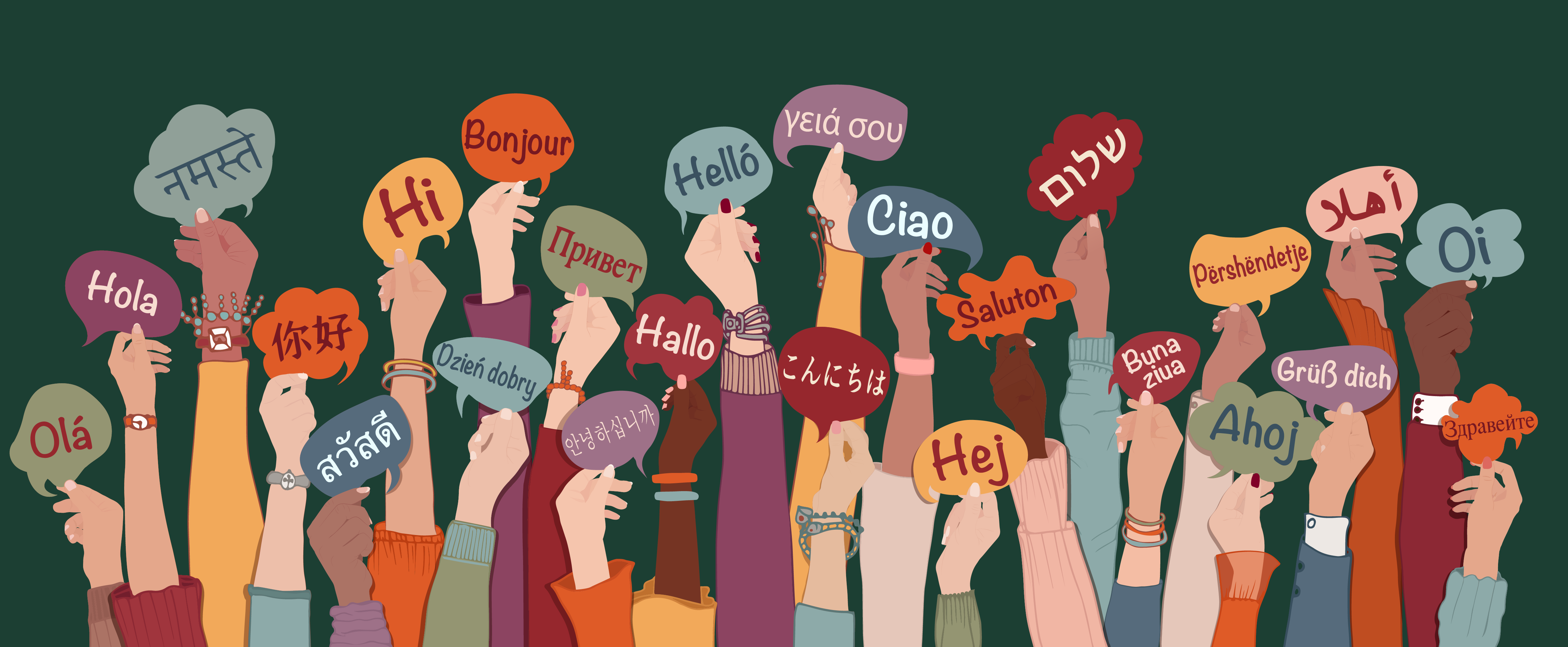
Speaking multiple languages may slow your brain’s aging process, according to a new study by an international team of researchers being presented this week at the Federation of European Neuroscience Societies conference in Barcelona.
The team’s prior research showed that people in countries where multilingualism is common seem to physically age more slowly, demonstrating an apparent protective effect at the population level. Now they’ve zoomed in to find a similar neurological effect on an individual level.
They began by creating a “brain aging clock” using data gleaned from 728 individuals. They measured neural activity of people at different ages and processed the data with artificial intelligence to create the baseline. They then used the clock to compare the neural activity of 144 people from the Basque region of Spain with different degrees of multilingualism.
Read more: “ The Strange Persistence of First Languages”
They found that the more languages the participants spoke, the younger their brain activity patterns were. People who spoke four languages showed the biggest decrease in their neurological age and their actual age, with brain activity that appeared 13 years younger. Those who spoke three languages had a brain age around seven years younger, and bilingual people’s brains appeared to be six years younger.
“In simple terms, people who spoke more languages tended to have brains that looked younger than expected for their chronological age,” study author Lucia Amoruso of the Basque Center on Cognition, Brain, and Language said in a statement.
While it’s tempting to think it just takes a few prolonged Duolingo streaks to roll back your brain’s clock 13 years, there are some important caveats. “Higher language proficiency and earlier acquisition of a second language were also associated with more delayed brain aging,” Amoruso added. “This suggests that multilingual experience matters as a gradient: It is not simply about being bilingual or not, but about the depth and duration of language experience.” In other words, it may be best to pair language-learning apps with a nice, prolonged trip abroad for a more immersive experience. It’s as good a reason as any to take a vacation, right?
*Enjoying Nautilus? Subscribe to our free * newsletter. Lead image: melita / Adobe Stock