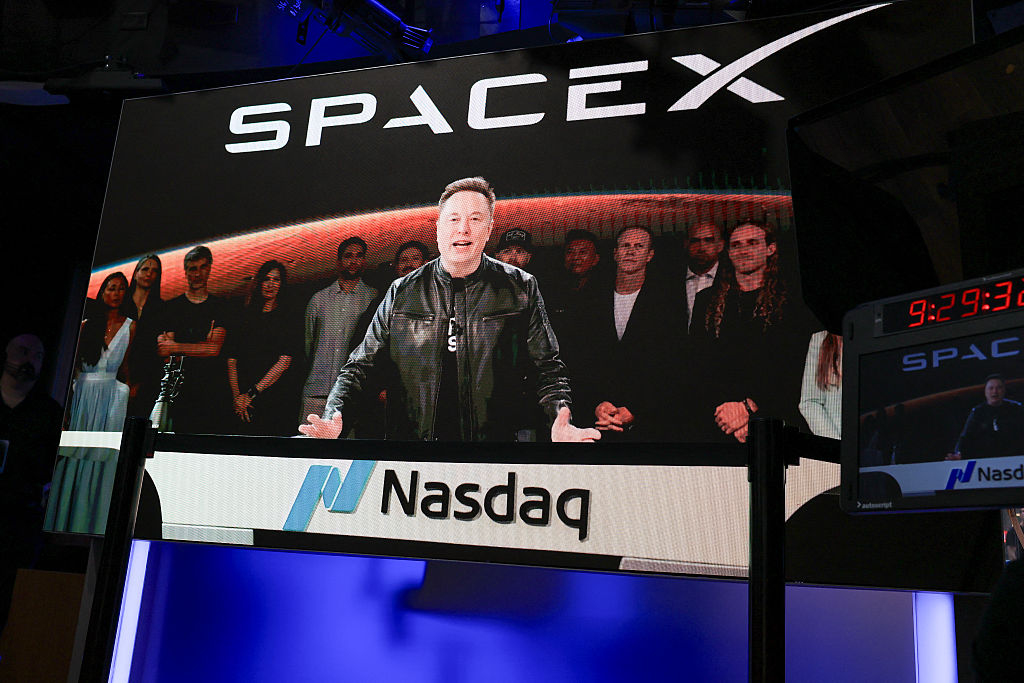
SpaceX plans to send a space-optimized version of Nvidia's Vera Rubin NVL72 computing system into orbit during the fourth quarter of 2027, roughly a year earlier than the timeline presented to investors. #
Elon Musk is pushing one of his most ambitious artificial intelligence projects ahead of schedule, with SpaceX now targeting late 2027 to launch an orbital data center powered exclusively by Nvidia technology.
According to a Moneywise report, SpaceX plans to send a space-optimized version of Nvidia's Vera Rubin NVL72 computing system into orbit during the fourth quarter of 2027, roughly a year earlier than the timeline presented to investors before the company's public debut.
The accelerated schedule represents a significant shift. In its May prospectus, SpaceX said it could begin deploying satellites for orbital data centers "as early as 2028." Musk subsequently told investors during the company's August 4 earnings call that launches could begin next year.
Then, on Aug. 24, he became more specific. "SpaceX, in partnership with Nvidia, has designed a space-optimized Vera Rubin NVL72 system for launch to orbit in Q4 next year, with significant scale in 2028," Musk wrote on X.
Nvidia's Vera Rubin platform is the company's next-generation AI computing architecture. SpaceX intends to redesign the system for orbital operation, connect it to solar power, and transmit data through laser communication technology similar to that already used by Starlink.
SpaceX has said its planned AI satellites could consume about 250 kilowatts of power at peak operation. The company has also asked the Federal Communications Commission for authorization related to a constellation that could eventually include as many as one million satellites.
But perhaps the biggest strategic decision is what SpaceX is not putting them aboard. Musk previously suggested the satellites could accommodate Nvidia's GB300 chips as well as Google's Tensor Processing Units, giving SpaceX multiple potential suppliers. That strategy has changed.
"We've decided to build exclusively on Nvidia because we think the Vera Rubin architecture is the best architecture," Musk said during SpaceX's first earnings call as a public company. "We're exclusive to Nvidia." That gives Nvidia an unusually important position inside another potentially enormous AI infrastructure market.
The chipmaker is already benefiting from extraordinary demand on Earth. Nvidia reported $89 billion in data center revenue for its fiscal second quarter, an increase of 117% from a year earlier. The company expects approximately $108 billion in total revenue during the current quarter. Vera Rubin systems are already operating with partners including CoreWeave, Google Cloud, Microsoft Azure and Oracle Cloud Infrastructure.
SpaceX's exclusivity may not be permanent. Musk's companies are developing Terafab, a semiconductor manufacturing project involving SpaceX and Tesla that could eventually produce chips for orbital computing systems. If successful, that could reduce SpaceX's reliance on Nvidia.
The bigger question is whether putting AI data centers in space will actually make economic sense. One major obstacle is launch cost. Bain & Company has estimated that orbital data centers become significantly more competitive if launch costs fall to roughly $50 to $100 per kilogram, compared with substantially higher costs using today's launch systems.
There are engineering problems as well. High-performance processors must survive radiation, extreme temperature conditions, and the complicated task of dissipating enormous amounts of heat in space.
Yet Wall Street is beginning to model what could happen if SpaceX solves those problems. JPMorgan analyst Doug Anmuth expects the company could build toward approximately 75 gigawatts of orbital computing capacity between 2029 and the end of 2031, according to Yahoo Finance.
© Copyright IBTimes 2026. All rights reserved.