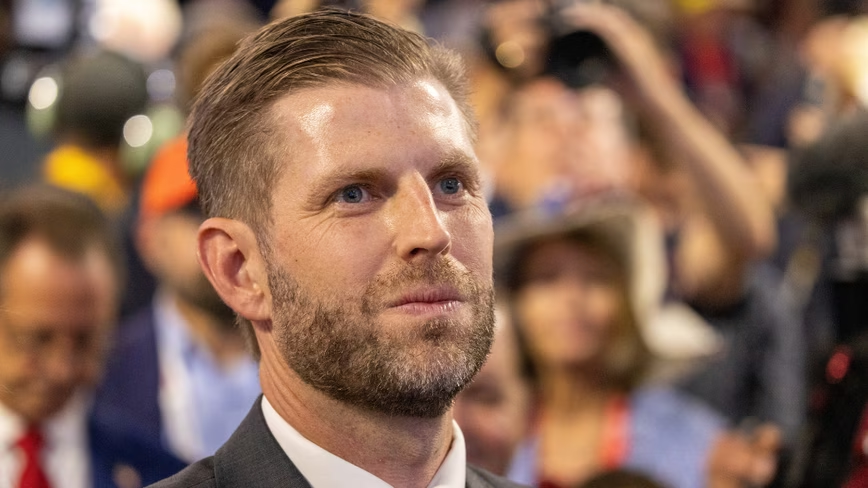
Space-Eyes, a Miami geospatial-intelligence company backed by Eric Trump, plans to go public through a $638 million blank-cheque deal, deepening the family’s defence-tech ties.
A defence-technology company backed by Eric Trump is preparing to go public through a $638 million SPAC merger, deepening the Trump family’s already extensive ties to the national-security industry.
Space-Eyes, a Miami-based geospatial intelligence firm, would list through a blank-cheque deal, following the path of Foundation, another Eric Trump-backed defence venture now winning Pentagon contracts.
Space-Eyes is a niche but strategic player. Founded in 2001, the roughly 35-person company builds satellite-based AI that tracks maritime activity, trade flows, and other security signals for governments and businesses.
Its focus sits at a sensitive intersection. Maritime domain awareness, the monitoring of ships and ports, has become a priority for Western militaries wary of sanctions-busting and grey-zone activity at sea.
The demand is timely. Shadow fleets moving sanctioned oil, illegal fishing, and threats to undersea cables have pushed navies and coast guards to hunt for better ways to watch the oceans, a market Space-Eyes is built to serve.
The listing would be a sharp step up. A $638 million deal values a small firm well above its modest funding history, reflecting how much investors will now pay for anything tied to defence and intelligence.
It fits a family pattern. Eric Trump and his brother Donald Trump Jr. have poured money into defence and manufacturing ventures over the past year, from drones to humanoid robots to a manufacturing SPAC.
The backdrop is a spending surge. Their bets have coincided with a Trump administration channelling record sums into defence technology, an overlap that critics say raises obvious conflict-of-interest questions.
Those concerns are not hypothetical. Reporting has documented how the president’s sons stand to profit from companies whose fortunes depend on federal contracts and policy set by their father’s government.
The SPAC route adds its own scrutiny. Blank-cheque mergers let companies reach public markets faster and with lighter disclosure than a traditional IPO, a structure that has burned retail investors before.
Blank-cheque deals are also back in fashion. After a long slump, SPAC listings have revived on the back of AI, crypto, and defence, and politically connected sponsors have been among the most active.
Space-Eyes joins a crowded field. Defence-tech valuations have soared as the Pentagon pushes for drones, autonomy, and AI, with firms like Mach Industries ballooning past a billion dollars.
The money is chasing a real shift. Western governments are rearming, and the Pentagon has been signing classified AI deals as it races to fuse data, autonomy, and intelligence into new capabilities.
Space-Eyes pitches itself into that gap. Its systems promise to turn raw orbital imagery into warnings about illicit shipping, trade anomalies, and security threats, the kind of tool agencies increasingly buy rather than build.
The Trump name is both an asset and a liability. It opens doors and draws capital, but it also invites the assumption that access, not just technology, is part of what investors are buying.
The wider trend is the blurring of lines. The boundary between Silicon Valley, private capital, and the Pentagon has thinned dramatically, a shift crystallised when a top venture capitalist joined the Pentagon’s board.
Ethics watchdogs have taken notice. They argue that when a president’s family profits from defence firms while that president directs defence spending, the appearance of impropriety is hard to avoid, whatever the legal reality.
The Trump camp frames it differently. Supporters cast these as legitimate private investments in American strength, part of a push to rebuild the country’s industrial and military edge.
For Space-Eyes, the immediate prize is capital. A successful listing would hand a small firm the funds to scale, and hand its high-profile backer a public-market endorsement of the defence-tech bet. The deal still has to close. SPAC mergers can fall apart or reprice, and this one will be watched as much for who stands behind it as for what the company actually does.
Get the TNW newsletter #
Get the most important tech news in your inbox each week.