Traditionally touted by social philosophers and left-wing economists, universal basic income has now found unlikely support in Silicon Valley as AI threatens to wipe out jobs. Eve Nicholson says it won’t work
A decade ago, the largest poster ever created was placed on the Plainpalais plaza in Geneva. Printed on its surface was the provocation “What would you do if your income were taken care of?”
This was the question put to ordinary Swiss citizens in the summer of 2016, in a referendum that proposed transferring every adult in the country a minimum monthly income, no matter how much or whether they worked. Over three-quarters of voters rejected the proposal.
Yet a decade on, the seductive allure of universal basic income (UBI) has found its way back into the political limelight. But where previous arguments for UBI were motivated by a desire to tackle poverty or cut the cost of the welfare state, this time UBI is heralded as the answer to the incoming onslaught of an AI-fuelled jobs apocalypse.
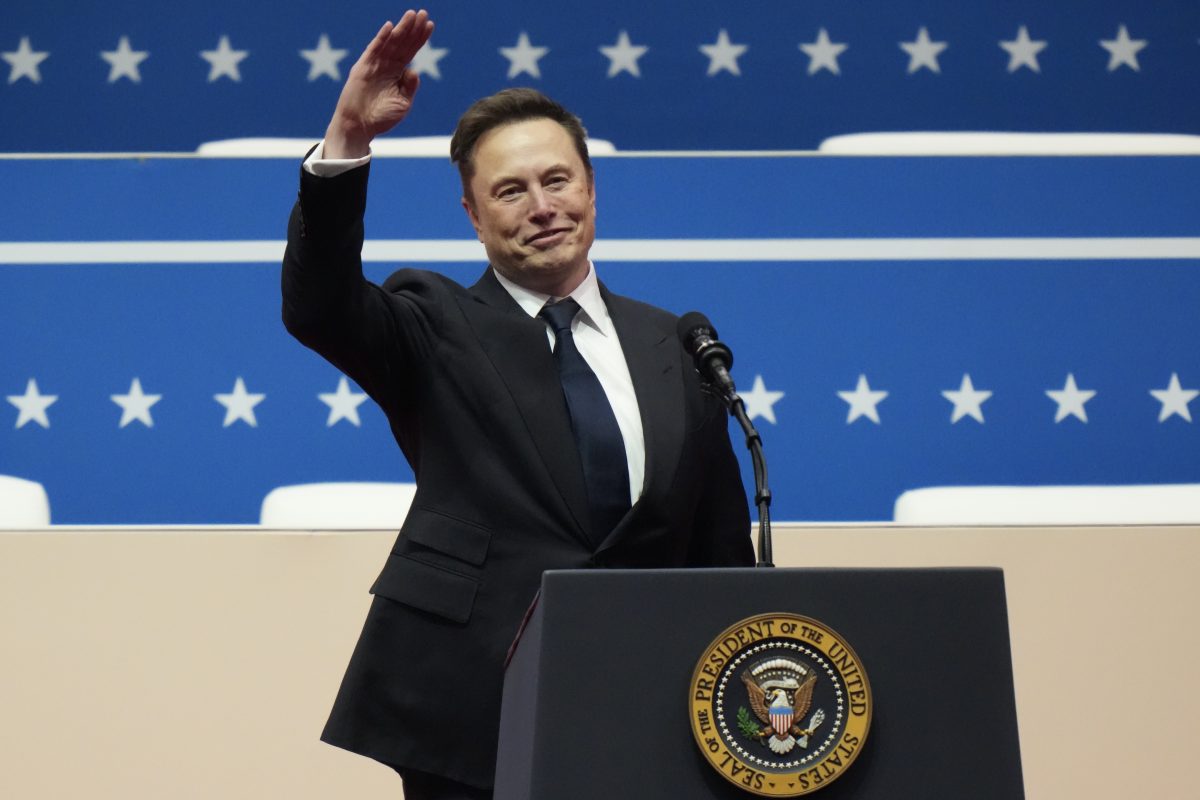
And rather than its usual brigade of social philosophers, left-wing economists and religious leaders, this time it’s backed by white-collar workers, venture capitalists and even the wealthiest man on the planet Elon Musk, who just a few months ago touted universal income as the “best way to deal with unemployment caused by AI”. Sam Altman also put $14m into testing the idea a few years ago.
Advocates argue that as AI reduces the need for human labour and improves productivity, UBI is the best way of regulating and distributing wealth. Some also argue that it is a fair compensation for sharing our data in training ‘cognitive capitalism’.
Why UBI won’t work in Britain #
UBI has particular purchase in Britain, with its service-sector economy highly exposed to AI, relative to the US or other advanced economies, and Andy Burnham previously described it as an idea “whose time has come”.
But UBI is still not the answer.
Politically, it is impossible. Paying every UK adult the basic rate of Universal Credit – around £400 a month – would cost over £200bn a year, comparable to the entire NHS budget. Even if we scrapped the entire benefit system in order to finance UBI, we would need to raise broad-based taxes like national insurance, effectively giving with one hand and taking away with another. A popular alternative suggests funding UBI with a tax on AI gains. Yet, there are political implications of relying on tech CEOs for a replacement welfare state, not least turning citizens into passive beneficiaries of a system they no longer participate in.
Economically, AI-driven UBI could result in inflation in sectors like housing, health or care. Whilst in software, digital content and administration, AI can drive “marginal costs toward zero”, in housing, healthcare or energy infrastructure, supply cannot expand at anywhere near the same pace because of physical and political obstacles like land scarcity, planning regulations or professional licensing. And it is precisely into those sectors and the wider ‘relational economy’ that people direct any extra cash. Increasing people’s nominal income would not produce abundance in these areas, but could drive prices up – exacerbating inequalities.
UBI is particularly seductive during periods of upheaval. Before Switzerland voted in 2016, there was Paine’s Age of Revolution ‘citizen’s fund’ and More’s Renaissance ‘citizen’s income’. But rather than a quick-cash solution, what these moments instead require are creative ways of navigating new relationships between labour, capital, citizen, state, work and meaning.
The alternative #
There are signs this is happening. This April, Sam Altman said he “no longer believe[d] in UBI as much” and OpenAI released a white paper suggesting a swathe of alternative measures, including unemployment insurance, pathways ‘into human-centred work’ and a Public Wealth Fund. Altman and others like Microsoft and Anthropic have funded a new initiative, RAISE US, centred around social growth in an AI economy. Its CEO, Gina Raimondo, likened UBI to “the end of America.”
Sam Altman and co are right to change their tune.
Rather than freeing labour from capital and distributing profit, AI-induced UBI would exacerbate inequalities, encourage greater unemployment and be so overwhelmingly expensive that the only way to fund it would be through handing over welfare provision to unelected corporations.
Besides, people don’t only work for money. Research from hundreds of cash transfer pilots over four decades finds that while UBI improves health and education, it does not boost labour market participation. In the face of AI, polls show most people would rather work. Beyond income, work provides us with purpose, relationships, organisation, mobility. UBI can’t replace that.
Eve Nicholson is a researcher and writer at The Week UK and editor of Running Dog Magazine