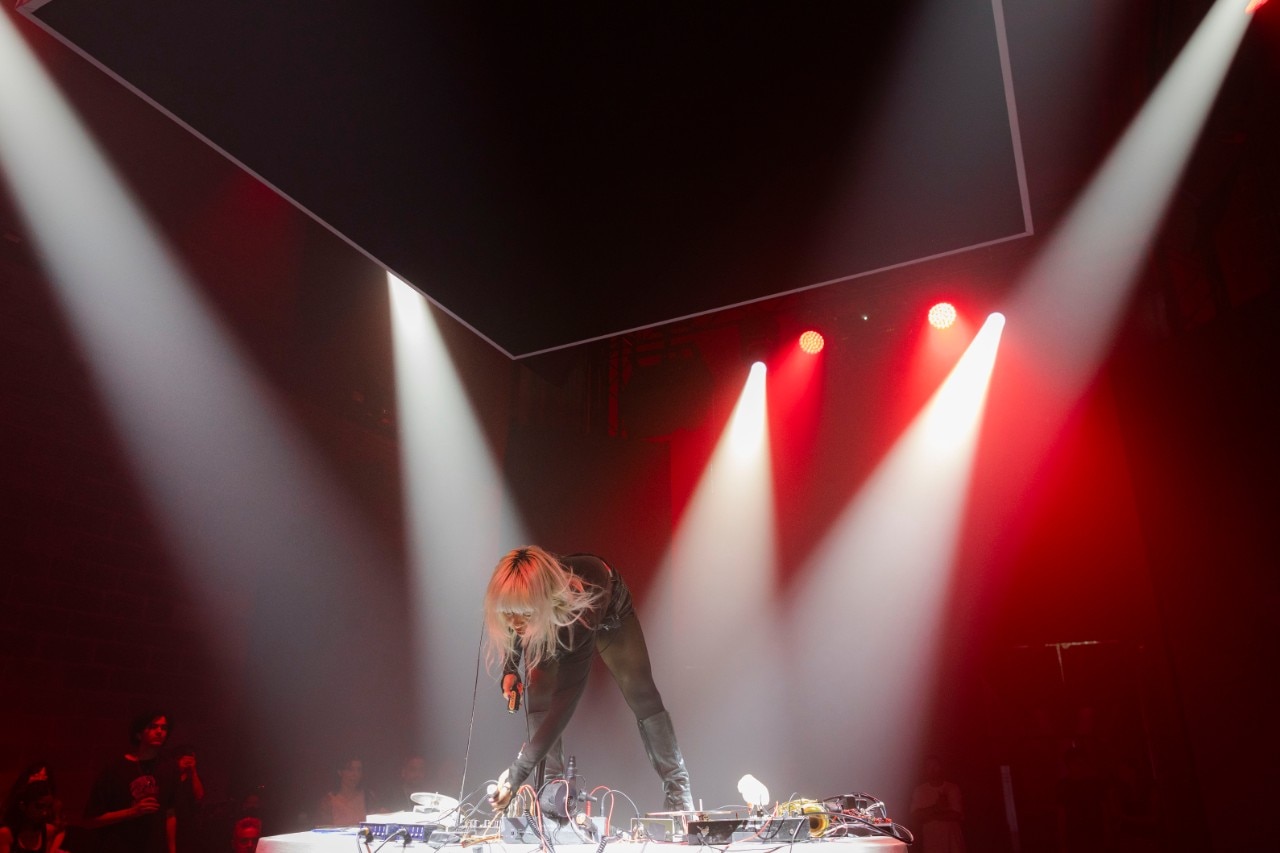
Sonar+D's 2026 exhibition moves into Barcelona's historic Llotja de Mar, combining immersive art, robotics and AI across 38 works, per the festival's programme page. Highlights reported by Domus and Sonar include Astral Twin by Brooklyn studio Volvox Labs - two robotic arms performing in dialogue with a giant LED wall (created with OFFF) - and Qs Ventures 2147: A Voice from the Future, an abandoned phone booth hosting an AI persona representing Earth as a living superorganism. Belgian studio Superbe's from0 installation transforms recorded sounds into melody via 12 pendulums. Designboom (active media partner) also notes Google DeepMind's Lyria 3 features in the sonic programme. Domus captured visitor-facing moments and a quoted exhibitor describing a video project called "Bardo" as "a kind of in-between state."
What happened
Sonar+D's 2026 Exhibition is staged inside Llotja de Mar, the historic palace in Barcelona, according to the festival's exhibition page and press coverage by Domus. Per Sonar's programme listing, the Exhibition and Installations strands present 38 works spread through the building's courtyard, ground floor and the new Agora+D space. Domus documents visitor-facing highlights including Astral Twin by Brooklyn studio Volvox Labs - two robotic arms that move in dialogue with a large LED wall, created in collaboration with OFFF - and a grass-covered telephone booth titled Qs Ventures 2147: A Voice from the Future, described on Sonar's site as an interactive booth hosting an AI persona representing Earth as a living superorganism. Belgian studio Superbe presents from0, an installation where a microphone records audience sounds and transforms them into melody reproduced aurally, visually and kinetically via 12 pendulums. At Agora+D, studio AUSGANG proposes a vision of cybernetic futurism with tentacle-like cables and a deactivated signal jammer, per Sonar's programme.
Technical and product context
Designboom (a declared media partner of the festival) reports that Google DeepMind's suite of AI tools including Lyria 3 appears in the sonic programme, exploring collaborative potential between human emotion and machine learning. The documented works foreground embodied robotics, site-specific LED-driven visuals and conversational AI as audience interfaces - formats that typically require integration of real-time control systems, generative media pipelines, and low-latency audio/video processing.
Context and significance
Arts festivals increasingly function as public testbeds for multimodal AI and robotics, making technical trade-offs visible to practitioners. Exhibits like robotic-arm-driven visuals and conversational AI booths surface practical issues in sensor fusion for gesture-driven rendering, safety and failover for public robotics, and persona design for deployed conversational agents. Standalone day tickets start at 15 euros, making this among the more accessible editions of Sonar+D.
What to watch
Follow post-festival documentation and technical write-ups from participating studios for implementation details on control stacks, real-time rendering engines and inference topologies. Note that designboom's coverage carries a media-partnership disclosure and should be read alongside independent reporting from Domus and Sonar's own programme pages.
Scoring Rationale #
Cultural showcase of applied AI and robotics at an established arts-tech festival; event surfaces real-world integration patterns (conversational AI, kinetic robotics, AI-generated audio) relevant to practitioners at a niche level. Presence of Google DeepMind's Lyria 3 in the sonic programme adds a minor industry-product angle, but this remains festival coverage rather than a technical announcement.
Practice interview problems based on real data
1,500+ SQL & Python problems across 15 industry datasets — the exact type of data you work with.