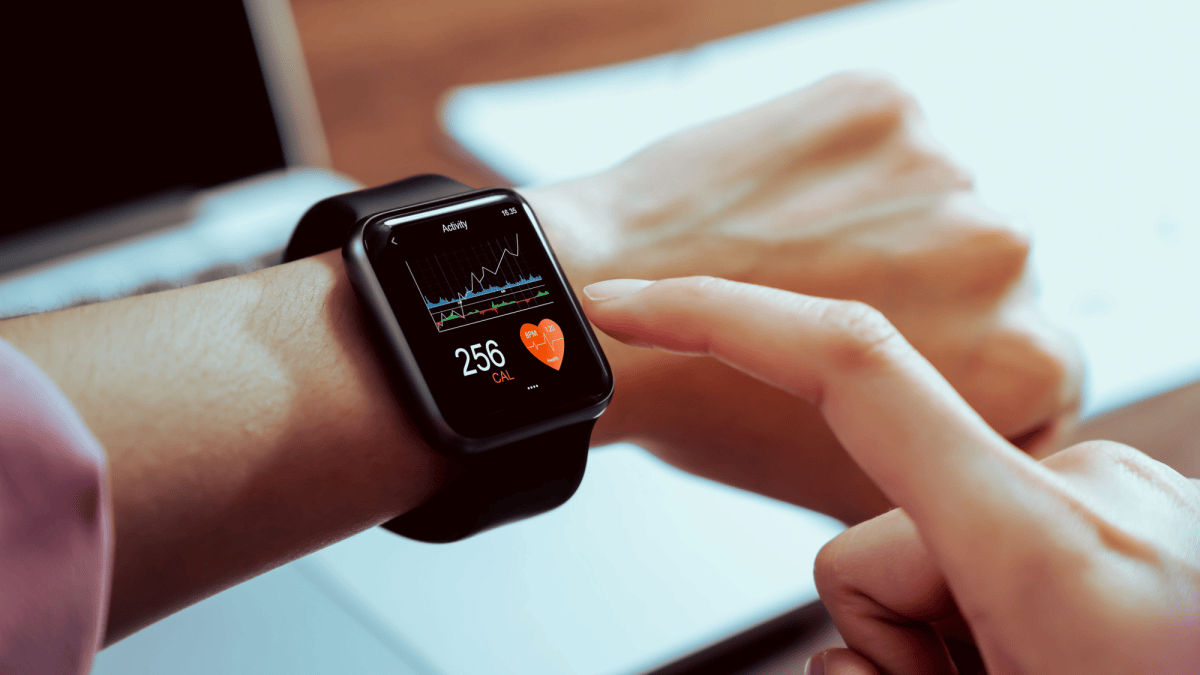
When the United States Food and Drug Administration cleared the Apple Watch’s Hypertension Notification Feature last year, some saw it as a turning point in the fight against one of the leading causes of cardiac disease. Rather than booking a doctor’s appointment and strapping a bulging cuff around one’s arm, users could instead receive passive hypertension alerts from the watch’s optical sensors to track blood flow patterns. Watch wearers who were previously unaware that they had signs of this ever-common “silent killer” would receive an alert advising them to seek out a clinician. Early intervention could mean a better chance at beginning life-saving interventions.
While that sounds great, the reality of smartwatch hypertension tools is more nuanced. Apple’s own validation data showed that their feature would miss around 59 percent of people with undiagnosed high blood pressure. Newer United States population level research from the University of Utah and the University of Pennsylvania went a step further, and warned that the absence of an alert could give wearers a false sense of security, potentially making them less likely to go get a proper cuff screening. The feature, in other words, isn’t necessarily harmful, but it also isn’t a medical silver bullet. That context is worth keeping in mind when considering new research from scientists at Google and a clinical partner from Beth Israel Deaconess Medical Center and Harvard Medical School recently published in the journal Nature*.* The team claims they created a new AI system that pairs with a consumer smartwatch to passively detect signs of high blood pressure, “with accuracy levels comparable to traditional cuffed blood pressure devices.”
The new system draws on two sensors already found in many consumer smartwatches: an optical pulse sensor (which tracks changes in blood volume at the wrist) and an accelerometer. An AI algorithm then analyzes several days of readings, factors in the wearer’s height, and then calculates the probability that they have hypertension.
Google’s system builds on Apple’s approach by adding in the watch’s accelerometer to the mix, which can pick up the faint wrist vibrations of each heartbeat. The results look promising. In initial screenings, the combined system caught more cases of high blood pressure than a standard office cuff reading, though it still missed about a third of cases. And while the researchers involved still advise against using the tool as a substitute for seeing a doctor, it’s potentially another step forward in attempts to use common wearable tech to catch underlying signs of disease earlier.
“By gently prompting at-risk individuals to step into a clinic for formal assessment, this technology holds the potential to significantly close the global awareness gap and catch hypertension before it causes permanent cardiovascular damage,” Google researchers note in a blog post.
Using sensor data to unmask a ‘hidden killer’ #
Heart disease remains the leading cause of death in the U.S. , claiming more than 900,000 lives in 2023 alone. Chronic high blood pressure (referred to as hypertension medically) is one of the key early risk factors. Around half of all Americans likely have it, but an estimated four in ten people don’t know they have it, partly because it often does not present with any clear symptoms. And while hypertension is treatable when caught early, many simply don’t see a doctor often enough to be screened regularly. That combination of an invisible condition and spotty screening makes the issue an attractive target for always-on smartwatch sensors.
The sensors on commercial smartwatches can pick up useful data, but those signals still need to be interpreted by an AI model. In this case, Google says it trained its system on nearly 500,000 hours of sensor data collected from 2,109 people. The optical sensor captures the shapes of each pulse wave at the wrist, while the accelerometer shows signs of the subtle physical vibrations that occur at the wrist when blood is ejected from the heart into the aorta. Both of those signal data are cut into 5-second PPG and ACC waveforms. The AI converts those signal snippets into numerical summaries, which Google refers to as an “embedding.”
Over time, the AI model was able to pore over those different numerical values and determine which types of pulses are likely associated with hypertension. By analyzing data collected from one wearer to the next, the AI sees numerical patterns that distinguish one person’s signals from another. But simply relying on a measurement from one point in time risks introducing what the researcher calls “environmental noise” that can skew results. To account for all that noise, they aggregated the sensors’ data over multiple days of use to establish a wearer’s persistent state. That data then gets fed into a logistic regression classifier, which comes out with a score corresponding to a person’s likelihood of having hypertension.
The team tested their system on 196 participants over seven days of real-world monitoring, checking their results against 24-hour ambulatory blood pressure monitoring, which they refer to as the “gold standard” in the field. The AI smartwatch system ultimately detected hypertension with a sensitivity of 65.8 percent. That means 65.8 percent of people who were proven to have hypertension were accurately identified by their AI system. That’s far from perfect, but it was still higher than the 55.3 percent caught by initial office cuff readings in the study.
“Taken together, the results show that our system can detect hypertension with accuracy levels comparable to traditional cuffed BP devices in the existing clinical framework,” Google notes.
Like Apple before it, Google and the other medical researchers involved in this story were quick to stress that these findings, noteworthy as they may sound, shouldn’t lead people to think of this system as a complete replacement for clinical blood pressure monitoring .Going to see actual human doctors isn’t going away anytime soon, but this system, if widely accessible, could help nudge more people towards getting checked out.