LAUNCH · AUG.27.2026 · Ritwik
75% of the web is dynamic. Basically database records presented in HTML. Built for humans.
For Agents, this problem was solved by:

**RAG** was the first generation (2024)- And then,
long-context LLMs took it to a completely new level (2025)
Fast-forward to 2026, and we're basically dumping anything and everything into the context windows; taking Nvidia to the moon.
This consists of claws, browser/computer-use, and agentic crawlers, and scrapers. These have made it easier to retrieve data, but the cost has stayed the same. Underneath, these still rely on long-context LLMs.
And, here's where they fall short:
- Cost at scale: for large datasets, cost grows linearly on a per-page basis.
- Hallucinations: LLMs are prone to hallucinations
- Context pollution and prompt injection
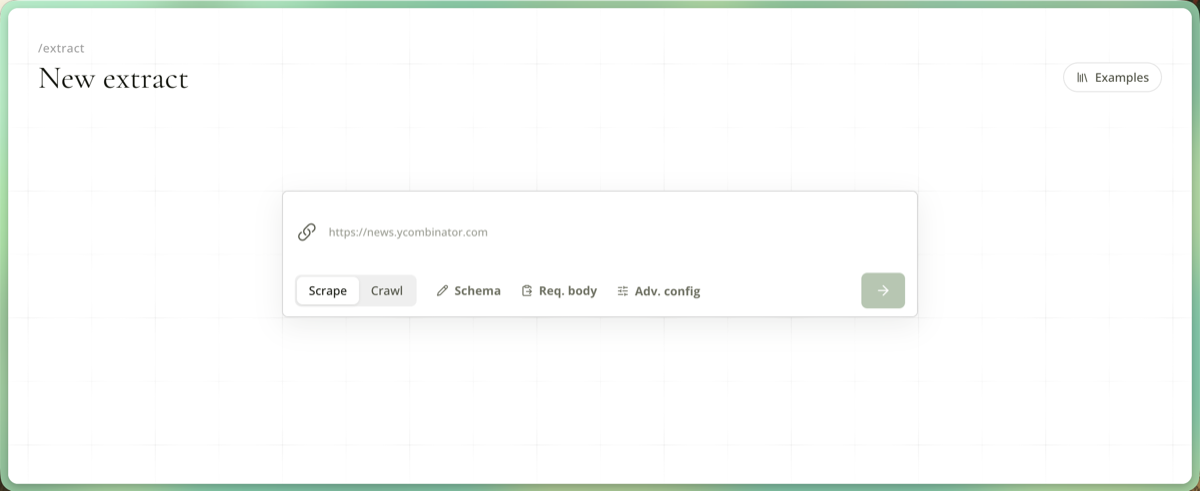
Let me now show you what we have built: Memoization-driven Knowledge and Data Retrieval
It's an work-in-progress implementation for a continual learning harness focusing on Browser-use.
Large-request correctness versus cost
Scatter plot of correctness against average USD cost for Makra, Exa, and Firecrawl. Lower cost is toward the left.
Building applications on top of a memoization-engine like Makra solves all 3 of these problems:
- Lower cost at scale: as layouts are memoized, cost comes down to a vector query.
- Makra extracts data like a traditional scraper. So, hallucinations? Theoretically, none.
- Your agentic loop only has to deal with the DOM nodes it's concerned with: More signal, less noise.
We have built an in-house browser harness (read-only for now) that does the following for you:
- Spins up a browser instance and sets up proxies.
- Extracts any structured or tabular data from the web for you.
- And you can do all this at 1/10th the cost of all the other previous generations.
Try it out in: /playground