If you find value in my newsletter and want to support the work that goes into it consider —> [☕Buy Me a Coffee☕]💡 Want more from me? [SEO Strategy Course] | [Build Your Own SEO Tools (with Python & Agentic AI)] | [Premium SEO Mastermind] Alternatively you can become a paid subscriber:
Intro #
Google is the largest search engine on the planet and everyone wants to rank high in SERPs and get cited and mentioned in AI overviews and AI mode to get clicks and ultimately conversions. To do that, we need to follow Google guidelines, very simple, right?
Not really… that’s the whole problem as well. When John Muller says things like “create helpful content” as part of guidance on what content Google considers to be valuable and high quality, that’s not really clear… it’s still very vague.
Well that’s not the only challenge in understanding SEO. Google also does not provide the complete data in GSC, even if using the API. Google also does not provide any metric or way to quantify the “clicks” we get from it’s AI features, but they did tell us they have a very super busy backlog and have finally launched the feature we all wanted “dark mode in GSC” 😂
It also seems that Google works based on feedback. After publishers have been very vocal about traffic drops, study after study, and post after post… Google finally decided to add more links in their AI features. Makes you wonder why was this not in the plan from the start?
These things make SEO challenging and really like a game with no clear rules… but that’s not it… Google has more for SEOs 😂
Google poisoning search results #
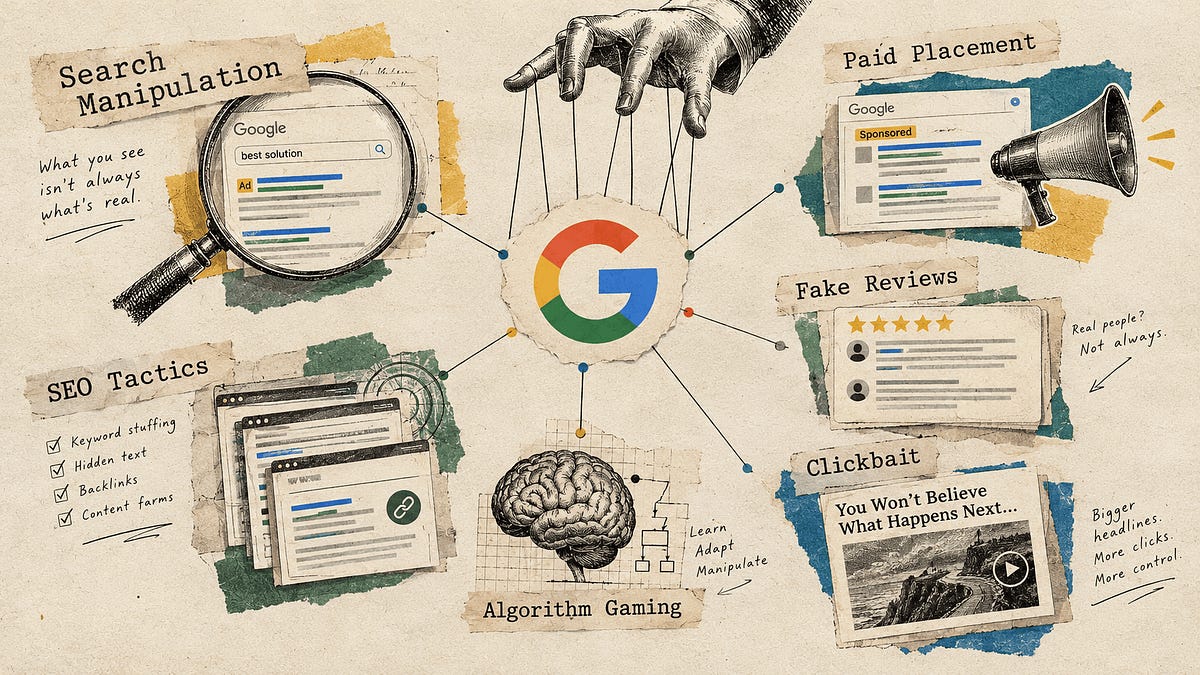
A recent study by Nozzle found that Google is purposefully serving up false data to AI scrapers. In simple words, Google is serving AI scrapers different search results than the ones actually being served to users.
It has been fighting scrapers for a while now, first with requiring JavaScript execution to view its search engine results pages (SERPs) which is a challenge to some of the scrapers.
Then by trying the google.com/goto as an intermediary hop, so that when you click an organic search result, your browser briefly passes through a Google-owned redirect (google.com/goto) before landing on the target page.
But since September 13, 8.4% of SERPs came back poisoned, against 0.17% before. Google is simply serving “different” results to scrapers than users… Google is Cloacking… the irony 😂
For transparency, I’ve always seen some kind of discrepancy between what SEO tools returns as SERPs and what I can see actually in SERPs, but it looks like there’s a huge difference now. As I always say, it’s always fun in SEO!
Historically speaking #
Manipulation from Google is not something new.
Take this for example….
You follow the guidelines you get results right? well no because Google also has a “spam” fighting system that intentionally delays any improvement in performance when you apply SEO improvements to your website.
Instead of immediately improving search rankings when optimization tactics are applied, the system may use time-based delays, dampened responses, or even initially negative responses before rankings gradually change over time.
Did you catch that? You can do everything right, follow SEO best practices, and still see your rankings drop before they improve.
Why? Google may observe how websites and SEO professionals react to unexpected delays or temporary ranking drops, then use statistical correlations to help identify potential spam.
In other words, doing good work doesn’t always produce immediate positive results—and an initial drop doesn’t necessarily mean you’ve done something wrong.
So tell me again, how is SEO not a game? 😄
What does that mean for SEOs? #
when you operate under uncertainty and ambiguity, you gotta have the right mindset to SEO. Here are few things to always keep in mind:
- “It depends” is a perfectly valid answer.
- Trust your gut and understand the limitations of your data. What you can measure isn’t always the whole picture. Data is either missing, incomplete, skewed or manipulated by Google.
- Ask yourself, am I doing a really good job? did I really do my due diligence in creating this piece of content? could it have been any better? and that’s actually your best bet.
- Learn what’s working from others, but create your own thing. Don’t copy, innovate.
- Test, and perform data studies, but combine that with gut feeling and understanding that the data we have in this industry is a lot of times directional.
And That’s a Wrap (Almost 😄) #
SEO is the least boring field there is in my opinion, every day something new, and every website is a new and different challenge or may I say Puzzle that we need to solve.
The important think is accepting the uncertainty and adapting.
The right mindset can help you navigate that… you know what won’t? being rigid like a checklist… but that’s a chat for another day.
That’s that for today folks and see you in the next newsletter!
Support the Riddler! #
- Sign up for my newsletter if you’re not already. (Pssst, you can also become a paid subscriber)
- Share the newsletter and invite your friends to signup. Help me reach 2k signups on Substack by end of 2026 please 🙂
- Provide feedback on how I can make this newsletter better!!!
- Buy me coffee .
- If you’re an SEO tool or an SEO service provider, consider sponsoring my newsletter. I’m also open to other partnership ideas as well.
Disclaimer: LLMs were used to assist in wording and phrasing this blog.