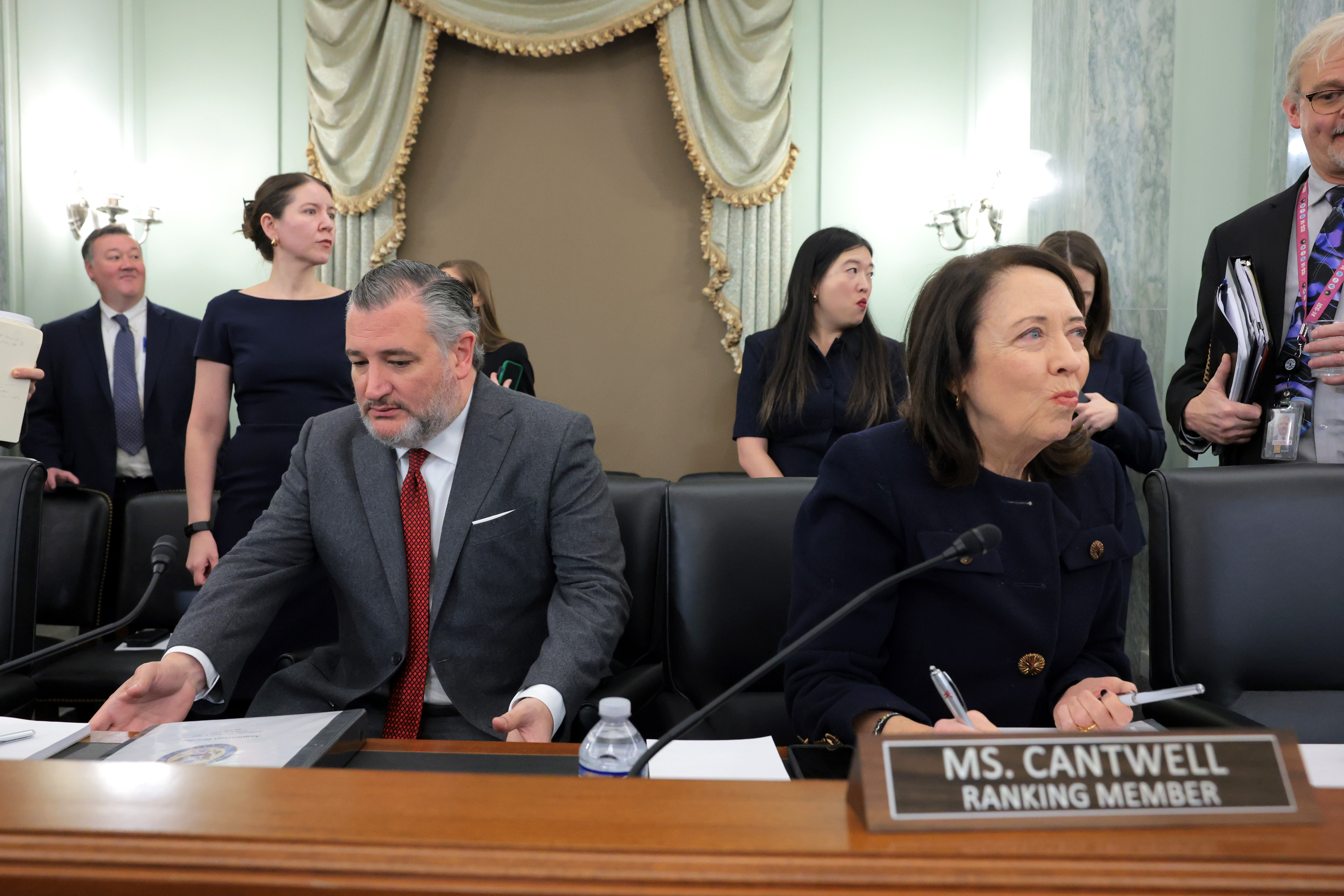
The Senate is teeing up debate on a raft of new bills that would impact online privacy, kids safety and artificial intelligence.
The Senate Committee on Commerce, Science and Transportation will mark up five bills Wednesday. The most high-profile legislation, the Kids Online Safety Act, sponsored by Sens. Marsha Blackburn, R-Tenn., and Richard Blumenthal, D-Conn., would implement broad changes to how social media and other websites handle data and accounts for users under the age of 17.
KOSA would require online platforms — including social media, video games, messaging apps and streaming services – to exercise “reasonable care” when designing features that could lead to more addictive or harmful online behaviors for minors. It would provide parents with digital tools to control and monitor their children’s accounts, prohibit market or product research on children under the age of 13 and empower the Federal Trade Commission to investigate, fine and enforce the law.
Earlier bill versions earned the backing of large tech companies, including Apple, OpenAI, and others.
By contrast in June, nearly 100 smaller parent, youth and tech-focused organizations signaled their opposition to the bill in a letter to congressional leaders. Some of the signatories, like the nonprofit Issue One, were previous supporters of KOSA who turned on the legislation after the House passed a significantly watered down version that stripped out stronger language around tech companies “duty to care,” which would have set a higher legal standard for covered platforms to consider user harm when designing their products.
Legal and ethical design standards are critical for online services, the groups argue, given lawsuits alleging that major tech platforms contribute to teenage addiction, depression, suicide, and non-consensual deepfakes.
“Major social media companies, the companies this bill regulates, are currently on trial across the country,” the letter said. “The evidence in those cases – internal records prioritizing teen engagement over teen wellbeing, safety changes shelved because platforms would lose users, buried research on the benefits of disconnection shows the default poor choices of these companies when the law does not require otherwise. Stripping the duty of care does not lighten a regulatory burden; it removes the most important obligation requiring these products to be designed safely in the first place.”
However, Blumenthal and Blackburn publicly stated that the House version was “dead on arrival” without those provisions, and they remain in the Senate version of the bill being considered Wednesday.
The markup will also consider other major legislation that would regulate age on the internet, safety features for AI chatbots and more. While proponents claim the bills enhance privacy and safety protections, technology experts largely disagree.
The SCREEN Act, introduced last year by Sen. Mike Lee, R-Utah, would require social media companies to implement age verification technology.
Lee has partnered with parent-led groups to advocate for state-level age verification laws that expand parental control over children’s social media accounts. Some public surveys have shown broad public support for age verification laws.
Louis Eichenbaum, a former chief information security officer at the Department of the Interior, told CyberScoop that one of the biggest challenges around online age verification is that it “increasingly requires collecting, storing or validating sensitive identity information about them.”
“The goal should not simply be verifying age, it should be doing so while minimizing the collection, retention, and exposure of personally identifiable information,” said Eichenbaum, now federal chief technology officer at ColorTokens. “Every additional piece of identity data collected expands the attack surface and increases the potential impact of a breach.”
Some privacy groups oppose the SCREEN Act and similar age verification laws, arguing the required data collection outweighs child protection benefits.
The Electronic Frontier Foundation said the SCREEN Act is broader than state-level age verification laws, which only cover websites that are predominantly sexually explicit.
“The bill requires nearly any service hosting even a single piece of sexually explicit content to verify the ages of its users,” wrote EFF director of federal affairs India McKinney. “The result is that the bill would apply not only to adult content sites like PornHub or OnlyFans, but also streaming services like Netflix, and social media platforms like Reddit, Discord, or Bluesky, if they host any adult content.”
The Youth AI Privacy Act, from Sen. Ed Markey, D-Mass., would require new safety features for AI chatbots.
According to a fact sheet released by Markey’s office in March, the bill would ban push alerts, require chatbots to disclose they’re not human, limit data retention, and prohibit using minors’ data for AI training or any purpose beyond providing answers.
The Chatbot Act, by Sens. Ted Cruz, R-Texas, Brian Schatz, D-HawaiI, John Curtis, R-Utah and Adam Schiff, D-Calif. would require AI companies to implement “family accounts” for AI chatbots that give parents the ability to monitor and restrict their children’s interactions. Cruz has said the status quo “has left many parents in the dark” on their kids’ AI use.
The Children’s Artificial Intelligence Toy Safety Act, by Sen. Tammy Duckworth, D-Ill., would create a federal study around toys sold to children that include artificial intelligence or chatbot components.