However, as clips get longer and assets multiply, creators hit a wall. Managing dozens of reference images, ensuring character consistency across scenes, and fixing a single glitch without rerolling the entire video becomes a nightmare. This is where the concept of a "Harness" comes in—the infrastructure that actually makes a powerful model usable for professional workflows.
LibTV recently rolled out a new harness specifically for Seedance 2.5 to solve these engineering bottlenecks. Instead of just being another wrapper, it focuses on asset organization, reference decomposition, and surgical edits.
Solving the "Asset Management" Headache #
The jump from Seedance 2.0 to 2.5 is massive. In a side-by-side test using the same prompt, 2.0 struggled with a 15-second limit and limited motion. 2.5, however, handled a 30-second sequence with complex camera cuts—from close-ups to high-angle wide shots—and the result was nearly usable on the first try.
But "luck" doesn't scale. When a project has 50+ reference slots, manually matching characters and props to a script is tedious. LibTV's AutoLink feature automates this. It analyzes the script and automatically maps characters and settings from the canvas to the prompt. For a comic-style film, you just drop the assets and the script; LibTV handles the matching. It doesn't necessarily make the pixels "prettier," but it makes the production stable.
Precision Editing and Narrative Flow #
The real test is whether an AI can maintain intent across a full sequence. In a test for a beauty ad, LibTV acted as an agent—confirming emotions and narrative direction, generating a storyboard, and then producing the clips, voiceovers, and music.
The most critical feature here is the ability to modify specific segments. If one shot is off, you can point it out and LibTV regenerates only that piece. You aren't forced to gamble your entire timeline on a new seed.
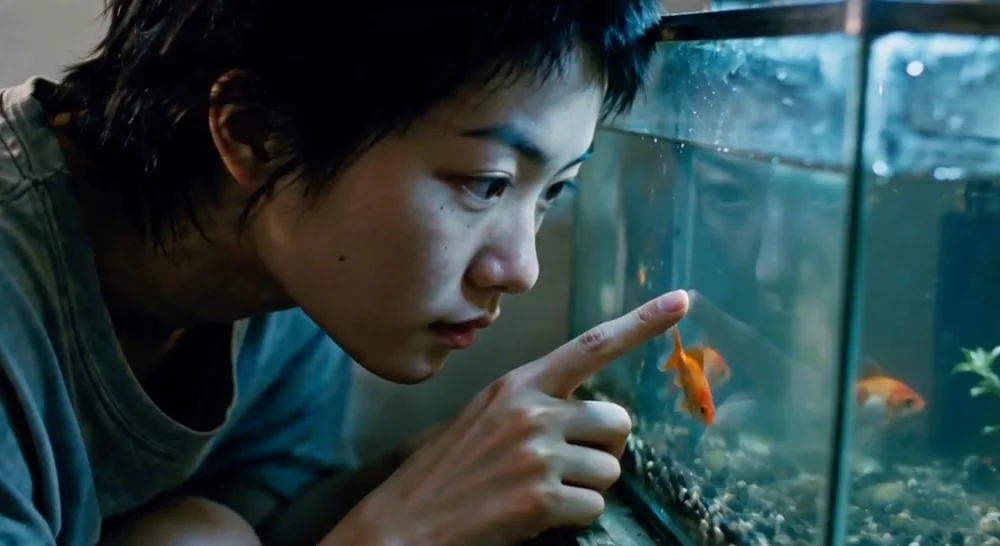
I also tested its "deconstruction" capability. By analyzing a reference video's style, keyframes, and pacing, LibTV creates a reusable asset group. In a project depicting a lonely woman in a damp city, I spent four rounds of iteration adjusting the sequence of actions (putting on socks, leaving the house, etc.) and adjusting the lighting from green to cold blue. Because the system understands shot types and timing, these changes were surgical rather than random.
Scaling to Long-Form Content #
For a more grueling test, I produced an 88-second animation. With over 20 shots, the system used "anchor images" to keep the character's yellow raincoat and glasses consistent across different environments. When I needed to tweak the overall art style, LibTV updated all related shots simultaneously. The limits are still there—specifically with continuous motion. If you replace a middle segment of a fluid action, the seam can sometimes be jarring. I even pushed a video to 4 minutes and 41 seconds. While the scale was impressive, repetition and continuity errors became more frequent.
Ultimately, Seedance 2.5 is a beast of a model, but without a proper harness, it's like a wild horse. LibTV provides the "saddle" that lets a creator actually steer the output. The value isn't in the model itself—which will always be iterated on by big tech—but in the workflow of asset organization and iterative modification.
For those looking to experiment, LibTV is currently offering a discount on 720P generation for Seedance 2.5, bringing costs down to roughly 0.4 yuan per second for a limited time. Next Huawei smart driving is finally hitting the $15k price bracket →
a library of Claude prompt techniques, with plenty of directly applicable cases.