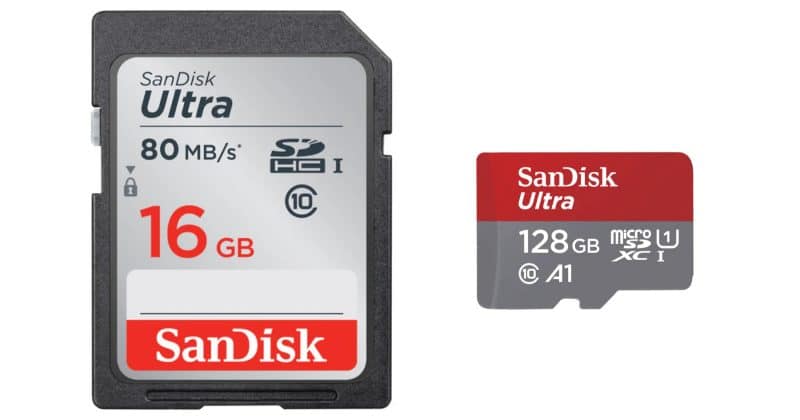
The NAND flash maker's surge highlights how AI infrastructure buildout is reshaping traditional tech investing, with implications for crypto miners and decentralized storage alike.
Sandisk has been on an absolute tear. The pure-play NAND flash memory and SSD supplier saw its shares climb roughly 23% over the 30 days through late June 2026, moving from around $1,695 at the end of May to over $2,090 by June 26. One particularly wild session in mid-June saw the stock pop 11% in a single day after favorable pricing signals from Apple hit the wires.
The company has become one of the top performers in the S&P 500 this year, driven by AI data-center workloads that require substantial amounts of high-capacity memory.
What’s driving the rally #
Sandisk reported Q2 2026 revenue of $3.03 billion, a figure the company explicitly attributed to the ongoing boom in AI memory demand, causing shares to rally double digits on multiple occasions throughout the year.
Western Digital, Sandisk’s former parent company, completed a planned exchange of its remaining roughly 1.04 million Sandisk shares on or around June 22, 2026. The debt-for-equity swap eliminated what traders call an “ownership overhang,” essentially the persistent worry that a large holder might dump shares at any moment.
The AI storage economy and what crypto investors should notice #
No crypto assets, protocols, or tokens were referenced in any of the reporting around Sandisk’s June performance. This is a traditional semiconductor story through and through.
The AI infrastructure buildout that’s lifting Sandisk has direct downstream effects on multiple corners of the digital asset ecosystem. Decentralized storage networks like Filecoin and Arweave depend on the same underlying hardware. When NAND flash prices move, it changes the economics for storage providers across both centralized and decentralized networks. Rising AI demand that tightens flash memory supply could squeeze margins for decentralized storage node operators, or alternatively, give them pricing power if centralized alternatives become more expensive.
Proof-of-space consensus mechanisms, used by projects like Chia, rely heavily on SSD performance and availability. A world where enterprise buyers are hoovering up every high-capacity SSD Sandisk can produce is not necessarily a friendly world for smaller-scale storage miners trying to source hardware at reasonable prices.
What this means for investors #
The elimination of Western Digital’s ownership stake is also instructive. Corporate restructuring events that remove large overhanging sellers can be powerful catalysts. For crypto investors accustomed to tracking token unlock schedules, the parallel is obvious. A large holder’s planned exit, once completed, often removes a ceiling on price action.
Sandisk competes with Samsung, SK Hynix, Micron, and Kioxia in the NAND market. For decentralized storage networks and proof-of-space miners, pricing dynamics across this oligopoly ripple directly into their operating costs and, ultimately, their token economics.
Disclosure: This article was edited by Editorial Team. For more information on how we create and review content, see our