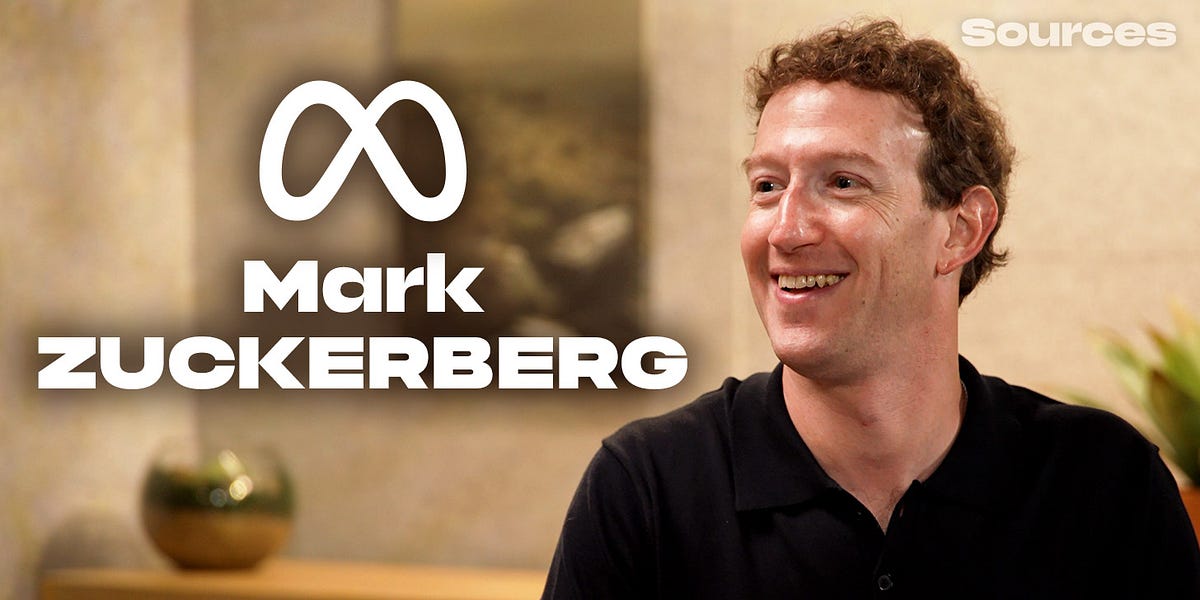
When Mark Zuckerberg laid out his “personal superintelligence” vision over a year ago, he was thinking about what Meta released today: Muse, an AI agent with its own computer that works for you around the clock. His ambition, he tells me, is to “give every person in the world a very capable personal agent that can understand their goals and can just work on their behalf 24/7.”
I sat down with Zuckerberg at Meta headquarters last Friday, and I’ve been trying Muse for the last several days. I’m impressed. It’s essentially OpenClaw for normies, with a serious focus on security that I think will make this kind of product accessible to a lot more people. You can also connect Muse to your Instagram and Facebook accounts, including the tools for running a business and buying ads.
Zuckerberg’s ambition is to build something he can hand to anyone in his family, regardless of their technical ability. “I don’t think there are going to be billions of people who are going to buy a Mac Studio and configure it and run it at their home,” he tells me.
Available now everywhere you get podcasts. Getting people comfortable giving an agent access to their lives is another challenge. Zuckerberg tells me he personally helped recruit the founder of Signal to work on a confidential virtual machine designed to keep even Meta from seeing what Muse is doing on a user's behalf. That’s an important promise from a company asking people to connect their email, messages, and other personal information to an AI that can act on their behalf. We get into how Meta is approaching that problem and why Zuckerberg sees privacy as a reason people will choose Muse.
He’s also making it very hard to compete on price. Muse launches with up to 100 million tokens per week for free, enough to give people plenty of room to put an agent to work. Zuckerberg thinks Muse will eventually pay for itself by helping people earn and save money, with Meta taking a small cut of transactions and offering a paid subscription for power users. We discuss how he uses Muse himself, from organizing baking projects with his daughter to critiquing his MMA training, and what happens when Muse agents start interacting with one another.
We also get into the backlash against data centers, why he thinks speculative developers are making it worse, Meta’s youth safety settlement, and the privacy concerns surrounding its smart glasses. He explains what went wrong with Llama 4, how he rebuilt Meta’s AI lab around him, and why he disagrees with rivals keeping their most powerful models to themselves.
A MESSAGE FROM MY SPONSOR
Reliable Clean Energy
Constellation is America’s largest producer of reliable, clean energy, driving progress and innovation coast to coast. From local neighborhoods to iconic cities, we bring the energy that serves industries, strengthens communities, and moves America forward.
Episode highlights #
- Zuckerberg is giving away a lot of compute to win the personal agent market. Muse launches with up to 100 million tokens a week for free, plus a virtual machine to work on your behalf. With startups likeInstinct andTown chasing the same market, Meta is setting an aggressive expectation for how much a personal assistant should do before asking you to pay. Those startups don’t have Meta’s existing business to subsidize that usage. Zuckerberg’s plan is to eventually “take a very small cut of whatever the transaction is,” potentially paid by the businesses users transact with. “We think that this thing is actually going to make you money and save you money, and that is how it’s going to pay for itself.”
- Zuckerberg personally helped recruit Signal’s founder to make Muse’s virtual computer private. He says he andNat Friedman recruitedMoxie Marlinspike to work on the confidential virtual machine behind Muse. The ambition is to give people a computer in the cloud with the confidentiality they’d expect from a machine under their own desk: “Even Meta cannot see the content that is in there.” Zuckerberg says he isn’t aware of anyone offering anything close to that system. He also describes separate “sentinel” agents that monitor what Muse receives and sends, flag possible prompt injections, and require user approval for sensitive actions.
- He thinks speculative data center developers are helping fuel the backlash against AI infrastructure. Zuckerberg draws a distinction between companies like Meta, which he says plan to invest in communities for decades, and developers trying to secure a site and flip it. “They don’t really care as much about the local community, and they’re not invested for the long term,” he says. He argues that Meta’s projects face less opposition because the company has a reason to invest in local jobs and training.
- He responds to Meta’s landmark youth-safety settlement and to privacy concerns over the company’s smart glasses. Zuckerberg says he wants the youth safety settlement to become an industry framework, with YouTube and TikTok agreeing to the same restrictions so that tightening Instagram’s rules doesn’t simply send teens elsewhere. On glasses, he defends the recording light and says Meta needs to explain its safeguards more clearly as the devices go mainstream.
ICYMI: Sources ep. 1 with Sam Altman #
Available everywhere you get podcasts. Sources is a newsletter and podcast by Alex Heath about the AI race, featuring conversations with leading founders and technologists. Every week, Sources reaches the inboxes of thousands of decision-makers in tech, finance, policy, and media.