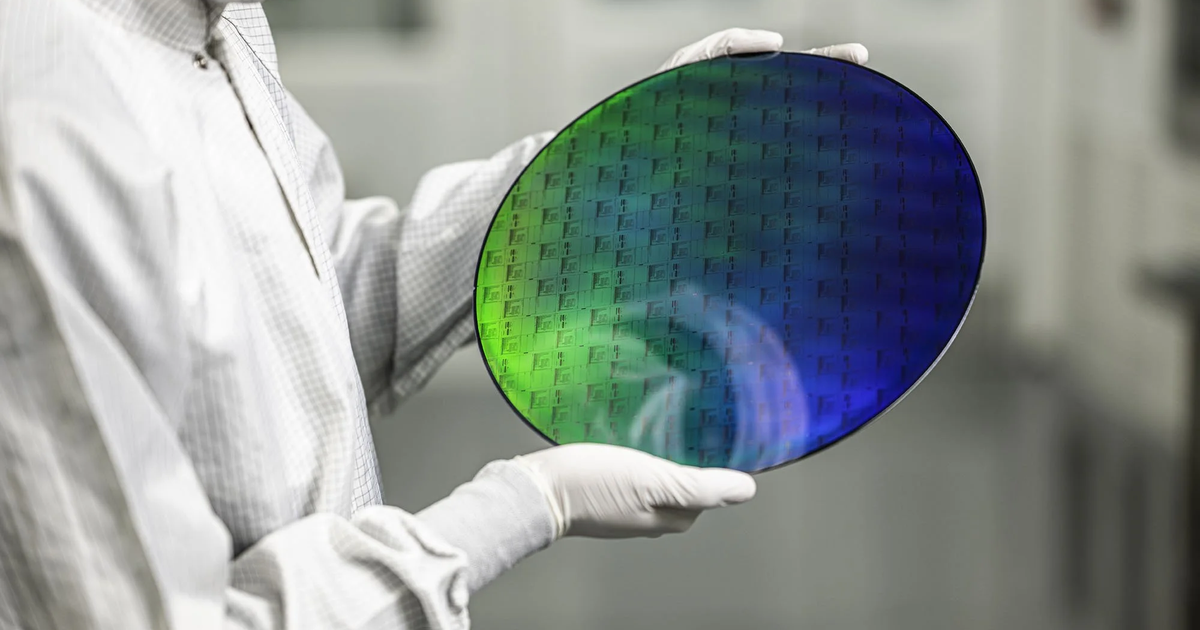
PsiQuantum is sharing optical circuit switch samples with prospective customers as it adapts silicon photonics developed for quantum computing to the networks connecting AI infrastructure.
The company reported typical insertion loss of 1.2 decibels (dB), crosstalk performance of 40 dB, and reconfiguration in less than three milliseconds in its own laboratory tests. The eight input, eight output (8×8) demonstrator operates without optical amplification.
Commercial products are expected to be announced in the coming months. PsiQuantum did not identify the prospective customers receiving samples or announce a commercial deployment.
Keeping AI traffic optical #
The potential application is connectivity between GPUs and other computing resources, where moving data can constrain the performance of large AI clusters.
Optical circuit switching establishes paths that carry light directly between ports, avoiding the optical-to-electrical conversions used in conventional electronic switching. PsiQuantum says this approach could reduce network power consumption and latency, helping accelerators spend more time computing.
Its demonstration device has with no moving parts or mirrors. The company describes it as strictly non-blocking, allowing a connection between an available input and output without rearranging existing connections.
Low insertion loss helps preserve the optical power available to receivers as signals traverse the network. PsiQuantum says it is developing larger devices, although it has not published specifications for them. The reported reconfiguration time refers to changing the optical path rather than the time traffic takes to traverse an established connection.
A commercial route for quantum components #
The switch extends a photonics platform developed over nearly a decade for PsiQuantum’s planned fault-tolerant quantum computers into conventional computing infrastructure.
“This opportunity exists because we chose to solve the hardest scaling problems at the beginning of our roadmap to utility-scale quantum computing,” CEO Victor Peng noted in the announcement.
PsiQuantum separately uses a 64×64 barium titanate (BTO) switch in its quantum systems. It explained BTO is not required for the AI networking demonstrator or its initial planned products, leaving that material as a possible route to faster future devices.
Other suppliers are also developing optical switches for AI networks. Salience Labs recently raised $125 million and unveiled a 64-port switch, following an earlier 32-port design. PsiQuantum’s 8x8 demonstrator is smaller, with larger devices still in development. Port count alone, however, does not establish relative performance, which also depends on optical loss and reconfiguration speed.
PsiQuantum’s manufacturing work is supported by a $100 million U.S. Department of Commerce award under the CHIPS and Science Act, covering optical switches, photon detectors, and advanced packaging.