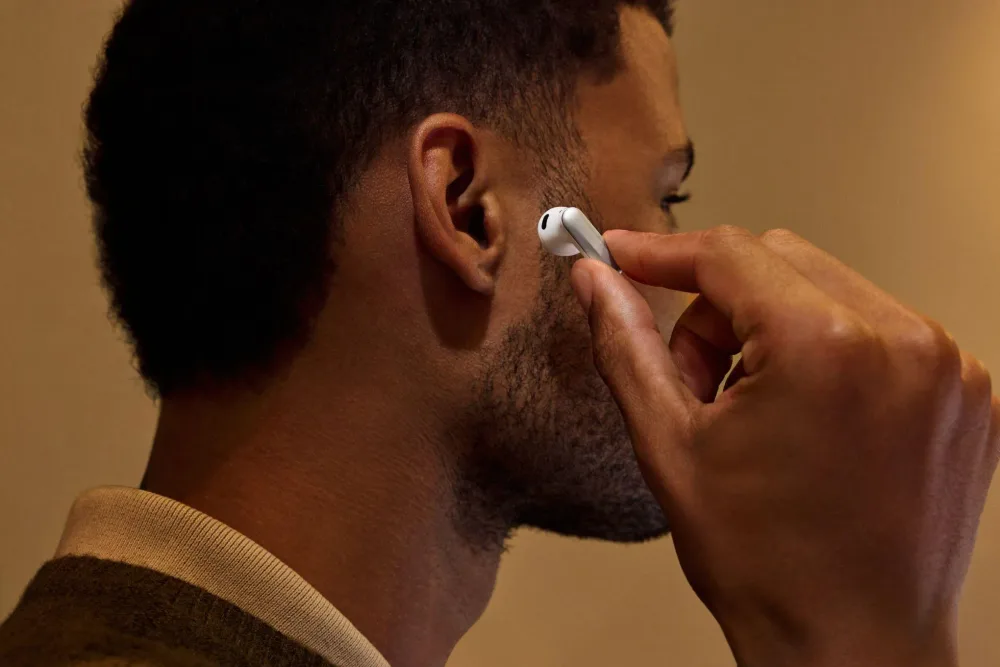
The most significant technical detail here isn't the form factor, but the charging case. It isn't just a battery reservoir; it has built-in 4G connectivity. This allows the system to upload captured audio and trigger LLM processing directly via the cellular network. If you are in a meeting or a field interview and your phone is dead or tucked away in a bag, the earbuds can still sync your data to the cloud for immediate transcription. This is a massive step toward a truly independent AI workflow for professionals who can't afford to be tethered to a mobile device.
Hardware Specs and Audio Capture #
From a hardware perspective, Plaud is leaning into the "always-ready" use case. Here is the breakdown of what's actually inside the hardware: Microphone Array: Each earbud is equipped with three microphones, specifically tuned to capture clear audio from up to two meters away.Local Storage: There is 16MB of onboard storage per earbud (32MB total), which acts as a buffer for immediate recording before the 4G sync takes over.Battery Life: The earbuds provide roughly six hours of continuous recording time.Connectivity: Integrated 4G in the standalone charging case for autonomous data processing.
Practical Implementation for AI Workflows #
If you are looking at this from a prompt engineering or LLM agent perspective, the value isn't just in the "recording" but in the structured data output. Most transcription tools give you a messy wall of text. Based on Plaud's previous product iterations, the goal here is to feed that raw audio into a model that can output structured summaries, action items, and meeting minutes automatically. The deployment of an LLM agent that can ingest audio via a 4G-enabled case means you could theoretically walk out of a briefing and have a complete summary sitting in your Notion or Obsidian vault before you even reach your car. It moves the AI from being a "tool you open" to an "environment you inhabit."
The six-hour battery limit is clearly the bottleneck for long-form seminars or all-day conferences, but for standard one-on-one meetings or quick field notes, the autonomy provided by the 4G case makes it much more capable than a standard Bluetooth headset. It’s a specialized piece of hardware for people who want their AI assistant to be a proactive listener rather than a reactive app.
Next Jensen Huang thinks we already hit AGI and it's basically →