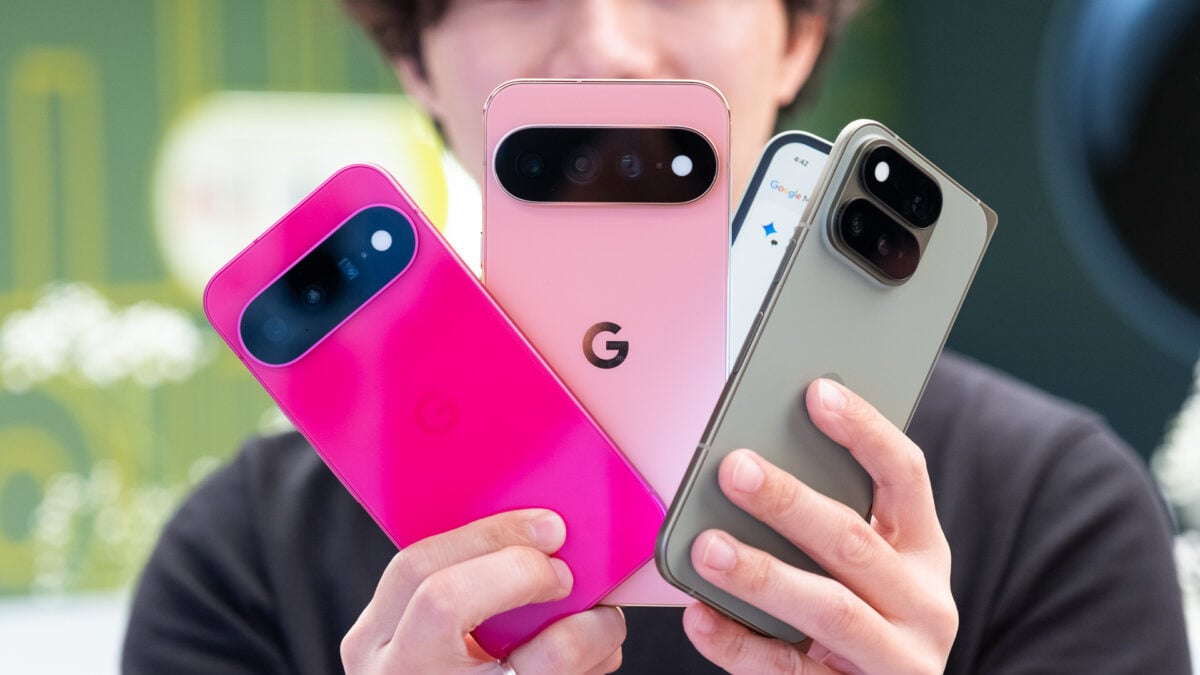
Google’s Pixel 11 series phones—the Pixel 11, Pixel 11 Pro and 11 Pro XL, and the Pixel 11 Pro Fold—are officially here. Weaved between the minor updates to the design, cameras, and performance is a whole lot of AI. The higher-end 11 Pro models have a new flash that can glow in multiple colors when Google’s AI chatbot, Gemini, is talking or to indicate when it’s “thinking.”
Shoving Gemini and AI (with more proactive suggestions) in more places until the Pixel phones become AI-first phones is Google’s game—one it’s been playing for a few years at this point. It explains why the Pixel hardware design has mostly remained the same since the Pixel 9 series. That’s not necessarily a bad thing; the Pixel 11 lineup looks distinct compared to the latest iPhones and Samsung Galaxy phones.
I’ll get to all the hardware and software improvements in a second, but first: price hikes… for some models. The Pixel 11 and 11 Pro start at $899 and $1,099, respectively. That sounds like a $100 price increase compared to the Pixel 10 and 10 Pro, but it’s actually not, because the new phones start with 256GB of storage instead of 128GB. The Pixel 11 Pro XL, however, starts at $1,299 for 256GB of storage, which is $100 more than the Pixel 10 Pro Fold was, which wasn’t offered with 128GB. The same goes for the Pixel 11 Pro Fold; it starts at $1,299 for 256GB of storage, $100 more than the previous version.
And because RAMageddon has made the cost of RAM and storage prices skyrocket, 16GB of RAM is reserved only for the 512GB and 1TB storage options for the Pixel 11 Pro, 11 Pro XL, and 11 Pro Fold. All base 256GB Pixel 11 phones come with 12GB of RAM, regardless of storage size. Tech enthusiasts will surely grumble at the memory downgrade for the 11 Pro devices.
All Pixel 11 phones are available for preorder starting today, Aug. 12, and will be on shelves on Aug. 20.
Pixel 11
The basic Pixel 11 has the fewest new changes. You can tell it apart from the Pixel 11 Pros with its glossy glass back and matte aluminum frame. Google also says it shrank the camera bar, which now has a black “visor” that extends all the way across it, by 40%.
It comes in four colors: Pistachio, Hibiscus, Frost, and Obsidian. The first two colors are fun; Pistachio is a muted pop, and Hibiscus is vibrant. Frost and Obsidian are the safe options.
You get the same 6.3-inch 120Hz display with up to 3,000 nits of peak brightness and built-in Pixelsnap magnets for wireless charging and attaching accessories.
All Pixel 11 phones have a faster Tensor G6 chip. Google says the CPU is up to 25% faster for web browsing and up to 15% faster for launching apps, and its TPU (Tensor Processing Unit) for AI tasks is up to 50% faster. On-device AI processing is up to 3.5x faster while consuming 3.5x less power, according to Google.
The Pixel 11’s upgrades are mostly to its cameras. You still get three rear cameras, but the main lens has a new 48-megapixel sensor that lets in 56% more light, and the 10.8-megapixel 5x telephoto now does 30x “Super Zoom” versus the 20x “Super Res Zoom” on the Pixel 10. The 13-megapixel ultrawide and 10.5-megapixel selfie cameras are unchanged. I saw a demo of the new 30x Super Zoom, and it did look like Google may have improved its upscaling/sharpening algorithms, though you still have to hold the Pixel 11 very still in order to focus properly at the highest zoom level.
The other new camera features are all software-related. There’s a “Magic Capture” feature that lets you record a video, and Gemini will pluck out several still photos based on what it thinks are the best moments. Google says the AI will look for stuff like smiles, laughs, and “dynamic action.” These aren’t just frames pulled from the video with video-quality resolution, but full-resolution still photos reconstructed with sharper details. Circle to Search, which lets you circle things in a photo or video and get Google results about them, now works right in the camera—no need to capture a photo or video first. There’s also a feature to translate videos in real-time with Live Translate.
Google is also pushing a new “Camera Looks” feature, which are essentially preset styles that alter the look of an image. They’re similar to Photographic Styles on iPhone. Google says the three new Camera Looks that can be set as a default (Natural, Shadows, and Vanilla) can make photos appear less processed. There are an additional six other Camera Looks that can be selected, some of which are a little film-like.
Content creators will appreciate the “Creator Suite,” which provides several ways to help make capturing social content easier. For example, you can load up a teleprompter that scrolls as you talk; turn on guidelines to frame vertical videos so they’re in the “safe zone” away from the usual column of buttons on the right side of a social app like TikTok, YouTube, and Instagram; and even arrange your recorded clips on a storyboard timeline to make editing easier.
Pixel 11 Pro and 11 Pro XL #
The Pixel 11 Pro and 11 Pro XL invert the Pixel 11’s frame and glass back. Instead of a glossy rear, it’s matte, and instead of a matte aluminum frame, it’s polished. Only the Obsidian (black) is all matte—frame and glass back.
In addition to Obsidian, the Pixel 11 Pro and 11 Pro XL come in Canyon, Olive, and Fog. They’re nice colors, especially the orange/coral-like Canyon, and better than another shade of blue for the millionth time.
They also have the same 6.3- and 6.8-inch 120Hz displays as before, but they’re up to 2x more scratch-resistant and can reach an even higher 3,600 nits of peak brightness.
The two phones also have the same Tensor G6 chip as the regular Pixel 11. Performance should be the same for the 256GB models, since they have the same 12GB of RAM. Gemini and AI tasks may be more responsive on the 512GB and 1TB versions of the Pixel 11 Pros since you get 16GB of RAM.
The most visible change is the new “HiLight” LED flash on the far right of the camera bar. This LED replaces the temperature sensor on previous Pixel phones. At launch it’ll do two things: you can set it to light up in a color when a specific contact calls, and it’ll glow when Gemini is activated. A Google rep showed me how you could place your Pixel 11 Pro facedown on a table and activate Gemini by holding the power key. The HiLight then glows when Gemini is talking or “thinking.” In the future, HiLight will also work with incoming notifications.
Like the Pixel 11, the Pixel 11 Pros have all of the same new software features. The triple-lens rear cameras are better in several ways. The 50-megapixel main and 48-megapixel 5x telephoto cameras have all-new sensors that let in more light; the telephoto should take better low-capture photos and videos, according to Google. The telephoto also supports portrait mode shots at 5x zoom, and the “Pro Zoom” has increased to 120x, up from the 100x on the Pixel 10 Pros. Additionally, Night Sight for night photography is up to 4.5x faster on the 11 Pros.
Pixel 11 Pro Fold #
Finally, there’s the Pixel 11 Pro Fold. Google’s book-style foldable is still very expensive, but there are some upgrades that make it better than its predecessor. It comes in just two colors: Olive and Obsidian.
Durability matters a lot for foldables, so Google made the back out of a new glass composite that it claims is nearly impossible to break. There’s a new gearless hinge that protects the inner screen, which, by the way, also has a reduced crease (though maybe not as nearly invisible as on Samsung’s Z Fold 8 and Z Fold 8 Ultra). Overall, Google says the Pixel 11 Pro Fold is 3x more durable compared to the Pixel 10 Pro Fold.
The Pixel 11 Pro Fold also sheds some weight. It’s 10% lighter than the Pixel 10 Pro Fold, 1mm thinner, and the bezels around the screen are thinner. Both displays are 20% brighter this time, too, and can reach the same 3,600 nits peak brightness as the Pixel 11 Pro and 11 Pro XL.
You’ll notice there’s a tweaked camera visor on the rear camera bump. You get the same HiLight LED as on the 11 Pro and 11 Pro XL, but also a new 48-megapixel main and telephoto lens capable of 30x Super Zoom (up from 20x). The cameras also support all of the new camera software stuff, including Magic Capture, Camera Looks, and Creator Suite.