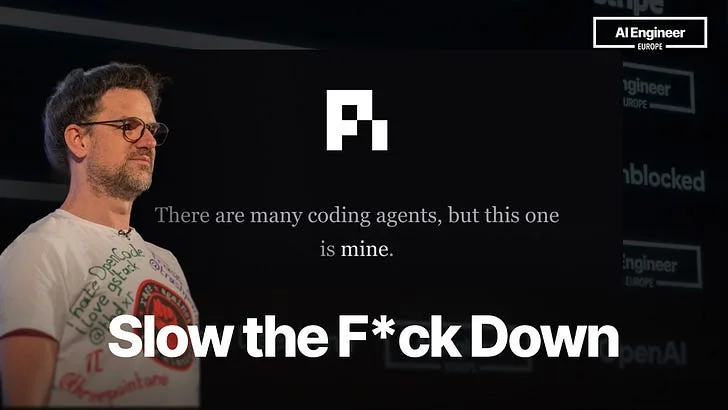
If you have ever had an agent crash mid-task and lost the entire conversation context or progress, Pi Durable is the specific solution for that. While Pi 1.0 focuses on the interface and tool integration, the Durable version is a full TypeScript port designed to externalize state. This means the agent doesn't just remember the chat; it checkpoints every single step. If the process dies or the server restarts, the agents and sub-agents resume from the exact state they were in, preventing the "start over from scratch" loop that plagues most LLM workflows.
What makes Pi 1.0 different from standard harnesses? #
Pi 1.0 moves away from the rigid "chat box" feel by introducing a TUI theme and making full-screen mode the default. Technically, it solves the latency and context issues that usually kill productivity. It implements cache warming specifically for Anthropic models and supports deferred tool , so the system doesn't hang while initializing every possible capability.
One of the most useful additions is the ability to inject mid-conversation system messages. Usually, system prompts are static at the start of a session. Pi 1.0 allows for transcript-aware prompt changes, meaning the "rules" can shift based on what has already happened in the conversation. It also natively supports MCP, Jev, and various image models via its Codemode.
How does Pi Durable handle state and concurrency? #
The shift to TypeScript allows Pi Durable to run anywhere with a JavaScript runtime, including Node, Bun, or Cloudflare. Instead of keeping everything in volatile memory, it uses pluggable storage backends like SQLite, JSONL, or standard Memory.
This architecture enables a few high-level capabilities:
- Parallel Branching: You can run a main conversation channel and several separate threads simultaneously without them blocking each other.
- Dynamic Hot-Swapping: You can update the code for a tool or extension while the agent is active. The next time the agent calls that tool, it uses the updated code without needing a reboot.
- Background Compaction: To avoid hitting token limits, the system automatically summarizes older parts of the conversation in the background so the agent can keep working without a manual "summarize this" command.
- Multiplayer Sync: State—such as a shared to-do list—is stored in documents alongside the transcript. This lets multiple users connect to the same agent and steer it in real-time.
Getting started with extensions and packages #
Pi is designed to be minimal. It intentionally skips built-in features like plan mode or sub-agents in the core install, forcing the user to define those via extensions. You can customize the behavior using prompt templates, skills, and themes. These are bundled as Pi packages and can be distributed through git or npm.
If you are looking to implement this, you can run it interactively or automate it using the print or JSON modes. For those contributing to the project on GitHub, be aware that new issues and PRs from new contributors are auto-closed by default to manage volume, though maintainers review these daily.
When should you choose Pi over other frameworks? #
Choose Pi Durable if your workflow involves multi-step processes that cannot afford to fail (like a checkout sequence) and require rollback capabilities. Because it treats every step as a checkpointed task, the risk of data loss during a crash is mitigated. If you need a lightweight harness that you can modify via npm packages rather than fighting a monolithic framework, this is the right path.
For those who want to see the technical implementation, the documentation is hosted at `https://github.com/earendil-works/pi/releases`. The key is to stop treating agents as ephemeral chat sessions and start treating them as durable processes with persistent state.

[Next SimuVerity: Benchmarking Agents for Engineering-Grade Simulink Model Generation →](https://promptcube3.com/en/threads/9815/)
All Replies (1) #
Want a live back-and-forth? Join the global AI chat room — login to talk. Pi Durable's checkpointing every step is a game-changer, but I'm curious about the overhead. How much extra time does it add per step?