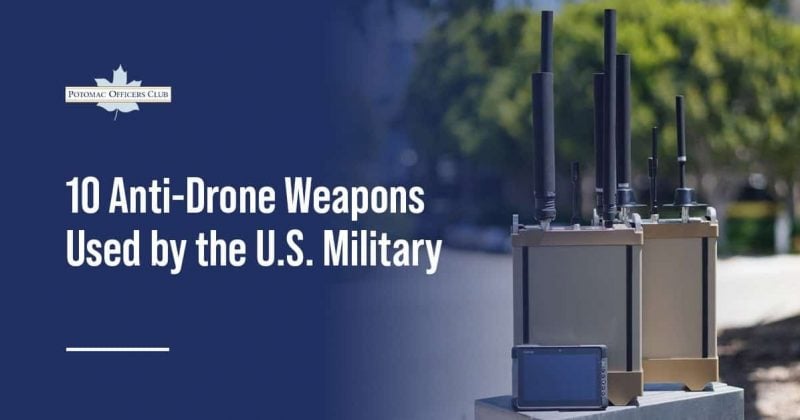
AeroVironment's Titan-MS system marks the first delivery under a $500 million Army contract, as unauthorized drone incursions near nuclear sites force the military's hand.
The US military just wrote an $80.5 million check to keep drones away from its nuclear weapons. AeroVironment landed the task order for its Titan-MS counter-drone system, a platform that uses artificial intelligence and machine learning to detect, track, and neutralize unmanned aerial threats hovering a little too close to the nation’s most sensitive military installations.
The award, executed around July 6-7, represents the first delivery under a much larger $500 million indefinite-delivery, indefinite-quantity contract established with the Army.
Why the Pentagon is moving fast #
The urgency here isn’t theoretical. Unauthorized drone incursions were reported at Barksdale Air Force Base earlier in 2026. Barksdale, for context, is home to the Air Force Global Strike Command, the organization responsible for managing nuclear-capable bombers and intercontinental ballistic missiles.
The Titan-MS system is designed specifically for fixed-site protection. It uses multi-sensor fusion, combining electro-optical and infrared payloads with counter-drone radar to build a layered detection net. The AI component handles the hard part: distinguishing between a hobbyist’s wayward quadcopter and something more concerning, then figuring out how to neutralize it.
The Titan-MS is built to handle both RF-controlled drones that communicate with an operator via radio frequency, and autonomous drones that navigate independently using pre-programmed routes or onboard AI.
The contract supports JIATF-401’s Domestic Shield initiative, a multi-agency coordination effort aimed at protecting military installations from aerial incursions across the continental US.
The defense AI arms race #
AeroVironment isn’t operating in a vacuum. Shield AI and Lockheed Martin are both developing their own AI-driven counter-drone systems.
The $500 million IDIQ ceiling on this contract suggests the Department of Defense expects to roll out counter-drone systems across multiple installations. The initial $80.5 million order covers the first deployment. For AeroVironment, a company that built its reputation on small unmanned aircraft systems, pivoting to the business of shooting them down represents a rather elegant hedge.
Disclosure: This article was edited by Editorial Team. For more information on how we create and review content, see our