Even as companies are innovating with AI in how to run their operations, some are also innovating in how they deal with their investors.
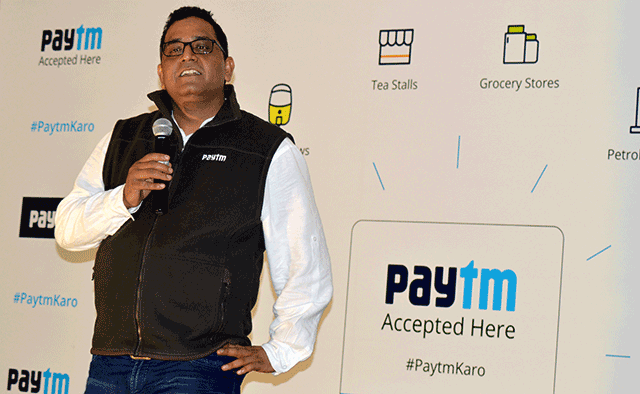
Paytm has started publishing its quarterly earnings material also as a downloadable markdown (.md) file, meant specifically to be fed into AI chatbots and agents. The company rolled this out alongside its Q1 FY27 earnings, and CEO Vijay Shekhar Sharma took a moment during the earnings call to explain, half-jokingly, that the “.md” in question had nothing to do with group CFO Madhur Deora.
“For everyone, I have a very interesting news that this time, we picked up ‘.md file’. And as you can expect, this is not a ‘Madhur Deora’ file, this is a ‘markdown’ (.md) file as we call it in the AI world,” Sharma said on the call. “This will allow you to just download and give it to your favourite chatbot, which is allowed in your business and company.”
The company has now put out the file on its investor relations page, and is pitching it as a single download that bundles the earnings release, investor presentation, call transcript, and financial results together. “So, you basically have even all the information in a single .md file and you can talk to our agent that will be powering this soon. So right now, do it yourself, download .md and play with this,” Sharma added, before signing off the call.
Paytm also promoted the file on X, telling followers to grab it off the investor relations page and “upload it to your favourite AI agent to ask questions about our latest quarterly results.”
The idea is fairly simple once you unpack it. Analysts and investors going through a results package usually have to sift through a PDF or an HTML page, pull out the numbers they need, and then paste chunks of it into a chatbot if they want AI-assisted analysis. A markdown file skips a step in that process, since it strips out the formatting overhead of a typical earnings PDF or webpage and leaves behind clean, structured text that a language model can parse directly. It is the same broader shift that has pushed platforms like Cloudflare to roll out tools converting entire websites into markdown on request, purely so AI crawlers and agents can read them without burning through extra tokens on layout and styling.
For Paytm, this fits into a larger AI push the company detailed on the same call. Sharma said Paytm has built a low-cost AI model, running on 4 billion parameters, that the company plans to sell to other businesses as a software service, its first major revenue stream outside payments and financial services. He said the model has helped the company cut down on call centre costs, and framed AI broadly as the thing that will end up deciding which financial services players actually make money going forward. “When you have a financial services business powered by AI, the differentiation will be how many customers you have and what you do with them,” he said. The earnings themselves were strong. Paytm’s revenue for the June quarter grew 27.6 percent year-on-year to roughly ₹2,448 crore, while net profit jumped 79 percent to ₹220 crore. Adjusted EBITDA margin expanded to 8 percent from just 1 percent a year earlier. UPI transaction value grew 45 percent year-on-year, which the company says is roughly twice the pace of the overall UPI market.
With both institutional and retail investors now heavily using AI for their research, it does seem that sharing .md files with earnings reports is where investor relations is headed. Paytm has said an AI agent will eventually sit on top of this data directly, letting anyone query the company’s numbers without down anything at all. Until that ships, the file is there for whoever wants to try it themselves.