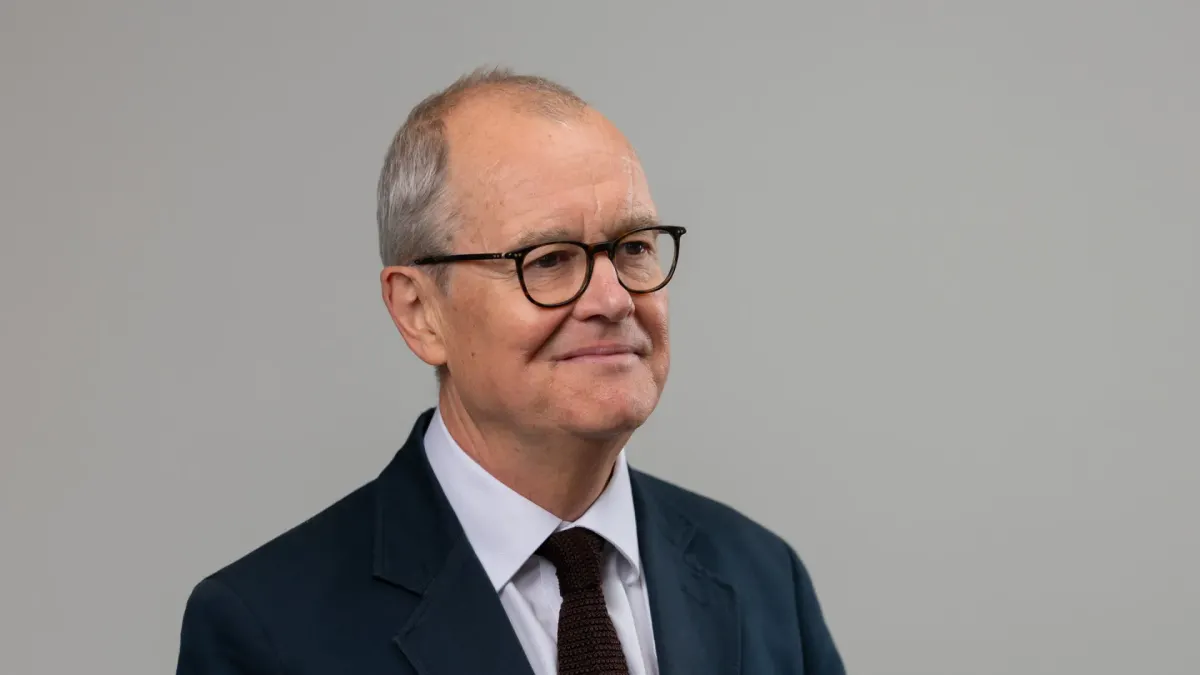
The UK’s Prime Minister, Andy Burnham, has appointed former Science Minister Patrick Vallance to chair a new central government AI Taskforce.
The taskforce will sit within a new Office for the Prime Minister and the Cabinet (OPMC) under a shakeup of government machinery under the new PM.
The new OPMC will house No.10, Burnham’s recently established No.10 North – based out of Heron House in Manchester – “and core Cabinet Office functions serving the PM and Cabinet” the Cabinet Office said on July 22.
The Taskforce will lead on "transformation and AI adoption across the public sector."
Responsibility for the UK's respected AI Security Institute, previously under the now-disbanded Department for Science, Innovation and Technology, will "move to the Office for the Prime Minister and the Cabinet," the government said, as Burnham – publicly an avowed decentraliser – looks to centralise No.10 control across a range of government functions.
Vallance is "tremendous"
The British Pharmacological Society’s CEO Richard Torbett was among those praising the “tremendous” minister for the Sciences after his resignation last week. Torbett said: “He has been instrumental in beginning to turn around international sentiment towards the UK as a life sciences destination”
Vallance is a veteran of pharmaceutical firm GSK, where he was President of R&D from 2012. Prior to joining GSK, he was Professor of Medicine and led the Division of Medicine at University College London (UCL) where he conducted research into diseases of blood vessels and endothelial biology.
“The remit of the [AI]Taskforce will be to transform public services and unlock growth and prosperity across the country, learning lessons from models such as the Vaccines Taskforce which showed that an empowered unit, with clear accountability to the Prime Minister, can drive extraordinary outcomes and deliver real benefits for people across the country." -[The Cabinet Office]. July 24.
Minister for Artificial Intelligence Kanishka Narayan added in a canned statement: "AI is likely the most significant technology in human history. That is why it is now at the UK Cabinet’s table, so we can reindustrialise with AI, secure our country, and support our public services... We will focus on using AI to boost growth, strengthen public services and create opportunities in every part of our country."
AI to No.10, GDS to DCMS?
The central government organisational shakeup includes, controversially, putting the Government Digital Service (GDS) under the Department for Digital, Culture, Media and Sport, which also now has a telcos remit.
That latter move has raised some eyebrows. As one former GDS product lead, Angela Hilton, put it on LinkedIn: “I just can't make sense of GDS in DCMS, there's just no common ground I can see. I'm really worried about the impact on the many brilliant people who work there, who have belonged to 3 departments in as many years. From the break up of BEIS creating DSIT (+ DESNEZ and DBT), to the merger of CDDO and GDS to breaking away from Cabinet Office and it's [sic] 2024 merger into DSIT, not to mention all the other big and small restructures along the way.
She added: “It's not easy moving from one operating model to another, it takes time, costs money and massively impacts delivery. I can't help wondering if this was actually needed at this point in time?”
The GDS, a digital product agency that aims to harmonise digital strategy across departments, was originally part of the Cabinet Office. It was moved by the Starmer government to the Department for Science, Innovation and Technology in 2024. DSIT has now been broken up and GDS is again under a new department, whilst the AI taskforce sits separately with the OPMC.