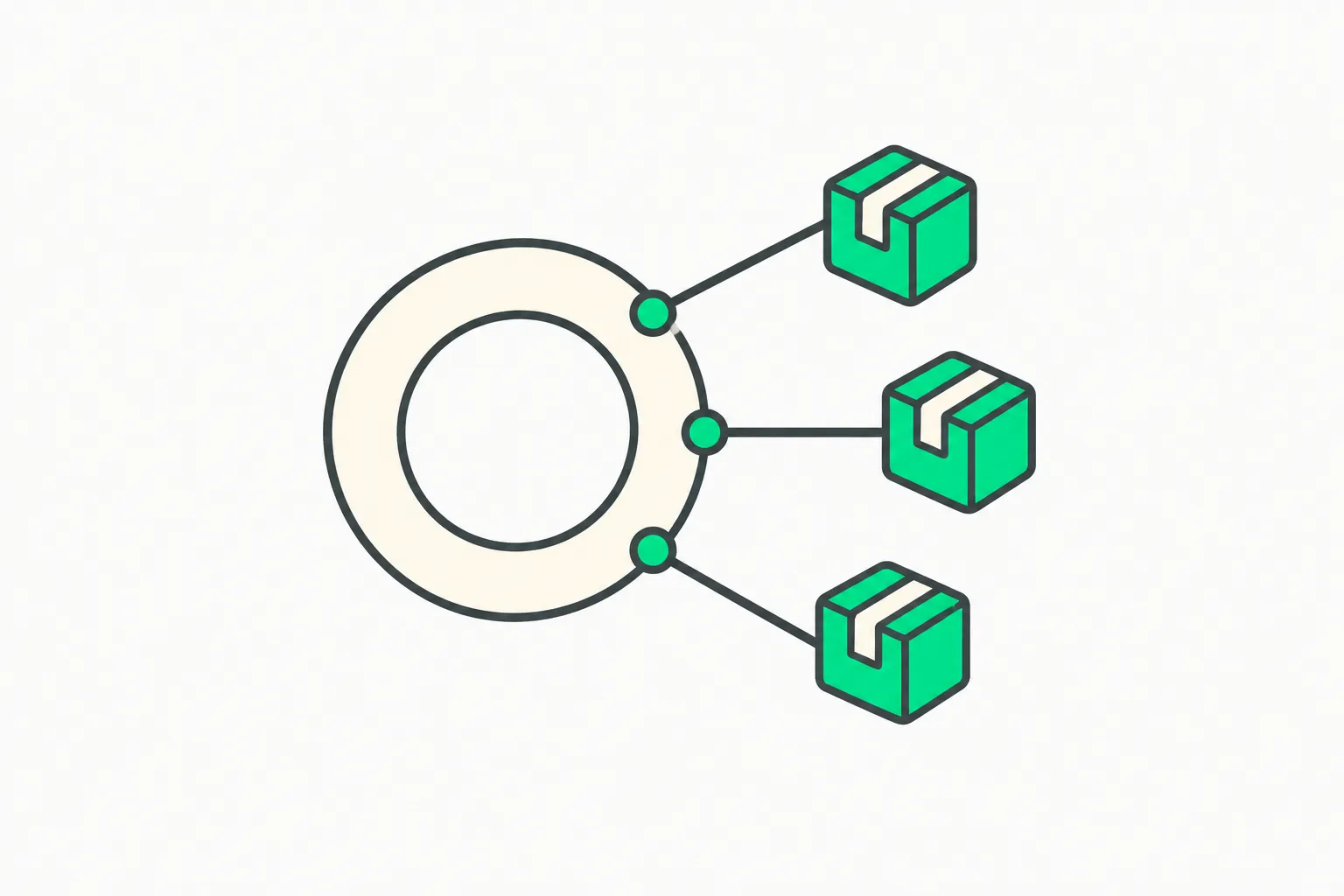
Orkas is a free, MIT-licensed desktop app that puts a "Commander" agent in front of a team: 16 built-in specialist agents plus the CLI agents you may already use, including Claude Code, Codex, OpenCode, OpenClaw and Hermes-Agent. The Orkas-AI/Orkas repository was showing about 5,900 stars, 355 forks and 820 commits when we read it on October 31, 2026, and it was on GitHub's weekly trending list.
The pitch in the README is "an open-source team of AI agents on your desktop — it turns your goals into finished work and keeps it moving." That puts it in the same lane as the team-style agent tools we have covered, such as DeepSeek's dsh-superagent prototype and OpenBot from Nightly Labs, but with a stronger focus on non-code deliverables: reports, decks, videos and store operations.
TL;DR: the questions people ask first #
| Question | Answer (from the README unless noted) |
|---|---|
| License | MIT |
| Price | Packaged app free with 500 credits for the built-in model; paid plans from $11.99/month |
| Do I need an API key? | No to start; or bring Claude, OpenAI, Gemini, DeepSeek, Kimi, GLM, Qwen, MiniMax, Doubao keys, or a local OpenAI-compatible endpoint |
| Platforms | macOS 12+ and Windows 10+ installers; Linux from source |
| Does it run Claude Code and Codex? | Yes, as local subprocesses it coordinates |
| Where does data live? | On your disk by default; the built-in model and optional sync use Orkas servers |
| Does it work when my computer is off? | No; automations need the computer awake, with a 12-hour catch-up for the most recent missed run since v1.9 |
| Account needed? | The packaged app asks you to sign in; the source build has no account layer |
What the Commander actually does #
The Commander handles general work itself and delegates specialist work through three tools described in the README:
dispatch_toruns a named agent and returns its result so the Commander can continue; it can wait or run asynchronously.hand_off_totransfers the remaining work to a named agent and ends the Commander's turn, optionally with a continuation.run_workerruns an anonymous, isolated sub-task with no conversation history and no named agent's skills.
Named agent tasks and anonymous workers have separate concurrency controls, and the docs say an admitted or queued task is not treated as a completed result. That last detail is the kind of thing that prevents a common multi-agent bug: reporting success for work that has only been queued.
The 16 built-in agents #
| Area | Agents |
|---|---|
| Research and analysis | DeepResearcher, SeoGeoAgent, StockAnalyser |
| Content and media | ContentWriter, PptMaker, ImageStudio, VideoStudio, VoiceStudio, UIDesigner |
| Build and office | ProductDeveloper, OfficeWorker |
| E-commerce | ECommerceResearcher, ECommerceWriter, ECommerceReviewer, ECommerceAnalyzer, ECommerceOperator |
The README also mentions a marketplace with 30+ agents and the ability to describe a role so the Commander builds a custom agent. Two features stand out. VideoStudio can analyze a reference video's hook, information order and pacing, then propose what to keep and what to replace using your own footage; the README states that exact camera moves, human performances and frame-by-frame matching are not guaranteed, and that social share-link down is not built in. And ECommerceOperator "plans catalog, price, promotion and inventory changes; executes only through tools you connect."
Keeping work moving: projects, to-dos, automations #
Orkas tries to avoid the one-prompt-and-done pattern:
- Projects hold a goal, rules, memory and files so each conversation starts informed.
- To-dos and Auto-advance: every project has a list for people and agents; with Auto-advance on, the team picks up the next item itself and returns finished work for review.
- Scheduled automations repeat hourly, daily, weekly or monthly, on your computer.
- Connectors include Gmail, Google Calendar, Sheets, Drive, Notion, Slack, Shopify and Stripe. By default, per the README, Orkas asks before it sends, posts or deletes anything.
- Apps: describe a tool and Orkas builds it as a local app; publishing as a public web app needs a paid plan (5, 8 or 15 apps on Lite, Pro, Max).
Shared projects, cloud sync and web-app publishing exist only in the packaged app; the open-source build does not support them yet. That is worth knowing before you call it fully open source: the core is MIT, but several team features are on the paid side.
Running Claude Code and Codex together #
This is the feature that drew the GitHub traffic. Orkas starts the CLI agents you already have installed as local sessions next to its specialists and keeps one plan across them, so one chat can fix a bug with one agent, review with another and draft release notes with a third. If you are choosing between those tools first, our comparisons of Codex vs Claude Code and Claude Code, Codex, Gemini CLI and GLM are the place to start, and OpenCode is covered separately. Hermes Agent and OpenClaw plug in the same way.
Orkas's README compares itself with tools it wraps and with frameworks: Claude Code and Codex are "not either-or" because Orkas drives them; LangChain and CrewAI are code-first frameworks, while Orkas is a desktop app you direct through chat. That comparison is the project's own, not an independent test.
How it works under the hood #
The README lists several design choices that go beyond a thin wrapper:
- Context budgeting against the selected model's usable input, with checkpoints that condense earlier process messages and structured records of file reads, changes and commands that survive compaction.
- Memory and Library: scoped durable notes; documents extracted into passages with a local SQLite vector index, using an embedding model (about 95 MB) that runs on your machine.
- Execution limits: session locks, tool-round budgets, repeated-call checks and idle watchdogs to contain stalled or looping runs.
- Self-improvement: background reviews of agent activity when the app is idle can update an agent's
COMPETENCE.md,LEARNING_STRATEGIES.mdor learned skills, and can conclude nothing is worth saving. The concept overlaps withagent skills .
How to try it #
Packaged app: download the macOS or Windows installer from the repository and sign in for the 500 free credits. From source, the README gives:
git clone https://github.com/Orkas-AI/Orkas.git
cd Orkas
./run.sh   # macOS / Linux
run.cmd    # Windows
You need Node 22.12+ (the README recommends Node 24 LTS), and Python 3 plus a C/C++ toolchain only if a native package must be rebuilt. First launch installs the locked dependency tree and prepares pinned Python, uv, Node, an embedding model, OfficeCLI, FFmpeg and whisper.cpp with a speech model, so expect a long first start. It creates a workspace under ~/.orkas/ (or on Windows, the smallest non-system drive). Then add a key in Settings, AI Providers. For a local model, add a custom OpenAI-compatible or Anthropic-compatible model with a base URL, exact model ID and key. Linux must have glibc 2.34+; Alpine and musl are unsupported. Native dependency errors are handled with npm run native:repair.
Caveats and risks #
- Autonomy plus connectors. An agent that can write to Gmail, Slack, Shopify or Stripe can do real damage. Keep the ask-before-acting default, scope connectors narrowly and test on a throwaway project first. The same concern drives our guide toClaude Code commands and permissions .
- Orchestrating other agents multiplies access. Whatever Claude Code or Codex can do on your machine, a Commander that delegates to them can do too.AgentBeam is the agent security platform from the explainx.ai team that stops AI agents before they take dangerous actions.
- Voice input in the source build sends audio to Orkas for recognition and uses the key owner's Orkas credits, per the README.
- Cost stacking. With your own keys, the README says Orkas adds no markup, but several agents running in parallel can burn through provider quota quickly.
- Open-core boundary. Shared projects, sync and publishing are not in the open-source build.
- Claims are the project's own. We found no independent benchmark of the 16 agents or of the "self-evolving" reviews; judge them on your own tasks.
Who it is for, and who should skip it #
The README is direct about fit. It is for people who want a team of agents rather than one assistant, work that continues across days, and keys and agents kept on their own disk. It is not for you if you just want a single all-purpose chatbot, or a pure code library to embed in your own application; in that case a framework such as LangChain or CrewAI, which the project itself lists as code-first alternatives, fits better.
A practical test before adopting it: pick one recurring task, such as a weekly research brief or a store sales summary, and run it as a scheduled automation for two weeks with ask-before-acting left on. If the output needs little editing and the credit or provider cost stays predictable, widen its scope. If you spend more time reviewing than you would doing the work, a single agent is the better tool.
Why it is trending #
Two trends meet here: developers who already pay for Claude Code or Codex want one place to coordinate them, and non-developers want agents that produce decks and videos rather than code. Orkas bundles both on a local-first footing with any model. Whether a Commander delegating to many agents beats a single well-prompted agent is an open question; for a comparison point on harness complexity, see our earlier look at the Rakazo bring-your-own-model bot and the Agency Agents specialist collection.
Related reading #
Star counts, pricing and features are as shown in the repository on October 31, 2026 and may change.