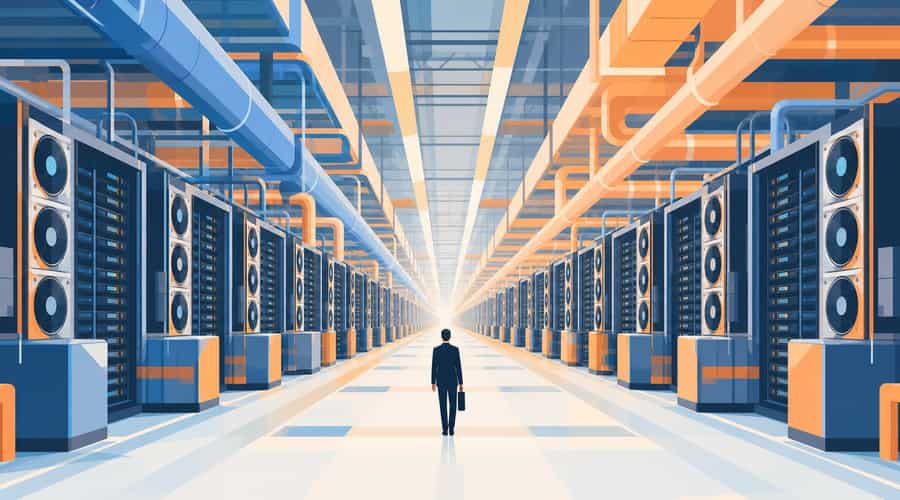
Oracle spent $55.7 billion building AI data centers this year and plans to spend even more in 2027, but the gap between that spending and the cash actually coming in is becoming Wall Street's clearest argument that the AI buildout won't pay off on schedule.
Oracle closed its fiscal year on May 31 having spent $55.7 billion building data centers, up from $21.2 billion a year earlier. Revenue for the quarter rose 21 percent to $19.2 billion, a healthy number on its own. But investors didn't look at it on its own. They looked at the gap between what Oracle is spending and what it's actually collecting, and they sold the stock.
The pitch behind that spending is Oracle's $455 billion backlog of remaining performance obligations, contracted revenue that hasn't yet shown up as cash, which the company says grew more than 300 percent from a year earlier. A large piece of that backlog, roughly $300 billion, is tied to a single customer: OpenAI. That's the bet. Oracle is building the data centers first and trusting that the contracts convert into revenue on schedule, starting with capacity that has to be built and switched on by fiscal 2027.
Paying for it is the hard part. Oracle expects a net cash outlay of around $70 billion in capital expenditures for fiscal 2027, and CFO Hilary Maxson has said the company plans to raise roughly $40 billion in new debt and equity to cover it, including a $20 billion equity issuance already announced. Barclays responded by downgrading Oracle's debt to underweight, warning the rating could slide to BBB minus, one notch above junk.
That's a lot of leverage for a company still waiting on its biggest customer's cash.
It got worse. A subsequent regulatory filing disclosed an additional $248 billion in lease commitments tied to Oracle's data centers, a figure analysts at CreditSights called a bombshell disclosure. Lease obligations don't show up in headline capex figures, but they still have to be paid.
Shareholders have already gone to court over this. A securities class action filed in the District of Delaware in February accuses Oracle and several of its officers and directors of downplaying the odds that its AI-related spending would outrun near-term revenue, covering investors who bought shares between June 12 and December 16 of last year. A related suit alleges Oracle executives sold roughly $1.87 billion in stock during that window, while the company was telling the market its AI buildout was on track.
Here's the thing: Oracle isn't the outlier. It's the preview.
Microsoft, Alphabet, Meta and Amazon are all still ramping AI spending, with Amazon alone guiding to more than $200 billion of capex for 2026. Collectively, the five largest hyperscalers are on pace to spend north of a trillion dollars on AI infrastructure across 2025 and 2026 combined. That spending has started to show up in stock prices the way it showed up in Oracle's: the Magnificent Seven lost roughly $2.3 trillion in combined market value in June alone, according to CNBC, as investors grew jittery about when, or whether, the AI buildout starts paying for itself.
The central banks are jittery too. The IMF and the Bank of England have both warned that AI valuations are approaching extremes last seen during the dot-com era, and the Bank for International Settlements has flagged the debt and leverage now financing much of the buildout as a systemic risk worth watching. None of that is stopping the spending. It's just making the spending harder to defend if the payoff slips.
Oracle's new CEO, Mike Sicilia, took over from Safra Catz late last year, but the strategy driving all of this still belongs to Larry Ellison. At 81, Oracle's chairman and chief technology officer is personally negotiating the GPU clusters with Nvidia and the infrastructure contracts with OpenAI that make up most of that $455 billion backlog. If the bet works, Oracle becomes the landlord of the AI economy. If OpenAI's spending slows, or the lease bills come due faster than the contracts convert, Oracle's balance sheet is the one that absorbs it first.
Also read: Goldman Sachs says Europe's grid and factory suppliers are cashing in on AI • Abu Dhabi's MGX Closes Nearly $50 Billion to Bankroll the AI Buildout • ITG Priced Its Nasdaq IPO Below Range Even as the AI Infrastructure Boom Rages On