OpenTelemetry graduated as a CNCF project in May 2026, and the keynote at KubeCon Japan this week made it formal: the “emerging standard” label is retired. After six years, 1.36 billion JavaScript API downloads, and production deployments at Anthropic, Bloomberg, and Capital One, OTel now shares a tier with Kubernetes and Prometheus. That matters — but not for the reasons you might expect. Graduation is not a feature release. It is a stability and governance signal, and it is precisely what unlocks the next chapter: standardized observability for AI agents.
What CNCF Graduation Actually Means #
Graduation in the CNCF sense means the project has satisfied a rigorous bar for security practices, governance transparency, contributor health, and production adoption. It is the same status held by Kubernetes, Envoy, Istio, and Dapr. For teams still weighing whether to standardize on OpenTelemetry, graduation removes the final objection. The APIs are stable with backward compatibility guarantees. The governance is documented and predictable. The community is not going anywhere.
The project’s own framing is instructive: “Graduation is not the finish line.” The CNCF post published last week names the next priorities explicitly — agentic workflow observability, browser and mobile coverage, and enterprise-scale schema governance via the Weaver toolchain. Graduation was the prerequisite, not the destination.
The Agentic AI Angle Is the Real Story #
OpenTelemetry’s GenAI semantic conventions define a standard vocabulary for AI system telemetry. Every LLM API call becomes a span carrying gen_ai.provider.name
, gen_ai.request.model
, gen_ai.usage.input_tokens
, and gen_ai.usage.output_tokens
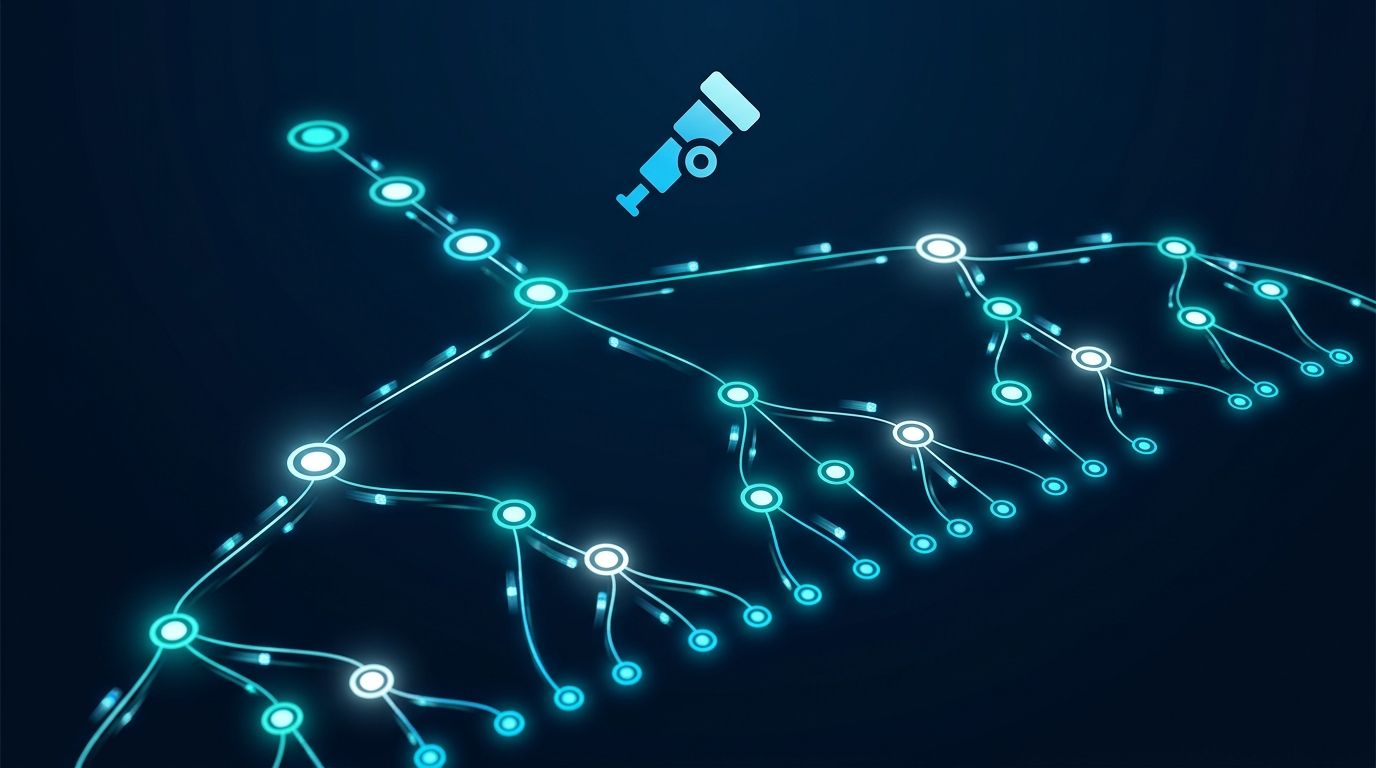
. When you run an agent, each step in its reasoning chain becomes a child span — embeddings, vector retrieval, LLM decisions, and individual tool calls all get their own entries in the trace.
The operation types added for agentic systems are worth knowing: invoke_agent
, execute_tool
, invoke_workflow
, and create_agent
. These map to how agents actually work — not just “call the LLM” but “run the agent, which called this tool, which called the LLM, which used 1,200 tokens, which took 400ms.” That level of granularity is what production debugging actually requires.
If your stack includes MCP servers, the spec has you covered. MCP tool calls get dedicated spans with mcp.method.name
and mcp.protocol.version
, and W3C Trace Context propagation keeps traces intact across agent-server boundaries. The full call chain stays connected.
Zero-Code Adoption for Common Stacks #
Auto-instrumentation packages exist for the common AI frameworks, requiring no changes to application logic:
pip install opentelemetry-instrumentation-anthropic
pip install opentelemetry-instrumentation-openai
pip install opentelemetry-instrumentation-langchain
pip install opentelemetry-instrumentation-llamaindex
Call .instrument()
on the relevant instrumentor at startup and every API call emits gen_ai.*
-compliant spans. The spans ship to whichever backend you already use — Grafana Tempo, Jaeger, Honeycomb, Datadog. When you swap the underlying model from Claude to GPT-5 or Gemini, the instrumentation code does not change.
One Caveat Worth Knowing #
The GenAI semantic conventions themselves are still in Development status — the project graduated, but the AI-specific attribute schema has not yet reached Stable. The conventions moved to a dedicated repository (open-telemetry/semantic-conventions-genai
) in 2026, and the core attribute names are settling. In practice, the concepts are stable enough to instrument against, but query both the older gen_ai.system
and the newer gen_ai.provider.name
if you need backward compatibility across stored data. Opt into the latest experimental behavior with OTEL_SEMCONV_STABILITY_OPT_IN=gen_ai_latest_experimental
.
On privacy: store prompts as span events, not attributes. Attributes are always indexed; events can be filtered or dropped at the Collector level. In production, run tail-based sampling — capture 100% of error traces and agent runs, 5-10% of successful routine calls. Full prompt and response content belongs in external storage with a reference URL on the span, not inline.
The Vendor Neutrality Argument #
OpenTelemetry’s value proposition sharpens as teams shift between providers and models. The AI-specific observability tools — LangSmith, Langfuse, Helicone — are all useful, and they all export to OpenTelemetry now. OTel is the layer beneath, the interoperability guarantee. The competition between backends has moved up the stack to AI-assisted root cause analysis and anomaly detection, not instrumentation APIs. That is a healthy place for the ecosystem to compete.
The Bottom Line #
If you are running AI agents in production without structured telemetry, graduation is the prompt you needed. The observability gap is real: you cannot optimize what you cannot see, and “my agent is slow sometimes” is not an actionable insight. OpenTelemetry, now graduated and explicitly prioritizing agentic workflows, gives you the tool. The GenAI semantic conventions give you the vocabulary. The auto-instrumentation packages give you a one-hour path to visibility. The debate about whether to standardize on OTel ended this week in Yokohama.