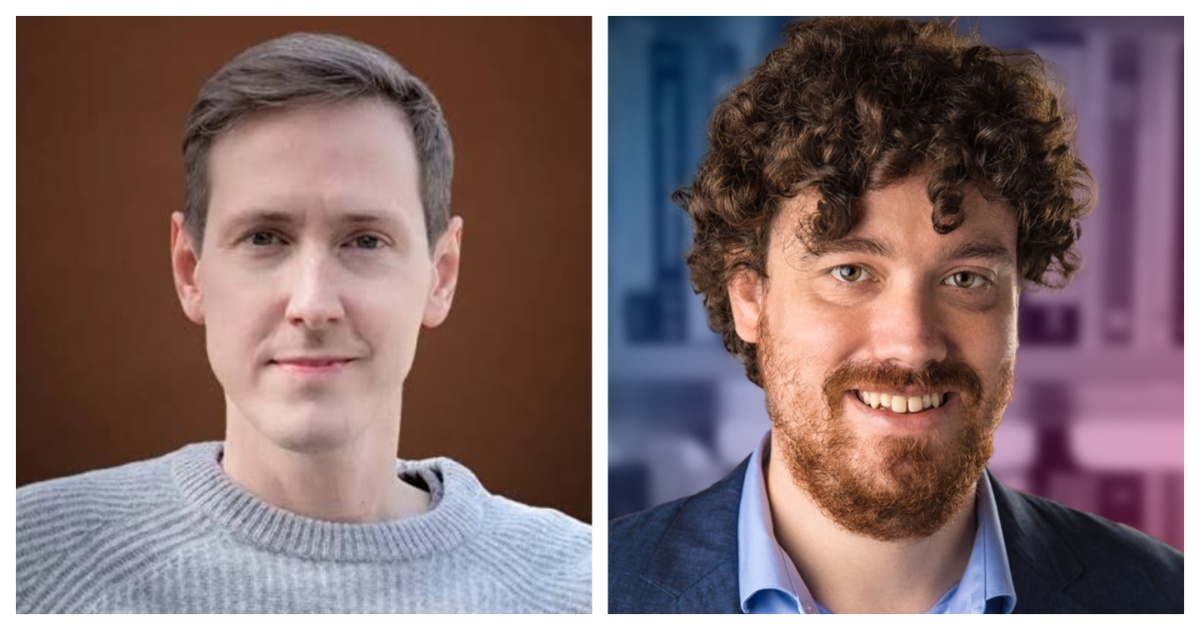
Sebastien Bubeck, the OpenAI scientist named directly in Tristan Buckmaster’s explosive statement earlier today, has issued his first public response — a short post denying wrongdoing and promising a fuller account “tomorrow.”
Bubeck’s statement, posted to X, reads in part that he came into the discussion “following academic norms,” and that he is disappointed the situation has escalated. He did not address any of Buckmaster’s specific claims point by point, saying only that a fuller response is coming.
Given that we now have a denial on the record, it’s worth laying out exactly what Buckmaster alleged, in detail, since the specifics are what Bubeck’s forthcoming response will presumably need to address.
Background: the math, briefly
Buckmaster, an NYU mathematician, and Levent Alpöge, who works at Anthropic, published results this week showing that several fluid dynamics equations — 3D incompressible Euler, Boussinesq, and incompressible porous media — can develop a finite-time “blow-up” under smooth external forcing. The work extends a research program started by Diego Córdoba and Luis Martínez-Zoroa, was formalized in Lean (a proof-checking system), and drew praise from Fields Medalist Terence Tao, who called it a “remarkable achievement.” That part of the story is not in dispute.
What’s in dispute is what Buckmaster says happened in the days before publication, once rumors began circulating that a Millennium Prize-level fluid dynamics result was imminent.
The Allegations
Buckmaster says that after a rumor spread linking him and Alpöge to a possible Navier-Stokes breakthrough, he proactively emailed a mathematician affiliated with OpenAI to clarify that the work was an independent, personal collaboration with no institutional backing from either Anthropic or NYU. He says the reply was friendly and even offered OpenAI compute resources.
Days later, he alleges, he was told an OpenAI research model had already produced a roughly 100-page proof of blow-up for forced Navier-Stokes. When he pressed for the timeline, he says OpenAI eventually acknowledged the first prompt on the project had been sent only in the days after word of his and Alpöge’s work had reached the company — not before.
This is one of the more technical but pointed claims in Buckmaster’s account. He says the OpenAI result was described to him as blow-up for forced Navier-Stokes using smooth forcing — specifically the “options c and d” version of the problem as categorized in a well-known formal statement of the Navier-Stokes problem by mathematician Charles Fefferman. Buckmaster says this is the exact, unusual route that he and Alpöge had been quietly pursuing for most of the past year, following directly from the Córdoba–Martínez-Zoroa program, and that almost no one else in the field was working on it. His argument is that it would be a remarkable coincidence for an outside team to independently converge on that same narrow technical path within days, rather than being pointed at it by advance knowledge of his work.
Buckmaster says he was initially told the OpenAI proof came from simply giving an internal model the bare problem statement, with “very little human input.” He alleges that over the course of two phone calls, as OpenAI team members fed Bubeck live updates and corrections, this account fell apart in real time — revealing an entire team had reportedly been working the problem for a while, that multiple approaches had been tried, that easier warm-up problems (including a version of Euler) had been tackled first, that even the prompt he was shown had itself reportedly been generated by prompting Codex, and that a very large amount of compute had gone into the effort.
Buckmaster says he and Alpöge had been using OpenAI’s Codex tool throughout their project and had been storing all of their draft proofs and working notes inside their Codex sessions. He says he directly asked whether OpenAI’s internal model had been trained on, or otherwise had access to, that user session data. He says he was told the model did not look up user data — but that when he asked a second, more specific question about whether the model might have been trained on that data, he says he received no answer at all.
Buckmaster is careful to note he does not know the answer to this himself and isn’t accusing OpenAI of actually doing this — only that the question was asked and, in his account, left conspicuously unaddressed.
Buckmaster claims he was presented with two options: a coordinated joint announcement with OpenAI releasing its own Navier-Stokes claim the following day, or a plan where he alone would author a paper on the Navier-Stokes result while crediting an internal OpenAI model. He alleges Bubeck twice pushed to have Alpöge dropped from authorship entirely, citing Alpöge’s employment at Anthropic — a direct OpenAI competitor — as an “annoying” complication. Buckmaster says he refused both proposals.
Buckmaster says that when he told Bubeck he would go public if OpenAI proceeded with its plan, Bubeck responded by asking, “Why would you ruin your career?” — and, when pressed on that remark, added a line to the effect that he didn’t have to be nice. Buckmaster says a separate outreach was then made directly to Alpöge suggesting Buckmaster wasn’t “being fully rational,” which Alpöge declined.
What Bubeck has said so far
Against that detailed list, Bubeck’s response to date is brief and general: he calls the allegations “false and inflammatory,” says he acted “following academic norms,” expresses disappointment that things have escalated publicly, and states that academic standards matter deeply to him. He has not yet responded to any of the specific claims above — the Codex data question, the authorship pressure, the “ruin your career” remark, or the timeline of when OpenAI’s effort began — saying only that a fuller statement will follow.
Until that fuller response arrives, the most consequential open question is probably the data one: whether an OpenAI model could have drawn, directly or indirectly, on Buckmaster and Alpöge’s own Codex-stored drafts. Buckmaster has been explicit that he doesn’t know the answer and isn’t alleging it happened — but he’s equally explicit that he asked, twice, and didn’t get a clear answer either time. Neither OpenAI nor Bubeck has addressed that specific point publicly as of this writing.