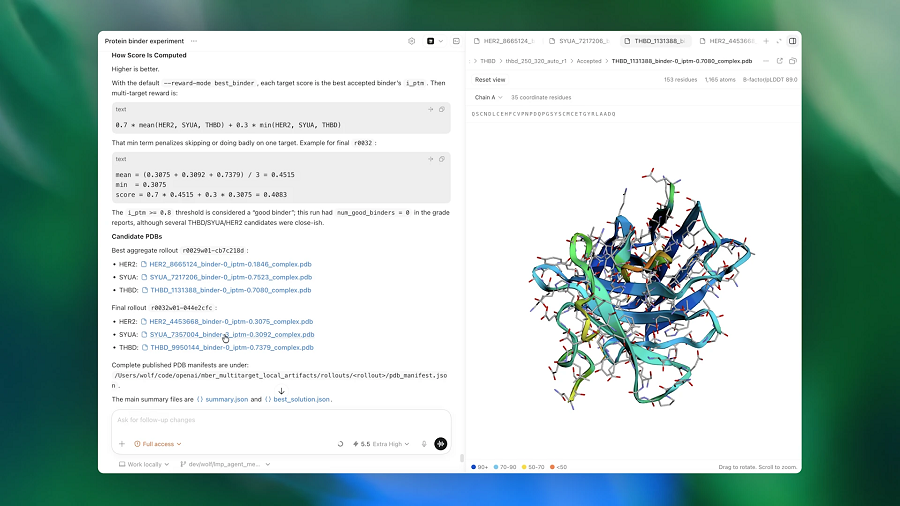
OpenAI opens new ChatGPT for Academic Researchers program to 100,000 scientists
OpenAI Group PBC today launched a program that will give 100,000 researchers free access to ChatGPT’s advanced features.
ChatGPT for Academic Researchers is part of a $250 million OpenAI initiative designed to support scientific projects. The initiative also includes several other programs. Last May, OpenAI made $50 million worth of artificial intelligence resources available to a group of universities. This month, it announced plans to support multiple U.S. Energy Department research projects.
Scientists can apply to ChatGPT for Academic Researchers via a form on OpenAI’s website. Initially, the program will be open to 10,000 users at a limited number of universities. OpenAI plans to onboard 90,000 more researchers over time.
According to the company, participants will receive access to a version of ChatGPT with “higher usage limits and larger context windows.” OpenAI also plans to provide an “expanded” edition of the chatbot service’s deep research feature. The capability, which debuted last February, can collect information from hundreds of websites to answer user questions. Researchers can alternatively configure it to focus on specific sources such as scientific journals.
A scientist who is invited to OpenAI’s new program can onboard four colleagues from the same academic institution. Those researchers receive access to the same set of features at no charge.
According to OpenAI, the version of ChatGPT offered through the program ships with its latest large language models. The includes the company’s flagship GPT-5.6 Sol algorithm. In particular, scientists will receive access to a version of the LLM called GPT-5.6 Sol Pro that is optimized for difficult queries and long-running tasks.
The program also includes Codex and ChatGPT Work. The latter tool, the latest addition to OpenAI’s lineup of productivity features, can automate sequences of relatively complex tasks. For example, a user could ask ChatGPT Work to summarize a set of customer support requests, turn the key findings into a graph and then embed the graph in a slide.
The program also includes certain supporting resources. OpenAI will provide training on how to apply ChatGPT to complex research tasks. Additionally, the company’s employees will help scientists integrate the service with their other scientific applications.
OpenAI first moved into the higher education sector in 2024 by launching a ChatGPT plan called Edu. It includes cybersecurity controls, a usage analytics dashboard and other administrative features.
ChatGPT for Academic Researchers could prove conducive to OpenAI’s revenue growth efforts in the sector. If a small number of researchers at an academic department sign up to the program and start using ChatGPT, some of their colleagues may follow suit. Those users, in turn, might purchase ChatGPT subscriptions or develop software that connects to OpenAI’s paid application programming interface.
Image: OpenAI
Support our mission to keep content open and free by engaging with theCUBE community. Join theCUBE’s Alumni Trust Network, where technology leaders connect, share intelligence and create opportunities.
15M+ viewers of theCUBE videos, powering conversations across AI, cloud, cybersecurity and more** 11.4k+ theCUBE alumni**— Connect with more than 11,400 tech and business leaders shaping the future through a unique trusted-based network.
About SiliconANGLE Media
theCUBE AIand theCUBE SuperStudios — with flagship locations in Silicon Valley and the New York Stock Exchange — SiliconANGLE Media operates at the intersection of media, technology and AI.
Founded by tech visionaries John Furrier and Dave Vellante, SiliconANGLE Media has built a dynamic ecosystem of industry-leading digital media brands that reach 15+ million elite tech professionals. Our new proprietary theCUBE AI Video Cloud is breaking ground in audience interaction, leveraging theCUBEai.com neural network to help technology companies make data-driven decisions and stay at the forefront of industry conversations.