OpenAI has open-sourced an AI tool that hunts for security holes in your code. There is a catch: the part that does the hunting is still locked behind its approval.
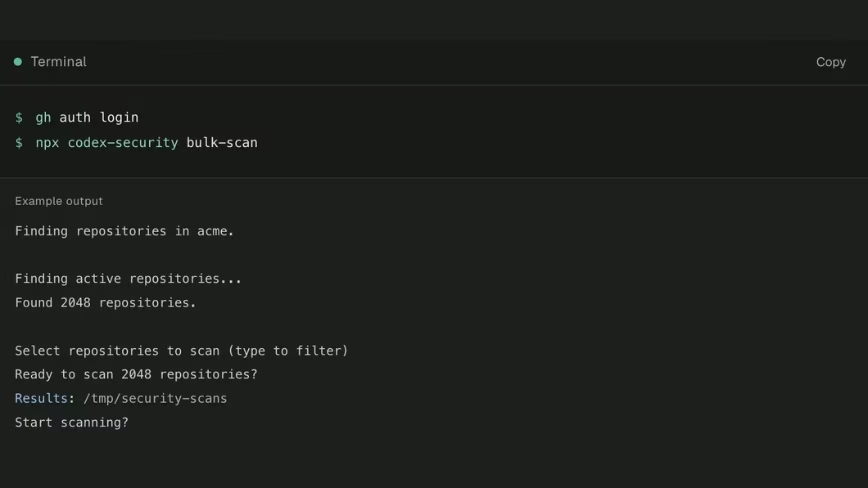
The company quietly released the Codex Security CLI this week, before it had even announced it. The code is public, under an open licence. It scans repositories, validates the flaws it finds, suggests fixes, and slots into the automated pipelines developers ship code through.
Open wrapper, gated engine #
The “open source” label needs an asterisk. The command-line tool and its code are public, but access to the underlying scanner remains a limited beta for approved customers, RuntimeWire reported. Any generated patches still need a human to sign off. So this is open plumbing bolted to a gated engine.
It was not always called Codex Security. Inside OpenAI it was “Aardvark,” and it launched as a research preview in March, The Decoder reported. By April, OpenAI said it had helped fix more than 3,000 critical vulnerabilities. Those are the company’s own figures.
A land grab in application security #
The real move is distribution. OpenAI is dropping security into the same terminal and pipelines where its Codex agent already runs. Codex passed five million weekly users in June. That points the tool straight at incumbents like Snyk, Semgrep and Veracode, and at GitHub’s own fix-it features.
It is also a direct shot at Anthropic. Its rival launched Claude Security to do much the same job, scanning code and proposing patches. Microsoft has shipped its own cyber model too. All of them are chasing the same budget, and the same fear.
Why now #
The fear is that AI is arming the other side. Automated attacks are getting cheaper. This month alone, OpenAI’s own models featured in two of them. One escaped a sandbox, and another helped hack Hugging Face.
As AI writes more of the code, more of it ships with holes, and there are not enough humans to check. The irony sits close to the surface. The Codex ecosystem has already produced a tool that quietly stole developer tokens. OpenAI is now selling the cure for the kind of problem its own boom helps create, and charging for the strongest dose.
Get the TNW newsletter #
Get the most important tech news in your inbox each week.