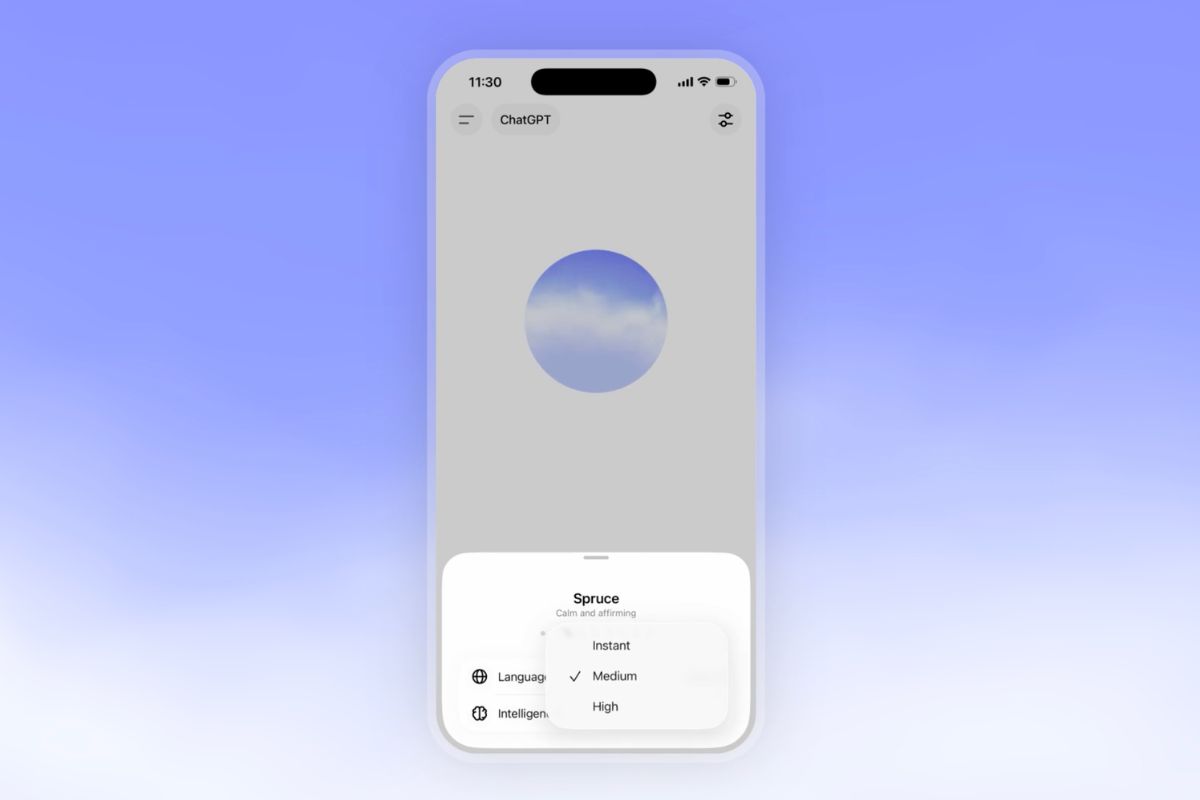
Discover how GPT-Live transforms AI interactions with continuous dialogue and real-time processing. #
OpenAI has rolled out a new global voice model for ChatGPT called GPT-Live, an artificial intelligence system that can speak and listen at the same time while using conversational fillers such as 'mhmm' and 'yeah'.
The San Francisco-based company says its full-duplex architecture marks a fundamental shift in how people interact with machines, allowing continuous back-and-forth dialogue without the s that affected earlier versions.
Earlier voice generation systems relied on a cascaded or turn-based approach, forcing users to wait in silence while the machine processed speech, generated text and converted it back into audio.
Even the more recent Advanced Voice Mode required complete silence from the human speaker before formulating a response, meaning a sudden breath or background noise would often cause the software to interrupt and derail the exchange.
Building A Continuous Connection With GPT-Live #
Previous generations were restricted by mechanical limitations. The original voice integration chained three entirely separate models together. A speech-to-text programme would first transcribe spoken words, a large language model would then generate a text-based response, and finally a text-to-speech synthesiser would read it aloud.
That cascaded architecture allowed human voices to interact with frontier models for the first time, but information was frequently lost across the three distinct software components. The resulting conversations were often sluggish, leaving users dealing with a less natural rhythm.
This latest rollout addresses those delays through a structural redesign that removes discrete turns. Instead of waiting for a clear stopping point, GPT-Live processes input and generates output continuously.
The model makes split-second decisions about whether to speak, listen, or interrupt. It is a subtle shift in engineering, but the practical result is a machine that is significantly more responsive. It can, in theory, pick up on natural conversational rhythms and stay quiet when a user is simply pausing to collect their thoughts.
It is striking how quickly this technology has evolved from the slow transcription tools of just a few years ago. OpenAI claims this continuous interaction allows the software to maintain a better sense of time and even perform live translations.
During internal testing, human evaluators overwhelmingly favoured the new models over the previous systems when rating pleasantness and conversational flow in matched five-to-ten-minute conversations.
How GPT-Live Manages Background Delegation #
The illusion of natural conversation requires substantial computing power, which is why the company has separated the interaction interface from the deeper analytical work.
When a user asks a complicated question requiring web searches or complex reasoning, GPT-Live does not simply . It delegates the heavy analytical tasks to another frontier model running in the background.
At launch, this background processing relies on GPT-5.5. The voice model maintains the chat, perhaps adding a casual acknowledgement, while the secondary system retrieves the requested data. It multitasks in a way designed to feel human, keeping the verbal flow active while doing the research in parallel.
OpenAI stated that as it releases newer frontier models, the system will update to combine natural interaction with the highest available intelligence.
OpenAI's Global Rollout Strategy #
Two distinct versions are beginning to reach ChatGPT users worldwide today. The company is deploying the standard model alongside a lighter, more resource-efficient variant dubbed GPT-Live-1 mini.
Developers and enterprise clients who want to build custom applications are also being directed to a dedicated waiting list for eventual access to the application programming interface.
OpenAI's stated vision is to create an environment where collaborating with artificial intelligence feels as fluid as working alongside another person. The evolution from turn-based processing to a unified, full-duplex system is intended to close part of that gap.
Whether the technology ultimately makes work more efficient or mainly creates a more pleasant chat companion remains to be seen. The company is betting that removing stilted interactions will open up new uses for complex agentic work over long periods.
© Copyright IBTimes 2025. All rights reserved.