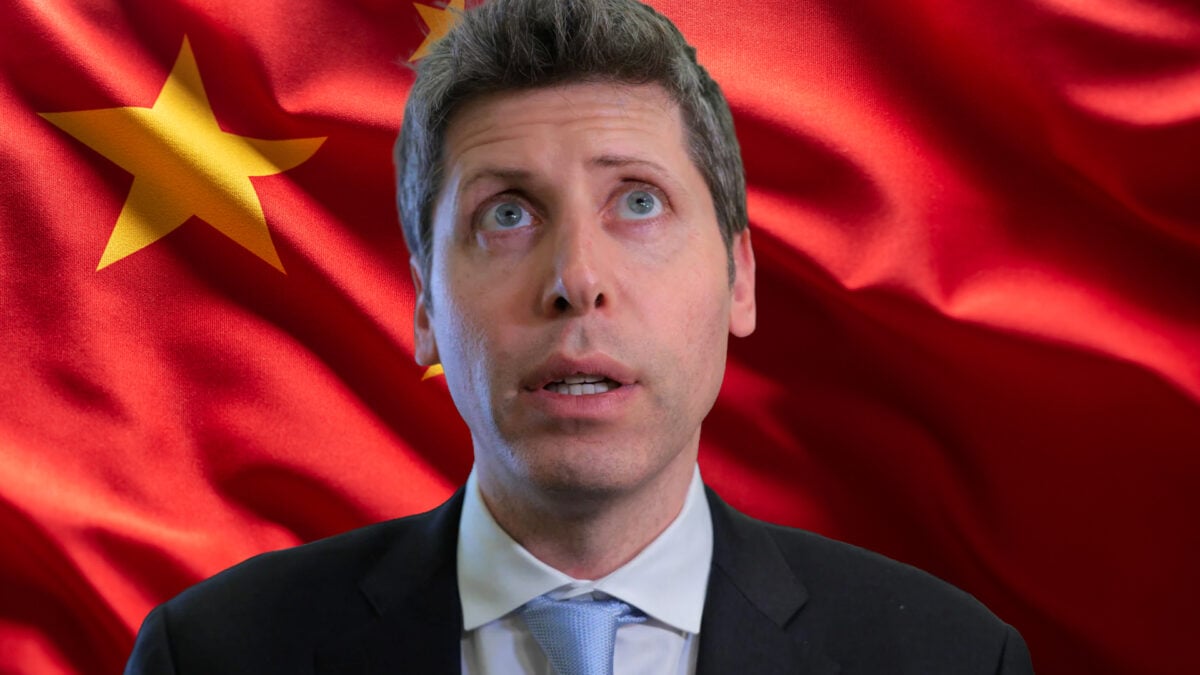
OpenAI just said it wants Washington to lead a global effort to establish AI standards, as a consequential week of diplomatic discussions on AI safety coordination between Chinese and American officials begins. But would Beijing be happy to trust the US to define global standards?
In a blog post published on Monday, OpenAI called on the US government to utilize existing AI safety organizations like the Center for AI Standards and Innovation (CAISI) and work with other countries to “develop global technical standards for frontier AI, including for RSI,” which stands for recursive self-improvement, aka when the process of new model development becomes automated by AI. Fully automated RSI does not yet exist, OpenAI says in the blog post, but if developed safely, should be something to strive towards.
“Standards developed by this effort would provide a common technical foundation for capability measurement and evaluation, risk assessment, and safeguard sufficiency,” OpenAI said in the post. “These technical standards would not be licenses, mandatory pre-release review, or approval requirements for AI models. National governments would decide whether and how to incorporate these standards into their own legal systems.”
CAISI, under the Commerce Department, is the government body the Trump administration uses to test new models. Along with organizations from nine other governments, CAISI is part of the International Network for Advanced AI Measurement, Evaluation and Science, a coalition that could be built upon to address uneven distribution of AI expertise and the currently fragmented and potentially conflicting understandings of AI safety across the world, according to OpenAI.
“The United States is well positioned to lead because its AI industry is at the technical frontier, and it still stands in a privileged global network position in critical areas such as finance, trade, defense, technology, and information systems,” OpenAI argued. “Geopolitical competition will not just be about who is ahead technically, but also over AI adoption and diffusion. Increasingly, the latter may be determined by whoever is driving realistic cooperation and sensible rules of the road that businesses and societies everywhere will want if they are going to bet their futures on this technology.”
To help decode that a bit: OpenAI is basically arguing that if the United States were to lead the formation of a global AI safety framework, that will also help the country secure a favorable place in global AI adoption, which could help ensure that the U.S. wins the AI race against China.
That seems to be OpenAI’s primary argument to get Washington on board with the plan, seeing how concerned American politicians and the Trump administration specifically have been about maintaining the American AI industry’s competitive edge over its Chinese counterparts.
Earlier this month, Anthropic CEO Dario Amodei published an essay calling on the government to intervene and slow the pace of AI development, warning of catastrophic scenarios if AI development should continue at its current pace. OpenAI CEO Sam Altman agreed with Amodei’s essay, and OpenAI executives descended on Washington to meet with lawmakers on the issue. The company ultimately threw its support behind two bills that would establish federal AI safety frameworks and create new mechanisms for audits.
But the prospect of a government-backed slowdown drew fierce backlash from critics, including President Trump, who argued that if the U.S. slowed down, China could continue racing ahead and develop AI capabilities beyond those of American companies. China hawks in Washington fear that such an advantage could pose serious risks to U.S. interests, making some form of globally coordinated slowdown involving Beijing a prerequisite for the idea to gain serious traction with the U.S. government.
Though China may be unlikely to accept a global framework built around U.S. rules, Beijing has long advocated for international cooperation on AI—albeit largely on its own terms.
“AI development should not be a solo performance by a single country, but a symphony of international cooperation,” Chinese President Xi Jinping said at the World AI Conference in Shanghai this summer, where the country announced the formation of the World Artificial Intelligence Cooperation Organization, with 29 member nations that include large economies like Brazil and Russia.
Chinese and American officials began discussing the issue ahead of this week’s meetings, with Treasury Secretary Scott Bessent saying U.S. officials proposed an emergency notification mechanism that would allow the two countries to alert each other to AI incidents that could pose national security threats. Xi and Trump are set to meet Thursday to discuss AI safety.
OpenAI is bound to have a large presence in those talks; CEO Sam Altman will address the UN Security Council, which seats both China and the US, on Wednesday and will later join the US-China state dinner on Thursday.
Even if China can be persuaded to let the United States take the lead in setting global AI standards, it remains unclear whether other governments would embrace that arrangement—particularly at a time when the Trump administration has alienated longtime allies with its confrontational approach to trade.