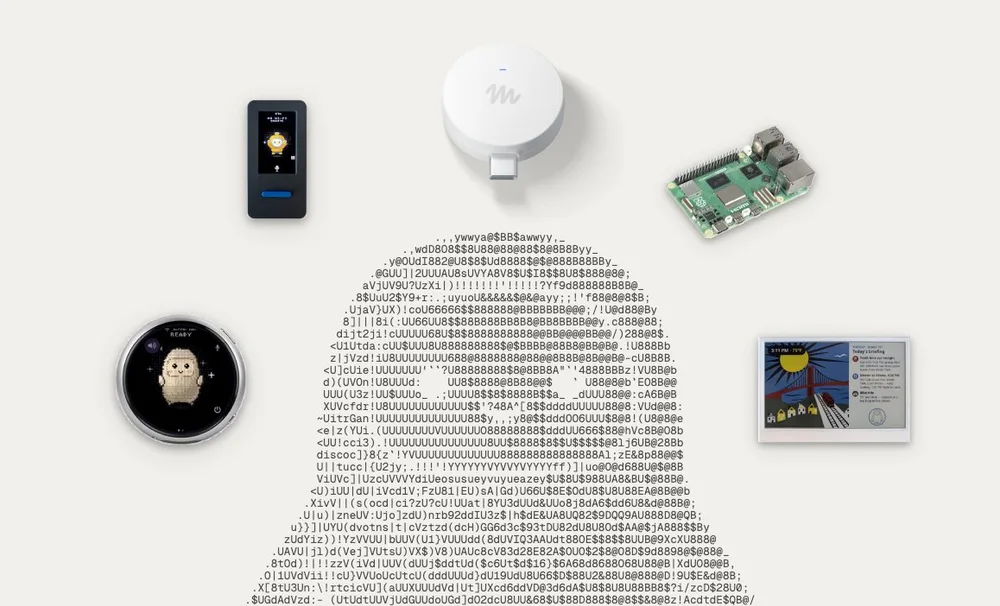
Meta launched Muse Gadgets, an open-source initiative that transforms AI hardware accessibility into a hands-on DIY experience for hobbyists and makers alike. The project provides programmable off-the-shelf ESP32 boards and Linux-based Raspberry Pi configurations, all controlled through shared development kits released under permissive licenses. By leveraging these components, builders can assemble custom AI-capable devices without relying on commercially packaged solutions.
Getting Started with Muse Hardware #
Builders have two clear pathways depending on their current setup. For those who prefer microcontroller-level control, the ESP32 Device SDK enables direct programming of standard ESP32 boards. You plug the board into Muse Gadgets and use the provided driver stack to create custom interfaces—display circuits, audio input/output modules, and any sensor array you desire can be wired onto the same platform. This route keeps costs low and encourages deep customization.
For users working with larger systems, the Linux Device SDK transforms a spare Raspberry Pi or general-purpose Linux box into an authentic Muse gadget. The SDK introduces hooks that allow developers to inject custom commands, manage system administration tasks, and integrate with nearby services such as Home Assistant. With both SDKs available at the official repository (facebookincubator/muse-gadget-sdk), the transition from generic hardware to a Muse-enabled machine follows documented code patterns rather than trial-and-error hacking.
What You Build and What's Available #
The open-source philosophy means every layer of the stack is accessible for inspection and modification. The ESP32 Device SDK (esp32) exposes APIs for controlling LEDs, reading touchscreens, and streaming media audio with minimal latency. Meanwhile, the Linux Device SDK (linux) extends the firmware to support higher-level orchestration—scripts can schedule compute-intensive operations like image generation, monitor ambient light, or coordinate multi-device states.
Beyond the individual boards, the project productioned exactly five thousand units of the "Muse Home Link," a dedicated USB-C device designed for smart-home integration. This module demonstrates how the underlying hardware translates into tangible functionality: voice-activated device control, status displays, and energy monitoring become possible once the firmware from the SDKs is flashed onto the appropriate controller. The physical link serves as both demonstration and prototype base for further iterations.
Risks and Practical Considerations #
While the project champions educational freedom, it carries inherent dangers stemming from running unfamiliar firmware on commercial-grade components. The documentation explicitly warns that tinkering may result in bricked boards, voided warranties, brownout events during power transitions, or even bankruptcy-related crises in extreme cases—phrasing that underscores why participants should proceed at their own risk. The balance between innovation and stability remains non-trivial; without professional QA cycles, early adopters must be prepared for occasional failures that could render their hardware unusable for weeks. The open nature of the project also invites misuse. Since anyone can clone the SDKs or attempt hacks on Muse hardware, the ecosystem faces potential security vulnerabilities. Additionally, the rapid iteration pace means compatibility between older ESP32 revisions and newer firmware patches can shift unexpectedly, requiring ongoing maintenance from contributors who might otherwise prioritize feature completion over backward testing.
In sum, Muse Gadgets represents a pragmatic bridge between hobbyist curiosity and production-grade AI infrastructure. The ability to construct your own AI accelerator from established components lowers barriers to entry while teaching fundamental integration skills. However, the same openness means builders absorb the consequences of mistakes—think expensive replacement parts or dead circuitry—as part of the learning curve. Those willing to accept these trade-offs will find the project rewarding for understanding how modern AI hardware can be built, adapted, and owned independently.
All Replies (1) #
Want a live back-and-forth? Join the global AI chat room — login to talk. That’s cool—just curious: with the ESP32-based boards, how precise does the power delivery need to be for reliable inference on those low-power models? Any specific voltage/current thresholds to account for?