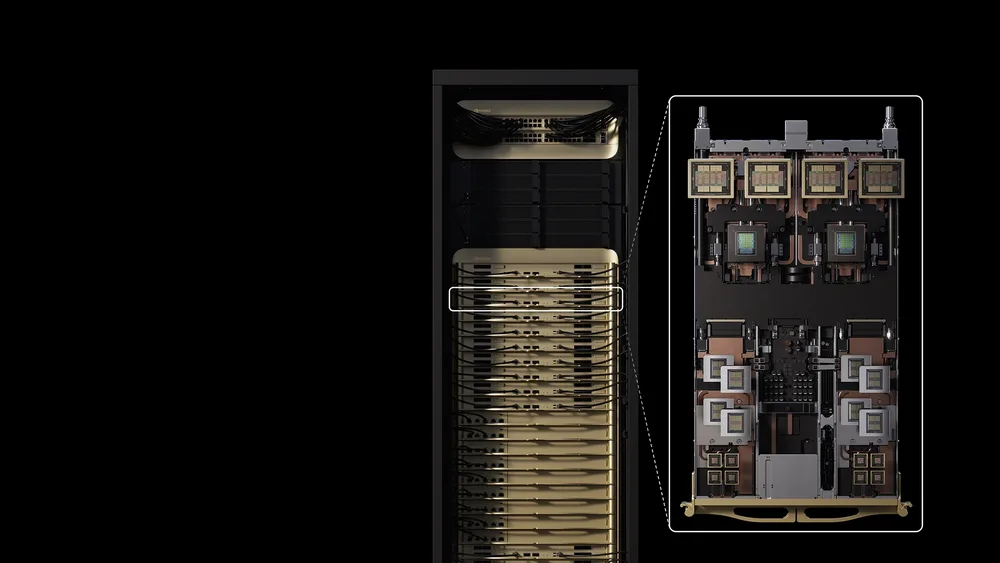
The massive gap in throughput isn't just a matter of raw clock speeds or architecture efficiency; it's a matter of scale. To hit that 3,400 tokens per second milestone, Nvidia requires a cluster of at least 64 accelerators working in tandem. Cerebras, on the other hand, can reportedly achieve its performance levels using only one or two units. This creates a massive discrepancy in terms of physical footprint, power consumption, and total cost of ownership for anyone trying to deploy an LLM agent or a high-throughput production environment.
When we talk about a real-world deployment, the math shifts from "tokens per second" to "tokens per second per dollar" or "tokens per second per rack unit." If you need 64 chips to match a single Cerebras wafer-scale engine, the complexity of your AI workflow increases exponentially. You aren't just managing a chip; you're managing a massive, interconnected network of high-speed communication links, dealing with increased latency between nodes, and trying to keep a small army of accelerators synchronized.
The scaling bottleneck for MoE models #
A major question mark remains regarding how these architectures handle Mixture-of-Experts (MoE) models as they grow. MoE models rely on routing specific tokens to specific "experts" within the neural network. In a highly distributed setup like Nvidia's 64-chip configuration, that routing becomes a massive networking headache. Every time a token needs to jump from one chip to another to find its expert, you introduce communication overhead.
If the communication latency between those 64 accelerators becomes a bottleneck, that 3,400 tokens per second figure might only be achievable under very specific, perhaps even unrealistic, network conditions. We need to see more data on how the Groq 3 LPX handles: Inter-chip communication latency: How much of that speed is lost when the model exceeds the memory of a single chip?Memory bandwidth vs. Compute: Is the speed coming from raw compute power or the ability to move weights through the system?Power efficiency: Does the energy cost of running 64 chips negate the speed benefits for a service provider?
While Nvidia's brute-force approach is undeniably impressive in terms of raw throughput, the industry is moving toward efficiency. For a beginner-friendly deployment or a startup looking for a practical tutorial on scaling, a single-chip solution is infinitely more attractive than a massive cluster requirement. We are essentially watching a battle between "distributed massive scale" and "monolithic architectural efficiency," and the winner won't be decided by token counts alone. Nvidia Jetson Orin is being used in combat drones in Ukraine 1h ago
Is AI actually burning the planet down or is that just hype? 15h ago
Nvidia is basically acting as a venture capitalist for the AI era 15h ago
Why the US immigration bottleneck is creating a massive talent 19h ago
The massive AI hype might be hitting a wall of reality 19h ago
Data centers are quietly becoming the new backbone of American 19h ago
Next Students are ditching ChatGPT for specialized LLMs when it comes →
a guide to making money with AI, with plenty of directly applicable cases.