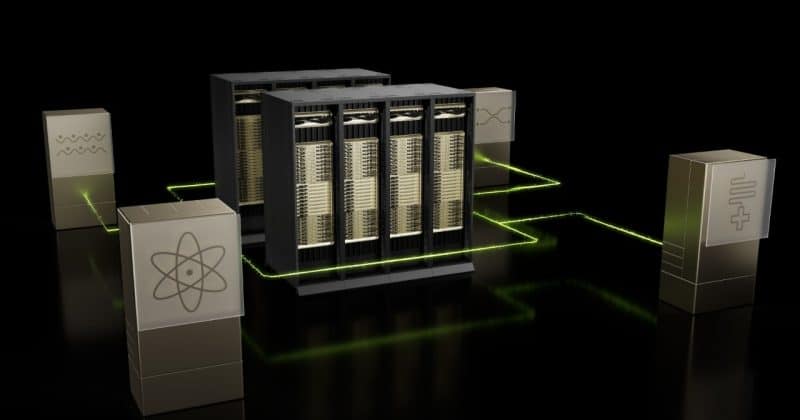
The GPU giant's push for a new power architecture in AI data centers could reshape the energy supply chain and ripple into crypto mining economics.
Nvidia isn’t just building the chips that power AI. It’s now redesigning the electrical backbone of the data centers that house them. The company is championing a transition to 800-volt direct current (800 VDC) power architecture for next-generation AI facilities, a move that could cut energy waste, slash copper usage, and fundamentally change how power infrastructure companies compete for a piece of the AI boom.
Here’s the thing: traditional data center power systems, running on 48V or 415-480 VAC, were designed for a world where racks consumed a fraction of what today’s AI clusters demand. Nvidia’s 800 VDC approach targets rack power densities of up to 1 megawatt per rack. For context, a standard enterprise server rack today typically pulls somewhere in the range of 10 to 30 kilowatts. We’re talking about a 30x to 100x leap in power density.
Why 800 VDC matters #
Higher voltage means you can push more power through fewer, smaller conductors with less energy lost as heat along the way. Nvidia claims the 800 VDC architecture could reduce energy conversion losses by up to 85% and cut copper usage by a similar margin in certain configurations. Nvidia projects overall efficiency gains of around 5% and total cost of ownership reductions of roughly 30%.
The metric Nvidia cares most about is “tokens per watt,” a measure of how much useful AI output you get for each unit of energy consumed.
Nvidia is collaborating with established power infrastructure players like Eaton, Schneider Electric, and Vertiv to build out the ecosystem around the 800 VDC standard. Proof-of-concept projects are already in the pipeline, with broader rollout targeted for 2027. Though supply chain challenges and ecosystem readiness could push full-scale implementation into 2028.
The investment case for power infrastructure #
Analysts have taken notice. Revenue projections for Nvidia itself are expected to exceed $100B by 2027, representing growth of more than 30%. The power supply chain has already seen massive capital inflows. Roughly $300B in new debt has been issued year-to-date in relevant sectors by mid-2026. Companies like Vertiv, Eaton, and Schneider Electric sit at the intersection of the AI hardware boom and the physical infrastructure required to support it.
By defining the power architecture standard, Nvidia is positioning itself as the de facto platform around which the entire AI data center ecosystem organizes. If 800 VDC becomes the default, every component supplier has to build to Nvidia’s spec.
What this means for crypto and digital assets #
Energy efficiency is the existential question for crypto mining operations. A 30% reduction in total cost of ownership would be transformative for operators running on thin margins.
Several publicly traded Bitcoin miners have pivoted portions of their infrastructure toward AI and high-performance computing workloads, essentially renting out GPU capacity to AI companies. If those facilities adopt 800 VDC power systems, they’d be better positioned to serve both crypto mining and AI inference workloads from the same physical plant.
The timeline matters too. If broad 800 VDC adoption lands in 2027-2028, that overlaps with Bitcoin’s next halving cycle and the anticipated maturation of several AI-crypto hybrid protocols.
Disclosure: This article was edited by Editorial Team. For more information on how we create and review content, see our