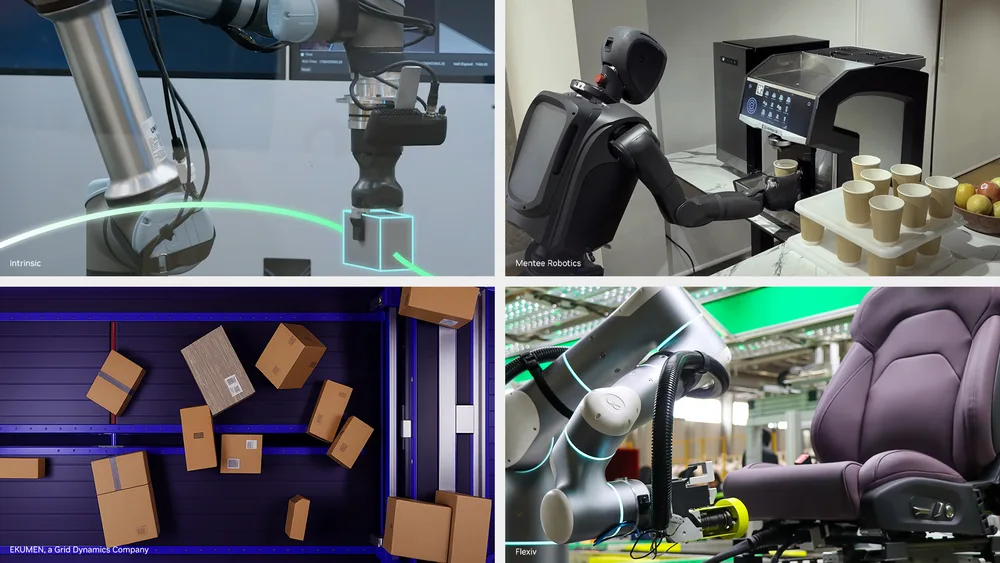
NVIDIA just dropped Isaac ROS 5.0 at ROSCon in Toronto, and it's basically a massive set of GPU-accelerated packages designed to let AI agents and humans collab on robotics dev. The big takeaway here is the shift toward "agentic workflows," meaning the tools are now structured so AI agents can actually help you write code, navigate the codebase, and handle repetitive setup tasks without you doing everything manually.
What actually changed in 5.0? #
The most practical update for those of us actually deploying stuff is the support for ROS Lyrical and Ubuntu 24.04. If you've been waiting to move to the latest ROS platform but didn't want to lose NVIDIA acceleration, this is the path. They also worked with the Open Source Robotics Alliance to put a standard data-handling interface into ROS Lyrical, which helps software run efficiently across different hardware, specifically GPUs via CUDA.
They've introduced "Isaac skills" for setup and manipulation. These are essentially reusable workflows that both humans and AI agents can trigger to get tasks done. They even updated the documentation to be "agent-ready," which basically means it's optimized for LLMs to parse so they can turn your intent into working code faster.
Performance boosts and specific tools #
There are a few specific technical wins in this release that look legit:
- FoundationPose: This is a foundation model for object pose estimation and tracking. The new agent-ready inference library lets robots track object position and orientation up to 5.5x faster.
- FoundationStereo: There's a new fine-tuning skill that lets anAI agent help you adapt a stereo perception model to your specific cameras and environment. This is huge for getting accurate perception when your sensor config isn't standard.
- Pick and Place: This workflow (detection → depth estimation → pose output) is now a standalone, agent-ready skill, so you have more flexibility if you're working outside the full Isaac ROS suite.
The broader ecosystem stuff #
It's not just NVIDIA pushing this; other players are plugging in. There's an open source project called AgenticROS (sponsored by RealSense) that links Isaac ROS with NVIDIA Nemotron open models and NemoClaw blueprints. This is what actually lets the AI agents interact with the ROS-based robots.
Speaking of RealSense, they're optimizing the D585 Pro 3D stereo depth cameras and an open source SDK for Isaac ROS and the Jetson Thor platform. Also, Intrinsic released the Open Machine Tending Solution as a reference app for CNC machine tending, which is part of their new Intrinsic Core open source suite.
If you're already in the ROS ecosystem (which is nearly 1.3 million users now), this looks like a solid way to stop doing the boring boilerplate setup and let an agent handle the plumbing while you focus on the actual logic.

[Next Werner Vogels' approach to infrastructure →](https://promptcube3.com/en/threads/9549/)
All Replies (3) #
Want a live back-and-forth? Join the global AI chat room — login to talk. Relief that agentic workflows are finally here. Manually configuring ROS packages used to take me three days of troubleshooting just to get a basic node running.
Curious if this helps with hardware latency. Agentic workflows in Isaac ROS 5.0 are great, but real-time constraints usually kill the performance.
I want to try this tonight. Agentic workflows should cut my setup time by 50% since Isaac ROS 5.0 handles the repetitive boilerplate.