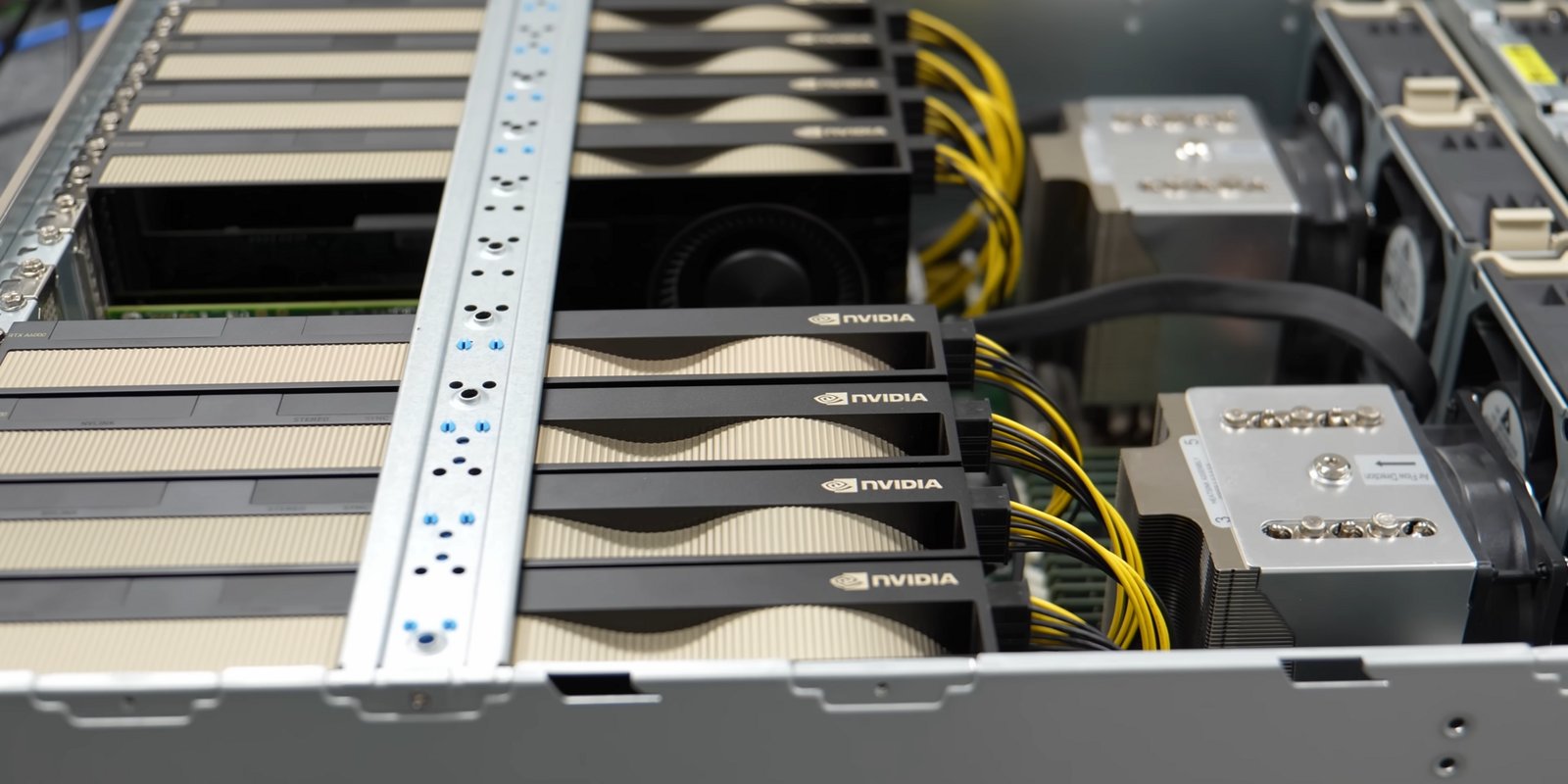
A Supermicro GPU server fitted with Nvidia RTX A6000 graphics cards, in a still from a Lawrence Systems video. Illustrative. Cropped. Image: Lawrence Systems / Wikimedia Commons, CC BY 3.0, cropped

Nvidia has told the companies that build its AI servers to stop shipping them to Malaysia, Singapore, Thailand and Indonesia, the Financial Times reported on Thursday, citing three people familiar with the matter. The four countries had become the easiest way for Chinese AI labs to use Nvidia chips they can no longer buy at home.
What the FT reported #
Dell and Supermicro, which package Nvidia’s graphics processors into data centre racks, have told buyers in the four countries that Nvidia will not let their pending orders leave the factory, according to the report. It is not clear whether the freeze is a short while Nvidia and its partners work out how to follow new US export rules, or something longer.
Nvidia declined to comment to the FT, and Dell, Supermicro, ByteDance and the Singapore cloud firm Aolani did not respond. Reuters, which relayed the report, said it could not immediately verify it. None of the four governments had commented publicly by Thursday morning UTC.
The US rule behind the freeze #
The halt follows a Commerce Department rule that shuts the cloud loophole Chinese companies used to rent top Nvidia chips in other countries’ data centres. It took effect when it was published in the Federal Register on November 19.
Exporters now need a licence to send advanced AI chips and servers to Indonesia, Malaysia, Singapore, Thailand and Brazil, which the rule says carry a “higher-than-normal risk of diversion”. Customers headquartered in the US, or owned by a US parent, are exempt if the exporter reports the shipments. Separately, data centres anywhere that sell large amounts of computing power to Chinese-owned firms need a licence, and those already doing so have 90 days to get one. Brazil is not among the countries named in the FT report.
‘Sheer chaos in the region’ #
Cloud companies in the region say they don’t know how to comply. “There’s this new rule but no guidance on execution,” an executive at one affected cloud provider told the FT. “No one knows how to apply for this licence while the 90-day clock is ticking. It’s causing sheer chaos in the region.”
The money is already moving. Lenders have held back about $500m of credit from Aolani, a Singapore cloud firm that had agreed leases to supply computing power to TikTok owner ByteDance, pushing that deal towards collapse, the FT says. The freeze also threatens Southeast Asia’s AI data centre boom, the paper says, hitting Malaysia and Indonesia hardest, where tech companies and investment funds have poured billions into huge AI sites.
For Nvidia, the region is a big earner on paper. The FT says it booked $104bn of revenue through its Singapore subsidiary in 2025, up 72% in a year, though that figure also covers billing for customers in Taiwan and China rather than only chips delivered to Southeast Asia.
A freeze in the shadow of Megaspeed #
The move comes as Nvidia tries to show Washington it is serious about export controls. US officials have been investigating Megaspeed, a Singapore cloud company, over Nvidia chips reaching China, and Jensen Huang quit as chief executive on November 12 amid reports about his ties to its former executive Alice Huang. Days later, Nvidia’s board took direct charge of export controls.
The board reinstated Huang on November 23, and the Commerce Department added Megaspeed and six other companies to its Entity List a day later. Suppliers told the FT that some had hoped Huang’s return would soften enforcement, but that Nvidia is instead pushing hard to make sure it fully complies. Nvidia had already stopped shipping licensed chips to China itself.
Why it matters #
If the FT is right, Nvidia is cutting off customers in one of its fastest-growing regions rather than risk another export scandal. Chinese labs lose their easiest route to top chips, and Southeast Asia’s data centre builders are left waiting until licences start to flow. Sources: Financial Times, Reuters (via Free Malaysia Today), Federal Register: Addressing Remote Access to Advanced Semiconductors